
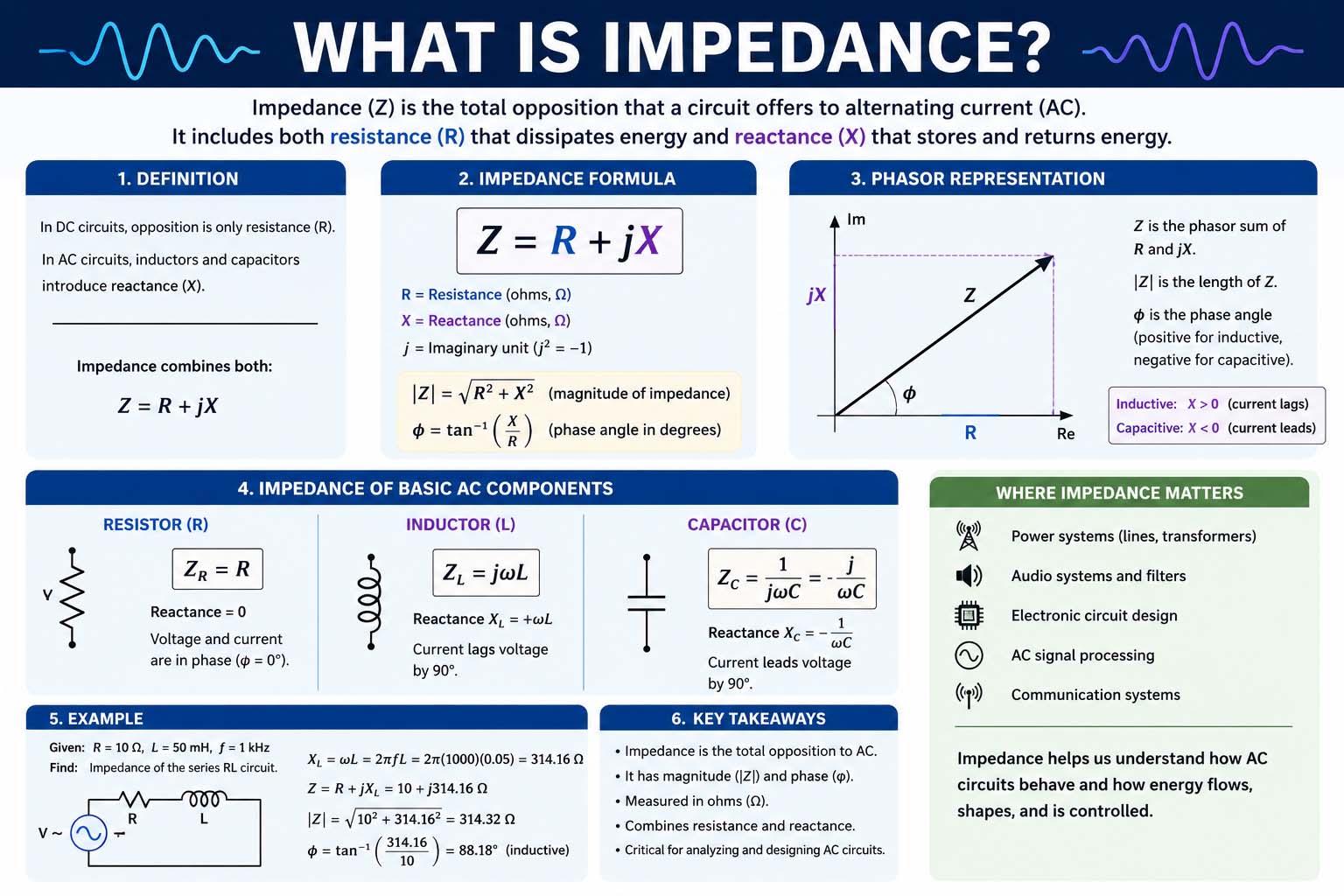
is one of the most important concepts in electronics, audio systems, and electrical engineering. If you have ever wondered why some headphones sound louder than others or why electrical circuits behave differently with alternating current, understanding can help explain it.
In simple terms, is the total opposition that a circuit gives to the flow of alternating current (AC). It combines resistance with additional electrical effects caused by capacitance and inductance.
Z = R + jX
In this formula:
- Z represents
- R represents resistance
- X represents reactance
- j represents the imaginary component used in electrical engineering
Understanding can help beginners troubleshoot electronics, improve audio quality, and better understand how modern electrical systems work.
What Is Impedance in Electricity?
When learning electronics, many people ask what is in electricity because it behaves differently from simple resistance.
Resistance only opposes direct current (DC), but affects alternating current (AC). Since most household power systems use AC electricity, becomes a key factor in real-world electrical systems.
includes two major parts:
Resistance
Reactance
Reactance is caused by capacitors and inductors in a circuit. These components temporarily store electrical energy and affect how current moves through the system.
For example, motors, transformers, and wireless communication systems all rely on behavior to function correctly.
Electrical is measured in ohms, just like resistance.
What Is Impedance in a Circuit?
Many beginners also search for what is in a circuit because circuits often contain more than just resistors.
A circuit may include:
- Resistors
- Capacitors
- Inductors
- Integrated circuits
- Audio components
In AC circuits, all these components influence how electricity flows. determines:
- Current flow
- Voltage behavior
- Signal quality
- Energy efficiency
- Power delivery
For example, if the in a circuit is too high, the current flow decreases. If is too low, excessive current may damage components.
Engineers carefully design levels to ensure stable performance.
Example of Circuit Impedance
A speaker connected to an amplifier has a specific rating. If the does not match correctly, sound quality may suffer or equipment may overheat.
This is why matching is important in many electronics systems.
What Is Impedance in Audio?
Audio technology heavily depends on . Many people ask what is in audio because it affects sound quality, loudness, and equipment compatibility.
In audio systems, controls how electrical audio signals move between devices.
Common audio devices using include:
- Speakers
- Amplifiers
- Microphones
- Headphones
- Mixing consoles
Low-devices usually require less voltage and are easier to power. High-devices often need stronger amplification.
Low Impedance Audio Devices
Low typically ranges from 16 to 64 ohms.
Benefits include:
- Louder sound on phones and laptops
- Easier compatibility
- Lower power requirements
High Impedance Audio Devices
High devices may range from 250 to 600 ohms.
Benefits include:
- Better studio-level sound accuracy
- Reduced distortion
- Improved signal control
However, they often require dedicated amplifiers.
What Is Impedance in Headphones?
One of the most searched topics today is what is in headphones because headphone specifications often display ratings.
Headphone affects:
- Volume levels
- Sound clarity
- Amplifier compatibility
- Battery consumption
Low-Impedance Headphones
Low-headphones work well with smartphones, tablets, and laptops. They produce higher volume with less power.
These are ideal for:
- Casual listening
- Mobile devices
- Gaming
- Everyday music streaming
High-Impedance Headphones
High-headphones are commonly used by professional audio engineers and musicians.
They offer:
- Cleaner audio reproduction
- More detailed sound
- Better studio monitoring
However, they often sound quieter without a proper amplifier.
How to Choose the Right Headphone Impedance
Here is a simple guideline:
| Device Type | Recommended Headphone Impedance |
|---|---|
| Smartphones | 16–32 ohms |
| Laptops | 32–80 ohms |
| Gaming setups | 32–80 ohms |
| Studio equipment | 250+ ohms |
Choosing the correct helps optimize sound quality and device performance.
Impedance vs Resistance
Many people confuse and resistance because both are measured in ohms.
However, they are not identical.
| Feature | Resistance | Impedance |
| Works with DC | Yes | Yes |
| Works with AC | Limited | Yes |
| Includes reactance | No | Yes |
| Frequency dependent | No | Yes |
Resistance is simpler, while is more advanced and important in AC systems.
Why Impedance Matters in Technology
plays a major role in modern technology systems.
It affects:
- Audio quality
- Signal transmission
- Wireless communication
- Electrical efficiency
- Device compatibility
Without proper control, systems may experience:
- Signal loss
- Distortion
- Overheating
- Poor sound quality
- Power inefficiency
Technology manufacturers carefully design levels for stable and efficient performance.
Common Impedance Problems and Fixes
Understanding can also help troubleshoot electronics and audio systems.
Low Volume Issues
If headphones sound too quiet, the may be too high for the device powering them.
Fix
Use a headphone amplifier or switch to lower-headphones.
Audio Distortion
Incorrect matching between speakers and amplifiers can create distorted sound.
Fix
Check the ratings on both devices before connecting them.
Overheating Equipment
Low may force amplifiers to deliver too much current.
Fix
Use compatible speakers and avoid exceeding amplifier specifications.
Weak Signal Transmission
Communication systems can lose signal quality due to mismatches.
Fix
Use proper cables and -matched components.
How to Measure Impedance
Engineers use specialized tools to measure .
Common tools include:
- Multimeters
- LCR meters
- Oscilloscopes
- Audio analyzers
The measurement process depends on the type of circuit and signal frequency.
In professional industries, testing ensures reliable device performance.
Future Importance of Impedance
As technology evolves, remains essential in advanced systems.
Modern applications include:
- 5G communication
- Smart devices
- Electric vehicles
- Audio engineering
- Wireless charging
- Robotics
Understanding gives students, technicians, and technology enthusiasts a strong foundation in electronics and engineering.
FAQ About Impedance
What is impedance in simple words?
It combines resistance and reactance.
What is impedance measured in?
is measured in ohms.
Why is impedance important in headphones?
affects volume, sound quality, and amplifier compatibility.
Is higher impedance better?
Not always. High can improve sound quality in professional setups, but low works better for mobile devices.
Resistance only opposes current flow, while also considers frequency-related electrical effects.
Can damage electronics?
Yes. Incorrect matching can overheat amplifiers or reduce performance.
Conclusion
Understanding what is is important for anyone interested in technology, electronics, audio systems, or electrical engineering. controls how alternating current behaves in circuits and directly affects device performance, signal quality, and power efficiency.