
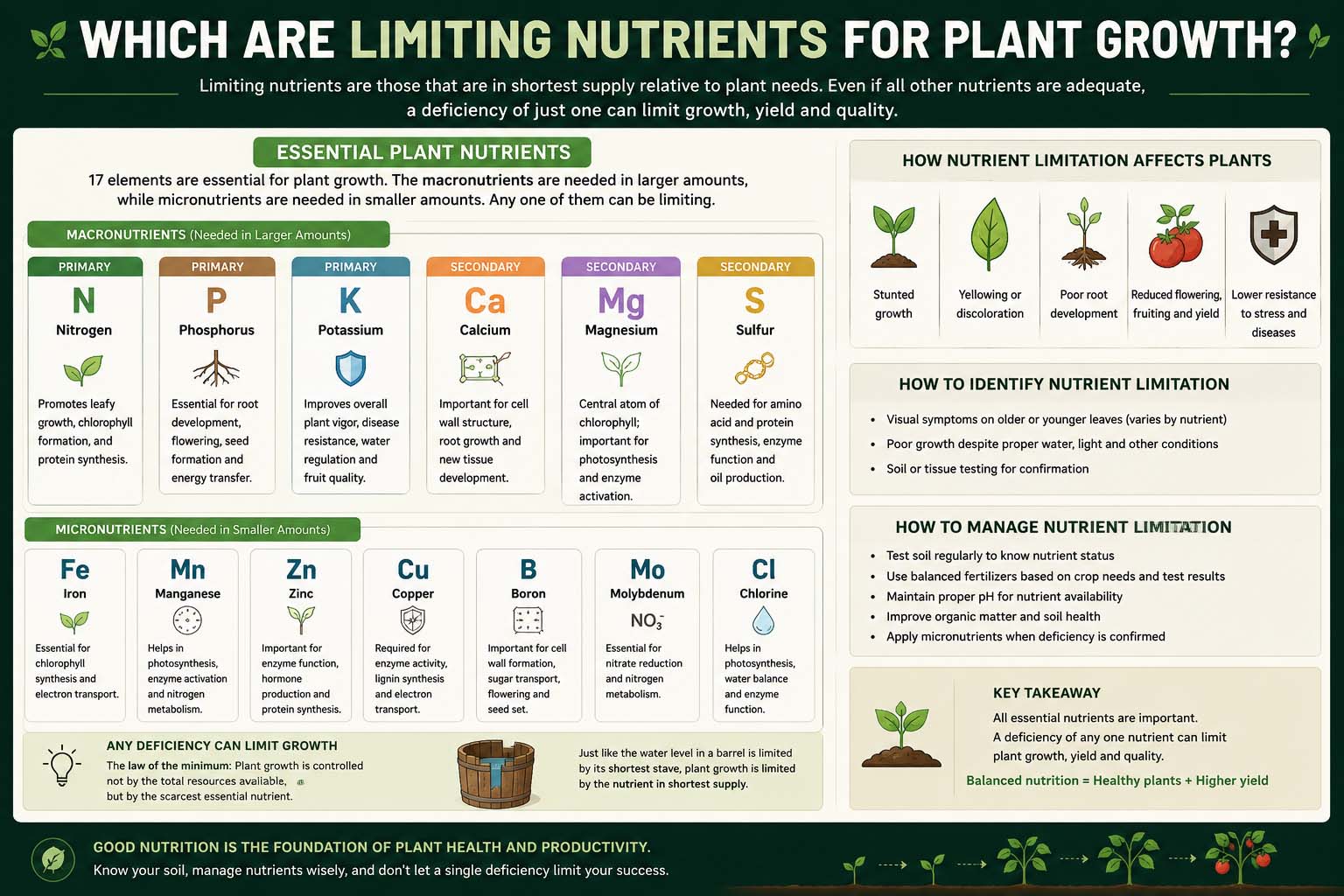
Plants require a variety of nutrients to grow properly, develop strong roots, produce healthy leaves, and create flowers or fruits. However, when certain essential nutrients are missing or available in very small amounts, plant growth becomes limited. Many gardeners, farmers, and students often ask which are limiting nutrients for plant growth because understanding nutrient deficiencies is important for healthy crops and higher agricultural production.
Limiting nutrients are nutrients that are present in the lowest supply compared to what the plant needs. Even if all other nutrients are available, the lack of one important nutrient can slow or stop plant development. Identifying and correcting nutrient deficiencies helps improve plant health, crop yield, and soil quality.
What Are Limiting Nutrients?
A limiting nutrient is an essential nutrient that controls the rate of plant growth because it is unavailable or insufficient in the soil. Plants need a balanced supply of nutrients for proper growth. If one nutrient becomes deficient, the plant cannot perform important biological functions effectively.
The concept of limiting nutrients is based on the “Law of the Minimum,” which states that plant growth depends on the nutrient in shortest supply. Even if other nutrients are abundant, a shortage of one critical nutrient can reduce growth significantly.
Understanding which are limiting nutrients for plant growth helps farmers and gardeners apply the correct fertilizers and improve soil management practices.
The Importance of Nitrogen for Plant Growth
Nitrogen is one of the most common limiting nutrients for plants. It plays a major role in leaf development, protein production, and photosynthesis. Plants use nitrogen to create chlorophyll, the green pigment responsible for capturing sunlight.
When soil lacks nitrogen, plants often develop yellow leaves and weak stems. Growth becomes slow, and crop production decreases. Because plants require large amounts of nitrogen, it is frequently added to soil through fertilizers.
Farmers commonly use nitrogen-rich fertilizers to improve crop yields in agricultural fields. Nitrogen is especially important for leafy vegetables, grains, and grass crops.
Phosphorus as a Limiting Nutrient
Phosphorus is another essential nutrient that often limits plant growth. It supports root development, energy transfer, and flower or fruit production. Plants need phosphorus to store and use energy during growth processes.
A phosphorus deficiency can cause poor root systems, dark green or purple leaves, and delayed maturity. Crops may produce fewer flowers and fruits when phosphorus levels are too low.
Phosphorus is especially important during the early stages of plant growth because it encourages strong roots and healthy seedlings. Many agricultural soils become phosphorus-deficient over time due to repeated crop production.
Potassium is also considered one of the major limiting nutrients for plant growth. This nutrient helps regulate water movement, enzyme activity, and disease resistance in plants.
Plants lacking potassium may develop weak stems, brown leaf edges, and reduced resistance to drought or disease. Fruit quality and crop yield may also decline.
Potassium improves overall plant strength and helps crops survive stressful environmental conditions. Farmers often add potassium fertilizers to improve plant performance and increase harvest quality.
Secondary Nutrients Needed by Plants
In addition to nitrogen, phosphorus, and potassium, plants also require secondary nutrients such as calcium, magnesium, and sulfur. These nutrients are needed in smaller amounts but remain essential for healthy growth.
Calcium helps build strong cell walls and supports root growth. Magnesium is a central component of chlorophyll and is necessary for photosynthesis.
Micronutrients and Their Importance
Micronutrients are nutrients plants need in very small amounts, but they are still critical for survival. Common micronutrients include iron, zinc, copper, manganese, boron, and molybdenum.
Iron deficiency is common in many soils and may cause yellowing leaves. Zinc deficiency can lead to stunted growth and reduced crop development. Boron is important for flower and fruit production.
Even though micronutrients are required in tiny quantities, a lack of any one micronutrient may become a limiting factor for plant growth. Soil testing helps identify these hidden deficiencies.
Soil Conditions and Nutrient Availability
Soil quality strongly affects nutrient availability. Nutrients may already exist in the soil but remain unavailable due to poor soil conditions. Soil pH, moisture levels, and organic matter all influence nutrient absorption.
For example, highly acidic or alkaline soils can prevent plants from absorbing nutrients properly. Waterlogged soils may reduce oxygen levels and damage root systems, limiting nutrient uptake.
Environmental Factors That Affect Nutrients
Environmental conditions also influence which are limiting nutrients for plant growth. Heavy rainfall can wash nutrients away from the soil, while drought conditions reduce nutrient absorption by roots.
Temperature changes may affect soil microorganisms that help release nutrients for plants. In some areas, poor soil naturally lacks certain nutrients, making fertilizer use necessary for successful farming.
Fertilizers and Nutrient Management
Fertilizers are commonly used to replace limiting nutrients and improve plant growth. Balanced fertilizers usually contain nitrogen, phosphorus, and potassium, often labeled as NPK fertilizers.
Organic fertilizers such as compost, manure, and bone meal also provide nutrients while improving soil health naturally. Many farmers combine organic and chemical fertilizers to maintain long-term soil fertility.
Proper nutrient management is important because excessive fertilizer use can harm the environment. Too much fertilizer may pollute rivers, lakes, and groundwater through runoff.
Signs of Nutrient Deficiency in Plants
Plants often show visible signs when nutrients become limiting. Yellow leaves may indicate nitrogen deficiency, while purple discoloration can signal phosphorus shortage. Brown edges on leaves may suggest potassium deficiency.
Stunted growth, poor flowering, and weak roots are also common symptoms of nutrient problems. Observing plant appearance carefully can help gardeners and farmers identify deficiencies early.
Conclusion
Understanding which are limiting nutrients for plant growth is essential for successful gardening, farming, and environmental management. Nitrogen, phosphorus, and potassium are the primary nutrients that most commonly limit plant growth, but secondary nutrients and micronutrients are also important for healthy development.
Soil quality, environmental conditions, and proper fertilizer use all play major roles in nutrient availability.