
A dead battery can turn a normal day into a stressful one, especially when your vehicle refuses to start. Learning how to change car battery is one of the most useful skills for any driver. It can save time, reduce towing costs, and help you stay prepared during emergencies. Most car batteries last several years, but weather, driving habits, and age eventually weaken them. When that happens, replacing the battery is often a quick solution.
Understanding the process is easier than many people think. With the right tools and a little patience, most drivers can handle the job at home. This guide explains the full process, signs of battery failure, maintenance tips, and answers common questions about replacement. Before replacing a battery, it is also helpful to understand what is a battery charge, since knowing how a battery stores and delivers electrical energy can make diagnosing battery-related problems much easier.
How to Change a Car Battery
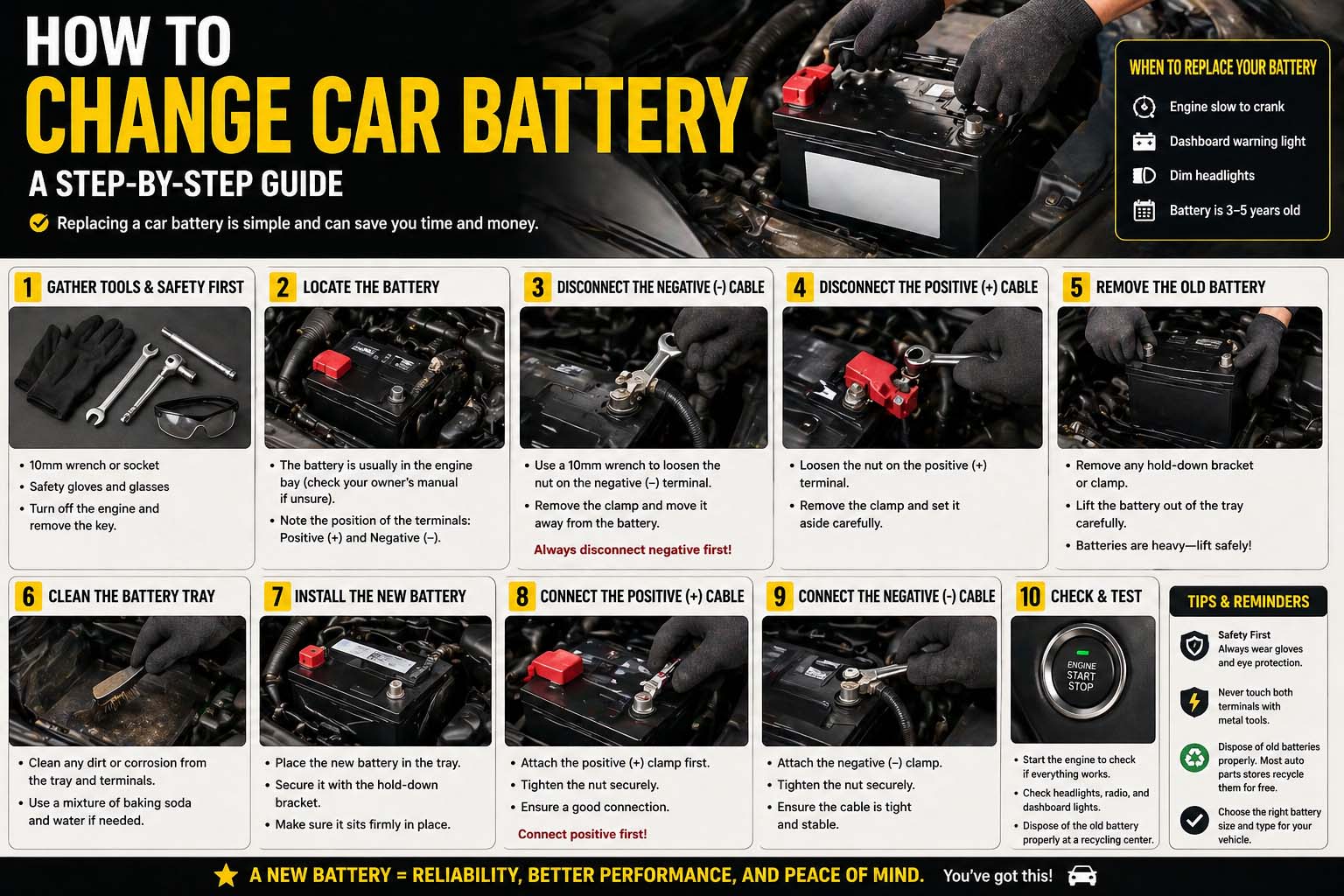
If your engine cranks slowly, headlights dim, or the battery warning light appears, it may be time for a replacement. Knowing how to change a car battery starts with safety and preparation. Park the car on a flat surface, switch off the engine, and remove the keys. Open the hood and locate the battery, which is usually near the front of the engine bay.
Before touching the terminals, wear gloves and eye protection. Car batteries contain acid and can release gases. Begin by loosening the negative terminal first, usually marked with a minus sign or black cable. Remove it carefully and keep it away from the battery post. Then disconnect the positive terminal, usually marked with a plus sign or red cable.
Once the cables are removed, loosen the hold-down bracket that keeps the battery in place. Lift the battery straight up. Some batteries are heavy, so use proper lifting technique. Clean the battery tray and cable connectors if corrosion is visible. Place the new battery in the tray, secure the bracket, and reconnect the positive cable first, followed by the negative cable. Tighten both connections and ensure they are snug.
After installation, start the vehicle. If it starts normally, the replacement was successful.
Signs You Need a New Battery
Many people wait until their car will not start, but batteries often give warning signs before complete failure. Slow engine cranking is one of the earliest clues. If the starter sounds weaker than usual, battery power may be dropping.
Electrical problems can also appear. Interior lights may flicker, dashboard lights may dim, and power windows can move slower than normal. In some cases, the battery case may swell due to heat exposure. A rotten egg smell can also indicate leaking acid or internal damage.
Testing voltage with a multimeter can confirm battery health. A fully charged battery typically reads around 12.6 volts with the engine off. Lower readings may suggest charging or battery problems.
How Long Does It Take to Change a Car Battery
Many drivers ask how long does it take to change a car battery because they assume it is a long repair. In reality, replacing a battery is usually one of the fastest maintenance jobs on a vehicle. For someone with basic tools and experience, it can take 15 to 30 minutes.
If corrosion is heavy or the battery is difficult to access, it may take longer. Some modern cars place batteries in the trunk, under seats, or behind panels, which increases labor time. Professional mechanics often complete the job quickly because they have the right tools and experience.
If you are doing it for the first time, allow up to one hour. Taking extra time is better than rushing and damaging connectors or forgetting safety steps.
Choosing the Right Replacement Battery
Not every battery fits every car. Always check the owner’s manual or battery label for the correct size, terminal placement, and power rating. Cold cranking amps, often called CCA, measure how well the battery starts in cold weather. Drivers in colder climates should choose a battery with higher CCA.
Reserve capacity is another useful rating. It indicates how long the battery can supply power if the alternator fails. Buying a quality battery with a solid warranty often saves money over time.
Some vehicles with start-stop systems require AGM batteries instead of standard lead-acid models. Using the wrong type can cause performance problems.
How Often to Change Car Battery
A common question is how often to change car battery to avoid breakdowns. Most car batteries last between three and five years. However, lifespan depends on climate, driving habits, and maintenance.
Hot weather can shorten battery life because heat accelerates internal chemical wear. Short trips can also reduce lifespan because the alternator may not fully recharge the battery. Leaving lights on or using electronics while parked also increases stress.
It is wise to test your battery annually after the third year. If it shows weak performance, replacement before failure is a smart decision. Preventive replacement can help avoid being stranded unexpectedly.
Battery Maintenance Tips
Proper care helps extend battery life. Keep terminals clean and free from corrosion. White or blue buildup can block current flow and create starting issues. Cleaning terminals with a battery brush and approved cleaner can improve performance.
How to Change Car Key Battery
Modern vehicles often use key fobs with small internal batteries. Learning how to change car key battery is another useful skill. If your remote unlock range becomes shorter or buttons stop responding, the battery may be weak.
Common Mistakes to Avoid
Installing the battery backward is one of the biggest mistakes. Always confirm positive and negative terminal positions before connecting cables. Reversing polarity can damage electronics.
Conclusion
Knowing how to change car battery is a valuable skill that every driver can benefit from. The process is straightforward, usually quick, and can save money compared to emergency service calls. By recognizing warning signs early, choosing the right replacement, and maintaining the battery properly, you can improve reliability and avoid unexpected breakdowns.