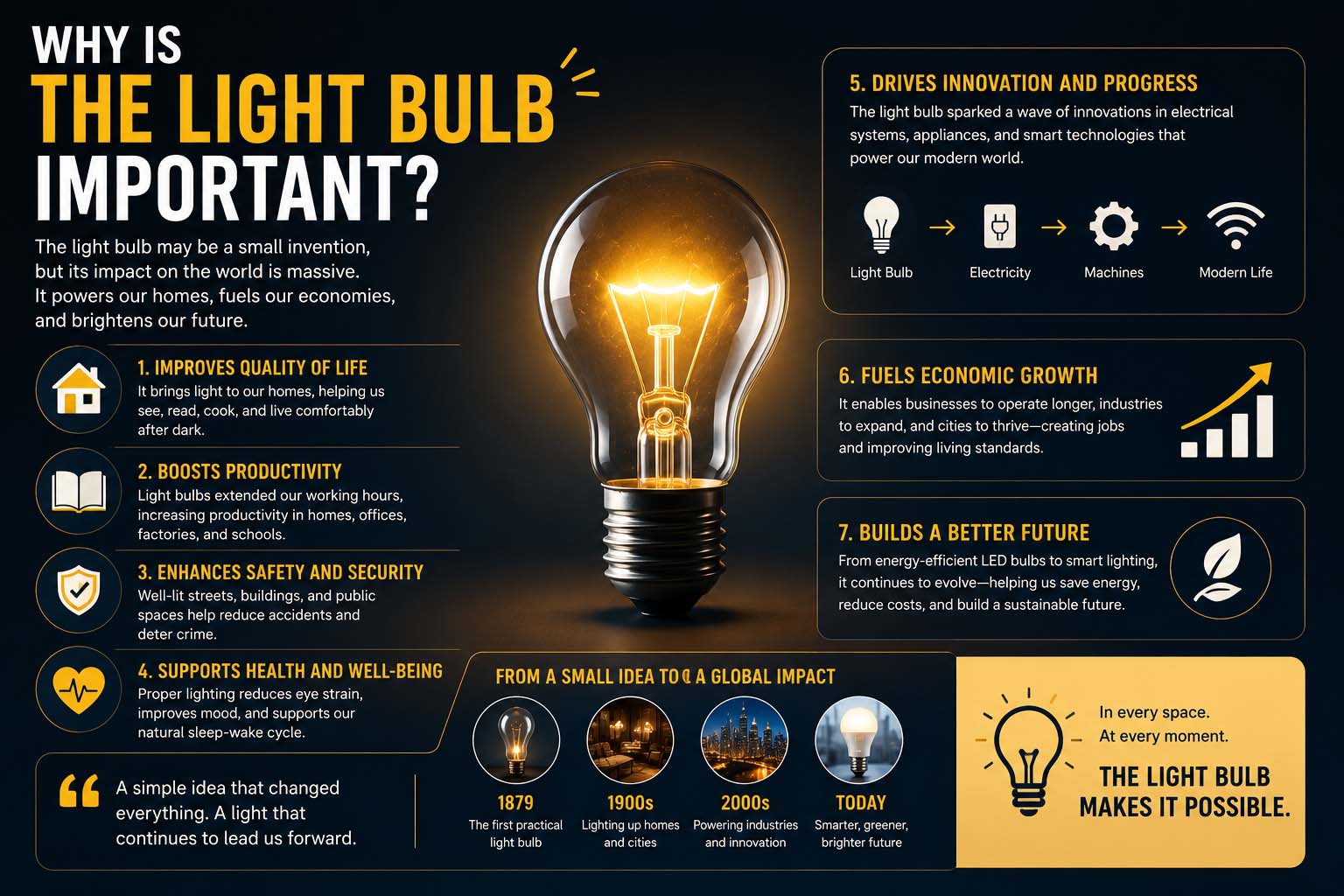
The light bulb is one of the most important inventions in human history. Before electric lighting became widely available, daily activities were limited by sunlight and less efficient sources of illumination such as candles and oil lamps.
Today, it is difficult to imagine modern life without electric lighting. Understanding why is the light bulb important helps explain how a simple invention helped drive technological progress and improve quality of life around the world.
In this guide, we will explore the history, significance, benefits, and lasting impact of the on society and technology.
What Is a Light Bulb?
A bulb is a device that converts electrical energy into .
Modern lighting technologies include:
- Incandescent bulbs
- Halogen bulbs
- Compact fluorescent lamps (CFLs)
- LED bulbs
- Smart lighting systems
Although lighting technology has evolved significantly, the original concept remains the same: producing reliable artificial light for everyday use.
Why Is the Light Bulb Important?
The bulb changed nearly every aspect of modern civilization.
Its impact includes:
- Extended working hours
- Improved safety
- Better education opportunities
- Industrial growth
- Increased productivity
- Enhanced quality of life
Electric lighting allowed people to remain active after sunset in ways that were previously impossible.
A Brief History of the Light Bulb
While many people associate the bulb with Thomas Edison, the development of electric lighting involved contributions from multiple inventors.
Key milestones include:
| Year | Development |
|---|---|
| Early 1800s | Experimental electric lights |
| 1878–1879 | Practical incandescent bulb development |
| Early 1900s | Widespread adoption |
| Mid-1900s | Improved efficiency |
| Modern Era | LED and smart lighting technology |
Edison’s contribution helped make electric lighting practical and affordable for everyday use.
Why Is the Invention of the Light Bulb Important?
Many students and technology enthusiasts ask, why is the invention of the light bulb important?
The invention had a profound effect on society.
Extended Productive Hours
The bulb enabled:
- Evening work
- Nighttime study
- Longer business hours
- Safer transportation
This significantly increased productivity worldwide.
Improved Living Conditions
Electric lighting replaced candles and oil lamps, which carried fire risks and produced smoke.
Homes became:
- Safer
- Cleaner
- More comfortable
This improved overall quality of life.
Support for Economic Growth
Factories and businesses could operate more efficiently after dark.
This contributed to:
- Industrial expansion
- Economic development
- Urban growth
The light became a key driver of modernization.
Why Is the Incandescent Light Bulb Important?
When discussing lighting history, many people specifically ask, why is the incandescent light bulb important?
The incandescent bulb was the first widely adopted practical electric lighting solution.
Its importance includes:
Accessibility
It made electric lighting available to ordinary households.
Standardization
The technology helped establish modern electrical infrastructure.
Foundation for Future Innovation
Many modern lighting technologies evolved from the principles demonstrated by incandescent bulbs.
Although LEDs are now more efficient, incandescent bulbs played a crucial role in technological history.
Why the Light Bulb Is Important for Education
Electric lighting transformed education.
Longer Study Hours
Improved Reading Conditions
Consistent lighting reduced eye strain and improved learning environments.
Access to Knowledge
Libraries, schools, and universities benefited from reliable illumination.
These improvements helped increase educational opportunities around the world.
Why Is the Light Bulb So Important in Modern Society?
Many people wonder, why is the light bulb so important even today.
Despite technological advances, lighting remains essential.
Supports Daily Life
Lighting is necessary for:
- Homes
- Offices
- Hospitals
- Schools
- Transportation systems
Enables Technology
Many modern technologies depend on reliable electrical infrastructure originally expanded through lighting systems.
Improves Safety
Streetlights and building lighting help reduce accidents and improve visibility.
Supports Global Connectivity
Cities, airports, and communication networks operate around the clock thanks in part to reliable lighting systems.
How the Light Bulb Changed Technology
The development of electric lighting accelerated numerous technological advancements.
Growth of Electrical Networks
Demand for lighting encouraged investment in electrical grids.
Innovation in Appliances
Once homes had electricity, additional technologies followed:
- Refrigerators
- Televisions
- Computers
- Internet equipment
Smart Home Evolution
Modern smart bulbs now offer:
- Remote control
- Automation
- Energy monitoring
- Voice assistant integration
The light bulb continues evolving alongside modern technology.
Traditional Lighting vs Modern LED Technology
| Feature | Incandescent Bulb | LED Bulb |
| Energy Efficiency | Lower | Higher |
| Lifespan | Shorter | Longer |
| Heat Production | High | Low |
| Operating Cost | Higher | Lower |
| Environmental Impact | Greater | Reduced |
Common Lighting Problems and Troubleshooting
While modern lighting is highly reliable, issues can still occur.
Bulb Flickering
Possible causes:
- Loose connection
- Faulty switch
- Voltage fluctuations
Solution
Check connections and replace defective components if necessary.
Bulb Burns Out Quickly
Potential reasons:
- Poor-quality bulbs
- Excessive voltage
- Overheating fixtures
Solution
Use compatible bulbs and inspect fixtures.
Dim Lighting
Possible causes include:
- Aging bulbs
- Dirty fixtures
- Electrical issues
Solution
Replace bulbs and clean lighting fixtures regularly.
Benefits of Modern Light Bulbs
Today’s lighting technology offers numerous advantages.
Energy Savings
LED bulbs consume significantly less electricity than traditional bulbs.
Longer Lifespan
Environmental Benefits
Reduced energy consumption lowers environmental impact.
Better Customization
- Brightness
- Color temperature
- Scheduling
- Automation settings
The Future of Lighting Technology
Lighting continues to evolve.
Emerging developments include:
- Smart city lighting
- Adaptive lighting systems
- Human-centric lighting
- Internet-connected bulbs
- AI-powered energy optimization
These innovations build upon the foundation established by the original light bulb.
Frequently Asked Questions
Why is the light bulb important?
The light bulb revolutionized society by providing safe, reliable, and efficient artificial lighting, allowing people to work and live beyond daylight hours.
Why is the invention of the light bulb important?
It enabled industrial growth, improved safety, expanded education opportunities, and supported the development of modern electrical infrastructure.
Why is the incandescent light bulb important?
It was the first practical and widely adopted electric lighting technology, paving the way for future innovations.
Why is the light bulb so important today?
Modern society depends on reliable lighting for homes, businesses, transportation, healthcare, and education.
Who invented the light bulb?
Several inventors contributed to its development, but Thomas Edison is widely known for creating a practical commercial version.
Are LED bulbs better than incandescent bulbs?
In most cases, yes.
Conclusion
Understanding why is the light bulb important reveals how a seemingly simple invention transformed the world. From extending productive hours to improving education, safety, and economic growth, the played a critical role in shaping modern civilization.