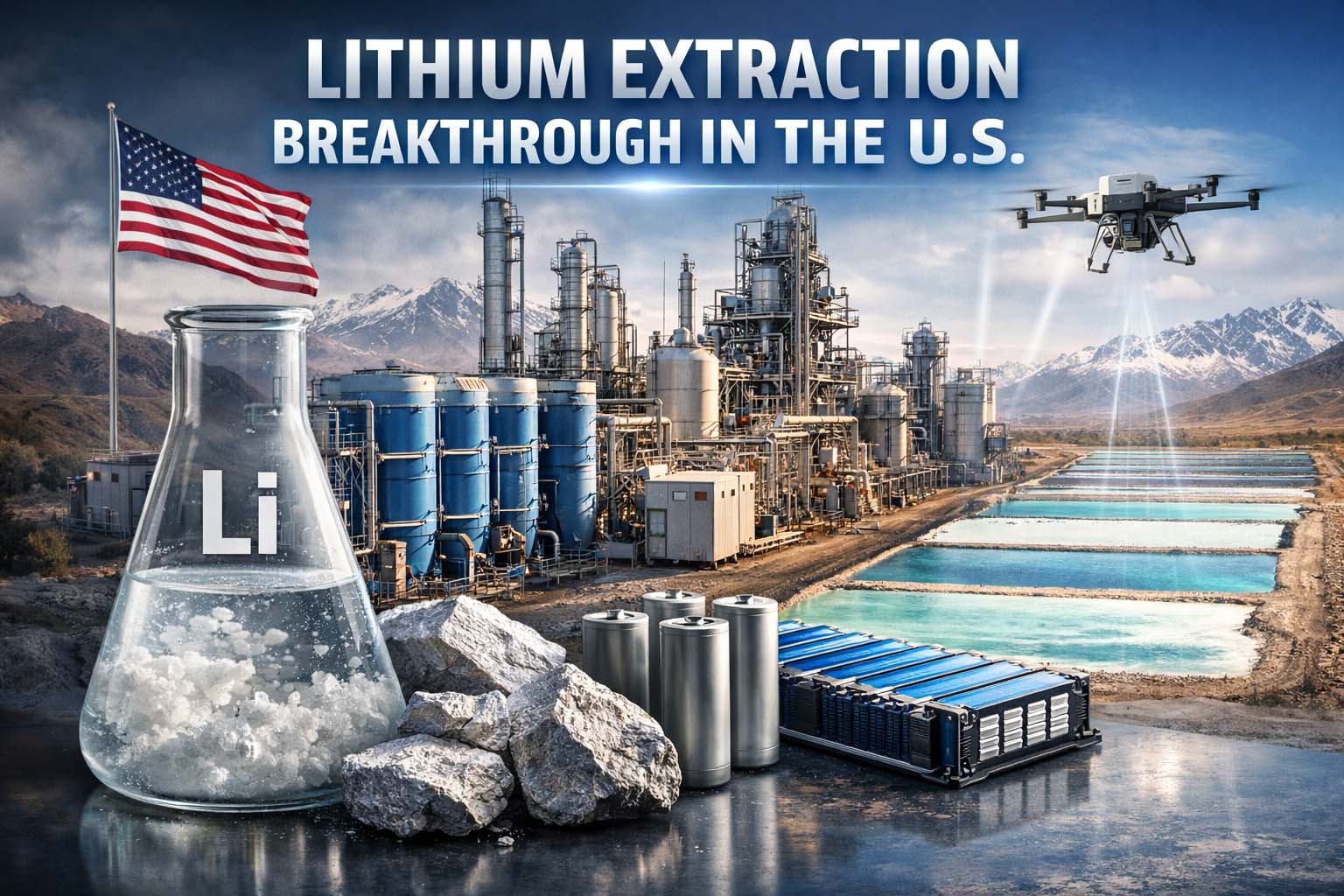
The growing demand for electric vehicles, renewable energy storage, and advanced electronics has placed lithium at the center of the global clean energy transition. Recent headlines about a lithium extraction breakthrough us have sparked interest across industries, investors, and policymakers. As the United States seeks to strengthen domestic supply chains and reduce dependence on foreign sources, innovative methods for obtaining lithium are becoming increasingly important.
Lithium is a key ingredient in rechargeable batteries used in electric cars, smartphones, laptops, and large-scale energy storage systems. However, traditional mining methods can be slow, expensive, and environmentally challenging. New American technologies are changing the landscape by making lithium production faster, cleaner, and more efficient. This article explores why the lithium extraction breakthrough us matters, how the industry is evolving, and what it means for the future of energy.
Why Lithium Is So Important
Lithium has become one of the most valuable minerals in the modern economy. As nations move toward cleaner energy systems, battery demand continues to rise. Electric vehicle manufacturers need reliable battery materials, while utilities require storage systems to stabilize renewable power from solar and wind.
The importance of lithium is not just about batteries. It is also about economic competitiveness, national security, and technological leadership. A successful lithium extraction breakthrough us could help America secure a stable supply of critical minerals while creating jobs and reducing import reliance.
Traditional Methods of Lithium Production
For decades, lithium has mainly been produced through hard-rock mining and brine evaporation. Hard-rock mining extracts lithium-bearing minerals such as spodumene from underground or open-pit mines. Brine extraction pumps salty groundwater into evaporation ponds, where water slowly evaporates over months or years.
Many people ask how is lithium mined when they first learn about the battery industry. In simple terms, lithium is either mined from mineral-rich rock or separated from underground brines. Both methods have benefits and limitations, but traditional systems can require large amounts of land, water, and processing time.
Because of these challenges, researchers and companies have focused on finding better ways to produce lithium at scale.
The Rise of Direct Lithium Extraction
One of the most promising innovations is direct lithium extraction. This technology removes lithium from brine using advanced materials, membranes, solvents, or adsorption systems rather than relying on huge evaporation ponds.
Direct lithium extraction offers several potential advantages:
- Faster production timelines
- Smaller land footprint
- Lower water use in some applications
- Higher lithium recovery rates
- More flexible operations in different environments
The rise of direct lithium extraction is a major reason many experts describe the recent progress as a true lithium extraction breakthrough us. Instead of waiting months for evaporation, producers may be able to recover lithium in hours or days.
Why the US Is Focused on Lithium
The United States has recognized that domestic lithium production is essential for long-term energy security. Currently, much of the global battery supply chain depends on overseas mining and processing. This creates risk when demand rises or geopolitical tensions disrupt trade.
A domestic lithium extraction breakthrough us would support several national priorities:
- Expanding electric vehicle manufacturing
- Supporting renewable energy storage projects
- Creating high-paying industrial jobs
- Strengthening critical mineral independence
- Encouraging advanced technology investment
America has lithium resources in states such as Nevada, California, Arkansas, and North Carolina. Unlocking these resources efficiently is a strategic goal.
New Technologies Changing the Industry
The newest generation of lithium extraction technologies uses chemistry, engineering, and automation to improve efficiency. Companies are developing systems that selectively capture lithium ions while leaving other minerals behind.
Examples of innovation include:
- Ion exchange materials that absorb lithium
- Advanced filtration membranes
- Geothermal brine lithium recovery
- AI-controlled process optimization
- Water recycling systems
These breakthroughs can transform lower-grade resources into commercially viable projects. That means locations once considered uneconomic may become future lithium hubs.
Lithium Refining: The Missing Piece
Mining raw lithium is only part of the equation. Battery manufacturers also need high-purity chemicals such as lithium carbonate and lithium hydroxide. This is where lithium refining becomes critical.
For years, much of the world’s refining capacity has been concentrated outside the United States. Even when raw materials are sourced elsewhere, battery production often depends on foreign chemical processing.
A true lithium extraction breakthrough us must include stronger lithium refining capabilities. By expanding domestic refining plants, the United States can build a complete battery supply chain from raw resource to finished battery materials.
Environmental Benefits of Modern Lithium Production
Sustainability is one of the biggest reasons new extraction methods are attracting attention. Traditional mining and evaporation systems can impact land, water, and ecosystems if not managed carefully.
Modern lithium extraction systems aim to reduce environmental impact through:
- Smaller operational footprints
- Less surface disturbance
- Faster resource recovery
- Reduced evaporation pond use
- Improved water recycling
- Lower emissions through cleaner energy inputs
If deployed responsibly, a lithium extraction breakthrough us could help meet climate goals while maintaining environmental standards.
Economic Impact on the United States
Domestic lithium production can generate significant economic benefits. Building mines, extraction plants, refineries, transport networks, and battery factories creates employment across many sectors.
Industries that may benefit include:
- Mining engineering
- Chemical manufacturing
- Construction
- Transportation
- Battery production
- Automotive manufacturing
- Renewable energy infrastructure
The lithium extraction breakthrough us story is not only about minerals. It is about rebuilding industrial capacity and competing in the next generation economy.
Challenges Still Ahead
Although the outlook is promising, the path forward is not without obstacles. New projects often face regulatory delays, financing hurdles, infrastructure gaps, and community concerns.
Key challenges include:
- Scaling technologies commercially
- Managing costs during expansion
- Securing permits efficiently
- Building domestic refining capacity
- Maintaining environmental trust
- Competing with established global suppliers
Even with a lithium extraction breakthrough us, long-term success depends on execution, investment, and public confidence.
The Role of Electric Vehicles
Electric vehicles are a major driver of lithium demand. Every EV battery requires lithium compounds, making the future of transportation closely linked to mineral supply chains.
As automakers invest billions into EV production, reliable domestic lithium becomes increasingly valuable. A successful lithium extraction breakthrough us could help ensure battery factories have steady access to critical materials while lowering supply chain risk.
This can also support more affordable EV production over time if local supply reduces logistics costs and market volatility.
Geothermal Lithium Opportunities
One especially exciting area is geothermal brine production. In places like California’s Salton Sea region, hot underground brines used for geothermal energy may also contain lithium.
Companies are exploring how to pair renewable electricity generation with direct lithium extraction from geothermal fluids. This creates a unique opportunity to produce clean energy and battery materials in the same location.
Such integrated systems could become a defining part of the lithium extraction breakthrough us narrative.
Future Outlook
The next decade could reshape global lithium markets. Demand is expected to rise sharply as EV adoption expands and renewable energy storage grows worldwide.
If the United States successfully scales new extraction and lithium refining technologies, it may become a stronger competitor in the global battery materials market. Continued innovation, smart policy, and responsible development will determine how quickly that happens.
Many analysts believe the current momentum signals only the beginning of a broader transformation.
Conclusion
The recent lithium extraction breakthrough us represents more than a technical milestone. It signals a shift toward cleaner, faster, and more secure production of one of the world’s most important energy minerals. Through advances such as direct lithium extraction, stronger lithium refining, and better answers to how is lithium mined, the United States has an opportunity to build a modern battery supply chain.
As demand for clean energy technologies continues to rise, domestic lithium innovation could play a major role in economic growth, environmental progress, and industrial leadership. The race for lithium is underway, and America’s latest breakthroughs may help shape the future.