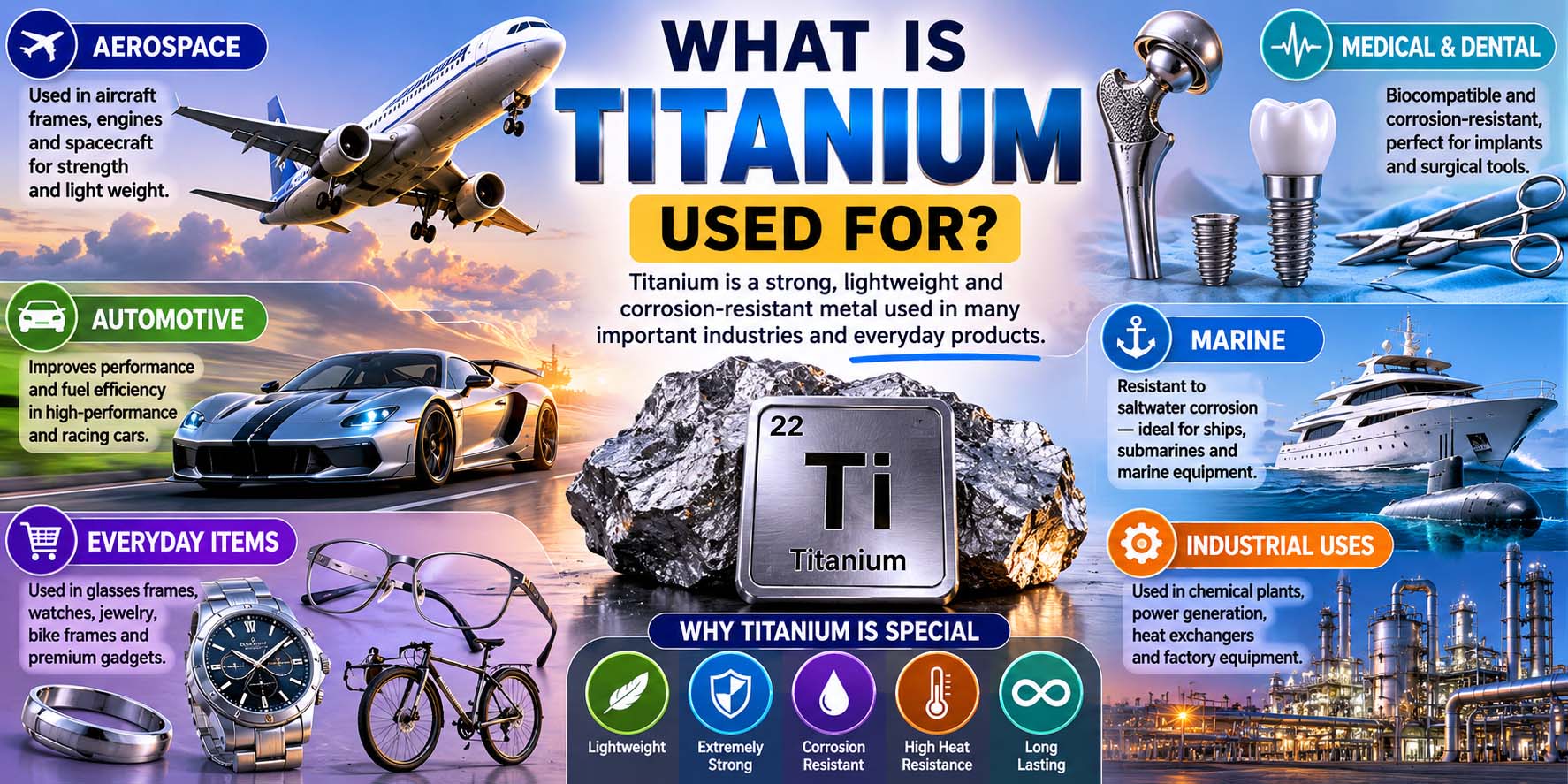
So, what is titanium used for? Titanium is a strong, lightweight metal that resists corrosion and handles high temperatures well. For this reason, it shows up in aircraft parts, medical implants, car parts, chemical plants and marine equipment. In addition, you can find it in bicycles, watches, eyeglass frames and sports gear, where low weight and long life really help.
Many people ask this question because the metal appears in everything from airplanes and smartphones to implants and golf clubs. In short, makers choose it when they need a material that is tough but much lighter than steel.
What Is Titanium?
It is a natural metal with a silver-gray color. According to Britannica, it is a chemical element in Group 4 of the periodic table and a lightweight, high-strength, low-corrosion structural metal.
Scientists discovered it in the late 18th century, and it soon became important because of its special properties. It is strong yet light, it resists corrosion and it handles heat well. Moreover, the human body accepts it, and it lasts a very long time.
As a result, engineers rely on it in tough environments where ordinary metals may fail.
What Is Titanium Used For in Aerospace Technology?
Aerospace engineering is one of the biggest users of this metal. Aircraft makers rely on it because it is both light and strong.
For example, it goes into jet engines, aircraft frames, landing gear, spacecraft parts and rocket components.
A lighter aircraft burns less fuel, so it runs more efficiently and costs less to operate. Besides, the metal handles extreme temperatures better than many traditional metals.
That is why modern fighter jets and space vehicles contain large amounts of it, since it survives intense pressure and heat.
What Is Titanium Used for in Everyday Life?
Many people feel surprised when they learn how often they touch this metal in daily life. Although it sounds like a rare industrial material, it appears in many consumer products.
Here are some common everyday examples.
Smartphones and Electronics
Some premium smartphones, laptops and smartwatches include it, because it adds strength without extra weight.
Jewelry and Watches
Titanium jewelry is popular because it is light, stylish and resistant to scratches and corrosion.
Eyeglass Frames
Many modern glasses also have frames made from it for comfort and flexibility.
Sports Equipment
You can find it in golf clubs, tennis rackets, bicycles and camping gear, since athletes benefit from light materials.
Kitchen Tools
Some high-end cookware and utensils have titanium coatings for durability and heat resistance.
Clearly, these practical uses explain why the metal keeps growing in consumer technology.
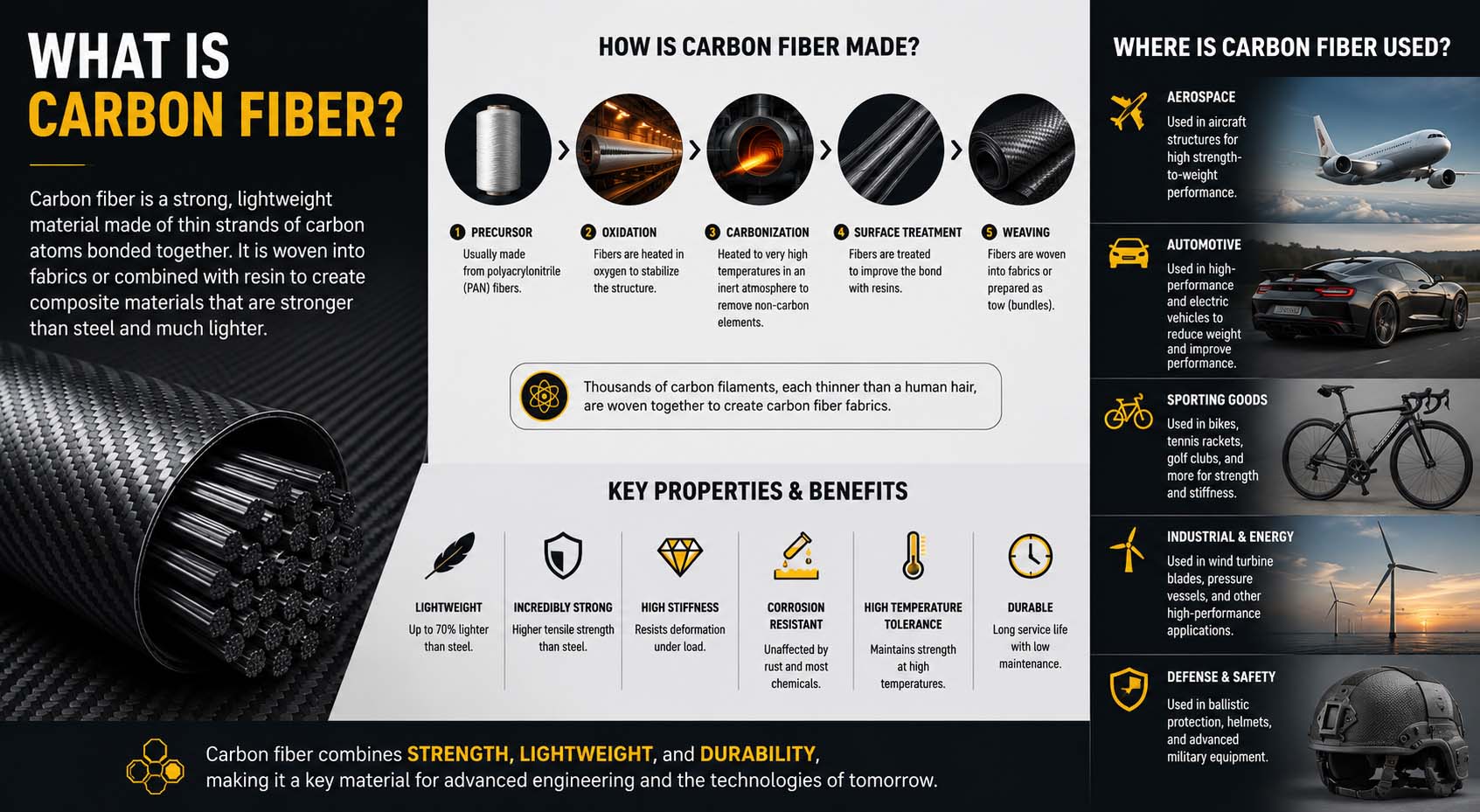
Manufacturers also combine it with what is carbon fiber materials when they design light products for aerospace, sports equipment and premium devices.
What Is Titanium Dioxide Used For?
When people talk about this metal, another common question is what titanium dioxide does.
Titanium dioxide is a white compound made from titanium and oxygen. In fact, it is one of the most common materials in manufacturing and consumer products.
Here are the main places you will find it.
Paints and Coatings
It gives paint a bright white color and makes it last longer.
Sunscreen
Many sunscreens contain it because it blocks harmful UV rays.
Cosmetics
Makeup and skincare products often include it for color and protection.
Food Products
Some processed foods add it as a whitening ingredient. However, the rules for this differ from country to country.
Paper and Plastics
Manufacturers also add it to paper and plastic products to make them brighter.
Overall, its reflective nature makes this white powder very valuable across many industries.
Medical Uses of Titanium
This metal is one of the most important materials in modern medicine. Doctors and medical engineers prefer it because the human body accepts it well.
For instance, it goes into dental implants, bone plates, joint replacements, surgical tools and pacemaker cases.
It does not rust easily, and it does not react with body fluids. Therefore, it works very well for long-term implants and surgery.
As a result, medical technology keeps finding new jobs for it, since it combines safety, strength and durability.
Understanding bioengineering vs biomedical engineering also helps explain why doctors choose it for implants, prosthetics and other advanced medical devices.
What Is a Titanium Drill Bit Used For?
Another popular question is what this type of drill bit does.
These bits are cutting tools with a titanium nitride coating. The coating improves drilling performance and reduces wear.
People mainly choose them for drilling wood, plastic and soft metals. Similarly, they work well for home improvement projects and DIY building tasks.
The coating cuts down friction and heat buildup. Because of this, the bit stays sharp longer than an ordinary steel bit.
However, these bits work best on softer materials. For very hard metals, cobalt drill bits may perform better.
Titanium vs Steel: Which Is Better?
People often compare these two metals, because both play big roles in construction and engineering.
| Feature | Titanium | Steel |
|---|---|---|
| Weight | Very lightweight | Heavier |
| Strength | High strength-to-weight ratio | Extremely strong |
| Corrosion Resistance | Excellent | Moderate |
| Cost | Expensive | More affordable |
| Heat Resistance | Very good | Good |
The lighter metal wins when low weight and corrosion resistance matter most. On the other hand, steel stays cheaper for general building projects.
Ultimately, the right choice depends on the job and its performance needs.
Engineers often compare stainless steel vs carbon steel alongside it before they pick materials for industrial projects.
Why Is Titanium So Expensive?
The metal costs a lot because extracting and processing it is hard.
First, workers mine the ore. Next, they separate the impurities. Then, they refine the metal, and finally they make special alloys.
Consequently, this long production chain raises the overall cost. Also, machining it needs advanced tools and equipment.
Even so, many industries still prefer it, because its performance benefits outweigh the price.
Common Titanium Troubleshooting and Maintenance Tips
A little care helps these products stay in great shape.
Avoid Harsh Chemical Damage
Some industrial chemicals can slowly harm coatings over time.
Use Proper Cleaning Methods
Clean these products with mild soap and water instead of harsh cleaners.
Prevent Surface Scratches
The metal is tough, but it is not fully scratch-proof, so store your items carefully.
Check Coatings on Tools
Coated drill bits wear down after a lot of drilling. So, replace damaged bits when they stop cutting well.
In the end, these simple steps help your products last longer.
Future Technology Uses of Titanium
Demand for this metal keeps growing, because new technologies need light and durable materials.
For example, new uses include electric vehicles, advanced robotics and renewable energy systems. Likewise, AI hardware, medical nanotechnology and space tourism vehicles may need more of it.
As manufacturing improves, it may become cheaper and easier to get.
Learning the reverse engineering meaning can also help engineers see how teams study and improve metal parts for future designs.
How to Identify Titanium Products
If you are not sure whether a product contains this metal, check a few simple signs.
Lightweight Feel
Products made from it usually feel lighter than steel versions.
Corrosion Resistance
It rarely rusts, even after long exposure to moisture.
Premium Pricing
These products often cost more because of high production costs.
Manufacturer Specifications
Finally, check the label or product details, since most makers clearly list the metal or alloy grade. Together, these signs help you make better buying decisions.
FAQ
What is titanium used for?
Industries rely on it for aerospace, medical implants, electronics, sports gear, construction and car engineering.
What is titanium used for in everyday life?
You can find it in smartphones, jewelry, watches, bicycles, eyeglasses, cookware and sports equipment.
What is a titanium drill bit used for?
These bits mainly drill wood, plastic and soft metals while they reduce heat and friction.
Is titanium stronger than steel?
It has a better strength-to-weight ratio than steel. However, some steel alloys are stronger overall.
Many people researching material strength also ask what is the strongest metal when they compare different engineering alloys.
Why is titanium important in technology?
It supports advanced technology because it combines durability, low weight and corrosion resistance.
Conclusion
To sum up, knowing what is titanium used for explains why this metal plays such a big role in aerospace, medicine, electronics and construction. As new technologies develop, experts expect it to remain one of the world’s most valuable engineering materials.