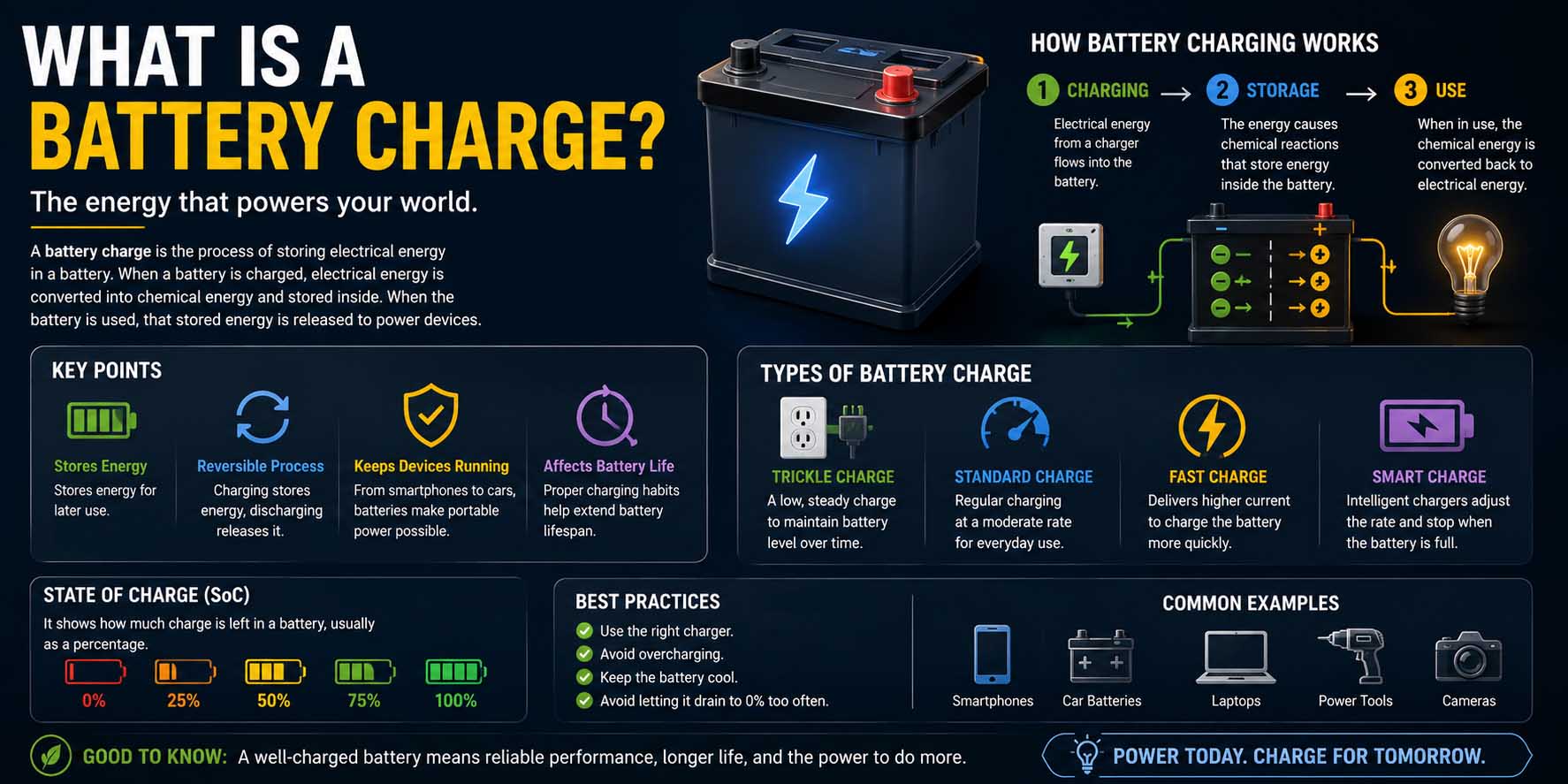
When learning about smartphones, laptops, electric vehicles, or rechargeable electronics, many people ask what is a battery charge. A battery charge can refer to the electrical energy stored in a battery or the process of replenishing that energy so the battery can power a device later.
Battery charging plays an essential role in modern technology. From mobile phones and wireless earbuds to solar systems and electric cars, rechargeable batteries support many everyday applications. Understanding the basics can help you charge devices safely, protect battery performance, and troubleshoot common charging problems.
How Does a Battery Charge Work?
A rechargeable battery stores energy through chemical processes and releases that energy as electrical power when a device operates. During charging, electrical energy from an external power source drives chemical changes inside the battery.
The charger supplies electricity at a suitable voltage and current. A charging circuit controls that electrical flow and helps keep the battery within its designed operating limits. Once charging reaches the appropriate level, the device or charging system reduces or stops the charging current.
To understand how electrical power relates to charging, it can also help to learn how to calculate watts. Wattage describes the rate of electrical power, while voltage and current help determine how that power reaches the battery.
What Is a Simple Battery Charge?
A simple battery charge generally refers to a basic charging process that uses a standard charger without advanced charging features.
These systems are common in older electronics, small tools, and basic rechargeable devices. Depending on the battery chemistry and charger design, the charging system supplies controlled electrical current until the battery reaches its intended charge level.
A basic charging setup usually includes:
- A power source
- A compatible charger
- A rechargeable battery
- A charging control circuit
Although the basic concept is simple, modern charging systems can monitor several conditions to improve efficiency and safety.
Types of Battery Charging Technology
Different devices use different charging methods. The appropriate method depends on the battery chemistry, device design, charger, and charging system.
Standard Battery Charging
Standard charging generally uses lower power than fast-charging systems and takes longer to reach a full charge. However, charging speed alone does not determine battery lifespan. Temperature, charging limits, battery age, and overall usage also affect long-term performance.
Fast Battery Charging
Fast charging increases the power delivered to a compatible device so users can reach a useful charge level more quickly. The device and charger must support compatible charging technology and appropriate power requirements.
Fast charging can also produce more heat. Therefore, modern systems use charging controls and thermal management to keep the battery within safe operating conditions.
Wireless Battery Charging
Wireless charging transfers electrical energy between a charging pad and a compatible device through electromagnetic fields. It removes the need for a physical charging cable at the device.
However, wireless charging can produce additional heat or charge more slowly in some situations. Performance depends on the charger, device, alignment, power level, and charging technology.
The electrical behavior of charging systems can also involve concepts such as impedance. You can learn more in what is impedance.
Smart Battery Charging
Smart charging systems use software and charging controls to manage power delivery based on factors such as battery temperature, charge level, and usage patterns.
For example, a device may slow charging as the battery approaches its upper charge limit. This approach can help manage heat and reduce unnecessary stress on the battery.
Modern battery research also includes alternatives to conventional lithium-ion technology. For example, natrium ionen akku technology is being explored for different energy-storage applications.
How to Charge a Battery Properly
Good charging practices can help you maintain reliable battery performance over time. However, the best approach depends on the specific device and battery chemistry.
Step 1: Use the Correct Battery Charger
Use a charger and cable that meet your device manufacturer’s requirements.
Compatibility matters because charging systems must provide suitable voltage, current, and power. Understanding volts vs amps can also help explain why different chargers do not always charge devices at the same speed.
Step 2: Avoid Extreme Charging Temperatures
Very high or very low temperatures can affect charging performance and battery life. Follow the manufacturer’s recommended operating and charging temperature range whenever possible.
If a device becomes unusually hot while charging, stop charging it and allow it to cool in a safe location.
Step 3: Monitor Battery Charging Conditions
Modern devices manage charging automatically, but users should still pay attention to unusual heat, swelling, unexpected shutdowns, or other signs of battery damage.
Some devices also provide battery-health and charging-limit features. When available, these settings can help users manage long-term battery use.
Step 4: Follow Battery Charging Guidelines
Battery chemistry and charging systems vary. Therefore, avoid applying one charging rule to every battery.
For lithium-ion devices, charging does not require the same approach as older rechargeable battery technologies. Follow the manufacturer’s recommendations for the specific product.
Step 5: Keep Charging Ports Clean
Dust or debris can interfere with electrical connections and cause intermittent or slow charging.
Clean the charging port carefully according to the manufacturer’s instructions. Never force a connector into a damaged or obstructed port.
Common Battery Charging Problems
Charging problems can affect smartphones, laptops, electric vehicles, power tools, and other rechargeable devices. Fortunately, many common issues have simple causes.
Slow Battery Charging
Slow charging may result from a damaged cable, an unsuitable charger, a dirty charging port, excessive device use, high temperature, or an aging battery.
First, check the cable and charger. Then inspect the charging port for visible damage or debris. If the problem continues, check the device manufacturer’s troubleshooting guidance.
Battery Overheating While Charging
A battery or device may become hot because of high charging power, demanding background activity, high environmental temperatures, poor ventilation, a damaged battery, or a faulty accessory.
If the device becomes unusually hot, stop charging it and allow it to cool safely. Continued overheating may indicate a hardware or battery problem that requires professional attention.
Battery Charge Draining Quickly
A battery that loses charge unusually fast may have an aging battery, high background activity, poor network conditions, demanding applications, or other software and hardware issues.
Check battery-usage information to identify applications or features consuming excessive power. If battery capacity has significantly declined, replacement may be necessary.
Battery Charger Not Detected
A device may fail to recognize a charger because of a damaged cable, incompatible accessory, dirty port, software problem, or hardware fault.
Try a compatible charger and cable first. If the device still does not recognize the connection, inspect the port and consult the manufacturer’s support information.
Battery Charge Percentage Stuck
Sometimes the displayed battery percentage does not change because of a software error or inaccurate battery reporting.
Restarting the device and installing available software updates may resolve minor problems. Persistent issues may require battery diagnostics or professional service.
Fast Charging vs. Standard Battery Charging
Fast and standard charging both have practical advantages. The better option depends on how quickly you need power and how your device manages heat and charging limits.
| Feature | Standard Charging | Fast Charging |
|---|---|---|
| Charging speed | Slower | Faster |
| Power delivery | Lower | Higher |
| Heat potential | Generally lower | Can be higher |
| Convenience | Good for routine charging | Useful when time is limited |
| Best use | Longer charging periods | Quick top-ups |
Fast charging can be very useful when you need additional power quickly. However, higher charging power can create more heat, so compatible devices use charging controls to manage the process.
What Is a Battery Core Charge?
A battery core charge has a different meaning from the electrical charging process.
A battery core charge is typically a refundable deposit associated with purchasing certain replacement automotive batteries. The charge encourages customers to return an old battery so the retailer or recycling system can recover it.
For example, the U.S. Environmental Protection Agency explains lead-acid battery collection and recycling, including the role of collection programs and financial incentives in encouraging battery returns.
When the old battery qualifies for the program, the customer can generally receive the applicable deposit back according to the retailer’s terms.
Other Meanings of Battery Charge
The word “battery” can also have a legal meaning. In law, battery generally refers to unlawful or offensive physical contact with another person, although the exact definition and legal consequences vary by jurisdiction.
A domestic battery charge refers to an allegation involving battery within a domestic or family relationship in jurisdictions that use that terminology.
These legal meanings have nothing to do with rechargeable batteries. Therefore, context matters when searching for information about battery charging.
Battery Charge and Long-Term Battery Health
Battery lifespan depends on the battery chemistry, temperature, charging conditions, usage patterns, and age.
Avoid unnecessary exposure to excessive heat, and use compatible chargers and cables. Also, keep the device’s software updated when manufacturers provide battery-management improvements.
For smartphones and laptops, reducing unnecessary background activity and lowering screen brightness can reduce power consumption.
Battery technology continues to evolve as engineers explore new materials and manufacturing methods. Research into areas such as lithium extraction breakthrough us may also affect the future supply and production of battery materials.
If a battery becomes swollen, severely damaged, unusually hot, or physically compromised, stop using it and follow the manufacturer’s safety instructions rather than attempting a repair yourself.
Frequently Asked Questions About Battery Charging
What Is a Battery Charge?
A battery charge can refer to the amount of electrical energy available in a battery or the process of replenishing that energy. In rechargeable batteries, charging uses electrical power to drive chemical changes that allow the battery to store energy.
Can Overcharging Damage a Battery?
Modern rechargeable devices use charging controls to reduce the risk of overcharging. However, excessive heat, damaged batteries, or unsuitable charging equipment can still create safety and performance problems.
Why Is My Battery Charging Slowly?
Slow charging can result from a damaged cable, unsuitable charger, dirty charging port, high temperature, heavy device use, or battery aging.
What Is a Battery Core Charge?
A battery core charge is generally a refundable deposit associated with certain replacement automotive batteries. Customers can receive the deposit back when they return an eligible old battery under the applicable recycling program.
Is Fast Charging Bad for Batteries?
Fast charging is designed to work safely with compatible devices and chargers. However, higher charging power can produce more heat, and heat can affect battery performance over time.
Understanding Battery Charging and Safe Power Use
Understanding what is a battery charge makes it easier to learn how smartphones, laptops, electric vehicles, and other rechargeable devices receive and store electrical energy.
Charging systems range from basic chargers to advanced fast and smart charging technologies. However, the same principles of compatibility, temperature management, and controlled power delivery remain important.
By using compatible charging equipment, avoiding extreme temperatures, and paying attention to unusual charging behavior, users can maintain better battery performance and identify problems earlier.