If your coffee starts tasting bitter, your machine runs slower than usual, or steam pressure drops, it may be time to learn how to descale espresso machine properly. Over time, minerals from water build up inside the internal pipes, boiler, and heating elements. This buildup is called limescale, and it can affect performance, flavor, and the lifespan of your machine.
Descaling is an important part of regular espresso machine maintenance. Whether you own a manual, semi-automatic, or fully automatic model, removing scale helps your machine heat efficiently and brew smooth espresso shots. including helpful tips for popular brands such as Breville and DeLonghi.
Why Descaling Matters
Every time water passes through your espresso machine, tiny mineral deposits can remain behind. Hard water creates scale faster than filtered water. If ignored, buildup may cause:
Slower Brewing
Blocked lines reduce water flow and can make extraction inconsistent.
Lower Temperature
Scale on heating components can prevent proper heat transfer.
Weak Steam Pressure
Milk frothing becomes harder when steam pathways are restricted.
Poor Taste
Mineral buildup may affect the flavor of your espresso.
Regular descaling helps keep your machine running like new.
How Often Should You Descale?
The frequency depends on your water quality and how often you brew coffee.
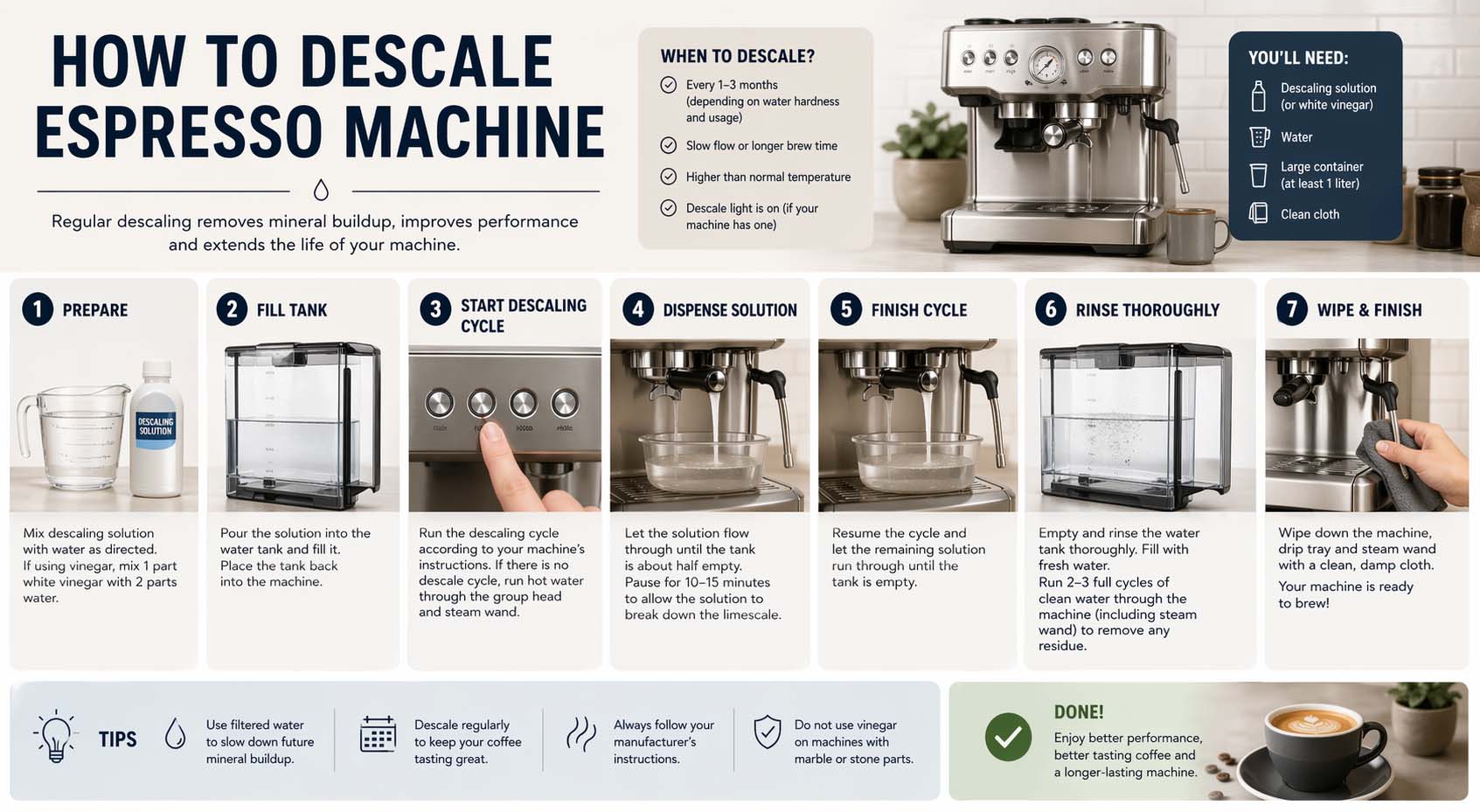
Every 1 to 3 Months
Recommended for homes with hard water or heavy daily use.
Every 3 to 6 Months
Common for moderate users with filtered water.
When Warning Lights Appear
Many modern machines display a descale alert automatically.
If you notice slower operation, it may be time even before the scheduled interval.
What You Need
Before starting, gather these items:
- Espresso machine descaling solution or citric-acid-safe cleaner
- Fresh water
- Large container or bowl
- Clean cloth
- User manual for model-specific steps
Always avoid harsh cleaners or vinegar unless your manufacturer allows it. Some brands specifically recommend official descaling solution.
How to Descale Espresso Machine Step by Step
Most machines follow a similar process.
Step 1: Empty the Machine
Remove coffee grounds, empty the drip tray, and clear the water tank.
Step 2: Mix Descaling Solution
Follow the instructions on your descaler bottle. Usually, it mixes with water in the reservoir.
Step 3: Start the Descale Cycle
Turn on the machine and activate the descale mode if available. If your machine has no special mode, run water through the brew head and steam wand in intervals.
Step 4: Let It Sit
Pause briefly during the process so the solution can dissolve mineral deposits inside the system.
Step 5: Flush the Machine
Empty the tank, rinse it well, then refill with fresh water. Run clean water through the machine several times until no cleaner remains.
Step 6: Clean Exterior Parts
Wipe the body, rinse drip tray parts, and reinstall everything.
Your machine should now brew faster and more efficiently.
How to Descale Breville Espresso Machine
Many users ask how to descale breville espresso machine models because Breville machines are popular for home baristas. Most Breville machines include a cleaning or descale cycle.
Start by filling the water tank with the approved descaling solution and water. Place a large container under the group head and steam wand. Activate descale mode according to your manual. The machine will cycle water through internal pathways. fresh water through the machine at least twice.
Using filtered water can reduce how often your Breville needs descaling.
How to Descale a Breville Espresso Machine
If you are searching how to descale a breville espresso machine, the process is similar across many models such as Barista Express, Bambino, and Oracle. Some machines use button combinations to enter descale mode.
Always check your specific model instructions, since buttons and indicators may differ. Once finished, pull a blank shot with clean water before brewing coffee again.
How to Descale My Breville Espresso Machine
Many owners ask how to descale my breville espresso machine when the clean/descale light appears. That warning usually means mineral buildup has reached a level where maintenance is needed.
Do not ignore the light for too long. Running the descale cycle promptly helps preserve heating performance, steam pressure, and shot quality. If the light remains on afterward, repeat the rinse process or check the manual for reset instructions.
How to Descale Delonghi Espresso Machine
Another common search is how to descale delonghi espresso machine models. DeLonghi machines often have automatic descale programs built in.
Fill the tank with the recommended DeLonghi descaler mixed with water. Place a container under the coffee spouts and steam nozzle. menu prompts. The machine usually runs several rinse and pause stages automatically.
Afterward, refill with clean water and complete the rinse cycle. This helps remove any leftover solution and restores normal brewing.
Tips to Prevent Scale Buildup
Keeping your machine clean reduces future descaling needs.
Use Filtered Water
Filtered or softened water leaves fewer mineral deposits.
Empty Water Tank Daily
Fresh water prevents stagnant taste and buildup.
Wipe Steam Wand After Use
Milk residue and mineral buildup can combine over time.
Follow Maintenance Alerts
If your machine has reminders, act early.
Clean Weekly
Rinse removable parts and keep the machine dry.
Mistakes to Avoid
Using Too Much Cleaner
Always follow product directions.
Skipping the Rinse Cycle
Leftover descaler can ruin coffee flavor.
Ignoring Manufacturer Advice
Some machines need specific products.
Waiting Too Long
Heavy scale is harder to remove and may damage components.
Final Thoughts
Learning how to descale espresso machine equipment is one of the best ways to improve coffee quality and extend machine life. descale breville espresso machine, how to descale delonghi espresso machine, how to descale a breville espresso machine, or how to descale my breville espresso machine, the process is usually simple and worth doing regularly.