People have argued about motor vs engine for decades. Many use the two words as if they mean the same thing, especially when they talk about cars, machines and modern technology. However, while both produce movement, they are not exactly the same.
For this reason, knowing the difference matters for students, car owners, tech fans and anyone curious about how machines work.
This guide explains how each one works, their key differences, where people use them and why the difference still matters today.
What Is an Engine Compared to a Motor?
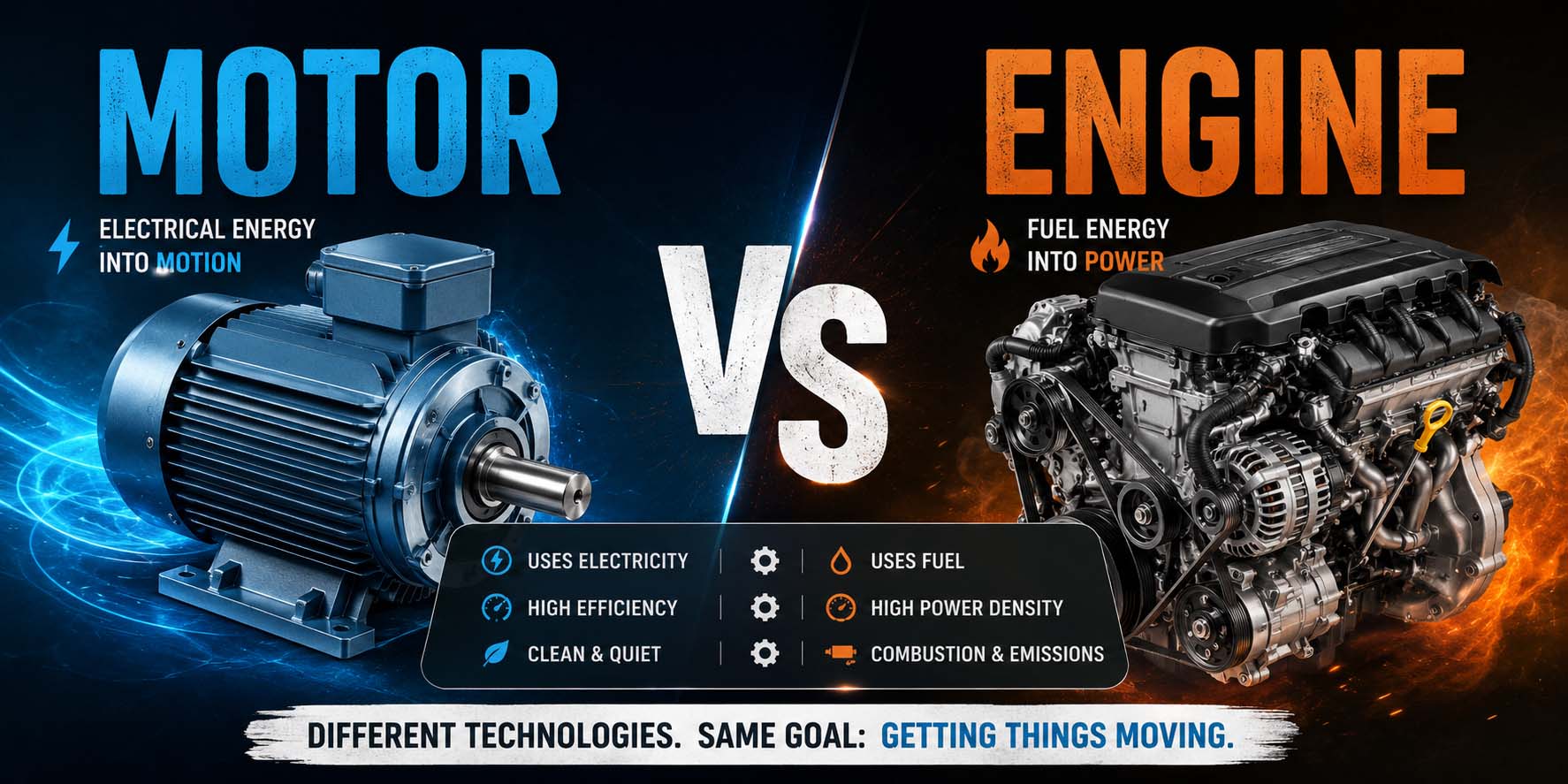
Most engines burn fuel and then turn the released energy into motion. For example, they may run on gasoline, diesel, natural gas or aviation fuel.
You can find engines in cars, motorcycles, aircraft and boats. In short, they usually rely on combustion to make power.
What Is a Motor Compared to an Engine?
Instead of burning fuel, a motor uses electricity to create movement. According to Britannica, an electric motor is any of a class of devices that convert electrical energy to mechanical energy.
For instance, you will find motors in electric vehicles, home appliances, factory machines, fans and robots.
As electric technology keeps improving, motors become more important in many industries.
Motor vs Engine: Quick Comparison Table
| Feature | Motor | Engine |
|---|---|---|
| Energy Source | Electricity | Fuel combustion |
| Emissions | Usually lower | Produces exhaust gases |
| Noise Level | Generally quieter | Typically louder |
| Maintenance | Often lower | Usually higher |
| Efficiency | High efficiency | Varies by design |
| Common Uses | EVs, appliances, robotics | Cars, trucks, aircraft |
| Power Generation | Electrical conversion | Combustion process |
Clearly, this table shows why people often talk about the two technologies separately.
Engine vs Motor: What Is the Main Difference?
The biggest difference in the engine vs motor discussion is the energy source.
Engines Use Fuel
An engine makes power through combustion. Fuel burns inside the system, and the released energy moves pistons or turbines.
Motors Use Electricity
A motor runs on electric current. Then, magnets and electromagnetic fields create a turning motion.
Although both do similar jobs, they produce movement in completely different ways.
Why Are Motor and Engine Often Mixed Up?
Many people swap the words because both create movement. For example, we say “motor vehicle” for a car that actually has an engine.
Over time, everyday language blurred the line between the two words. Even today, some professionals use them loosely, depending on their industry.
Still, from a technical point of view, there is a real difference.
How an Engine Works, Unlike a Motor
To understand the comparison better, it helps to follow the process.
Fuel intake: First, the engine takes in fuel and air.
Combustion: Next, the fuel ignites inside the combustion chamber.
Energy production: Then, this small explosion creates force.
Mechanical movement: After that, the force pushes pistons, crankshafts or turbines.
Power output: Finally, this mechanical energy drives the vehicle or machine.
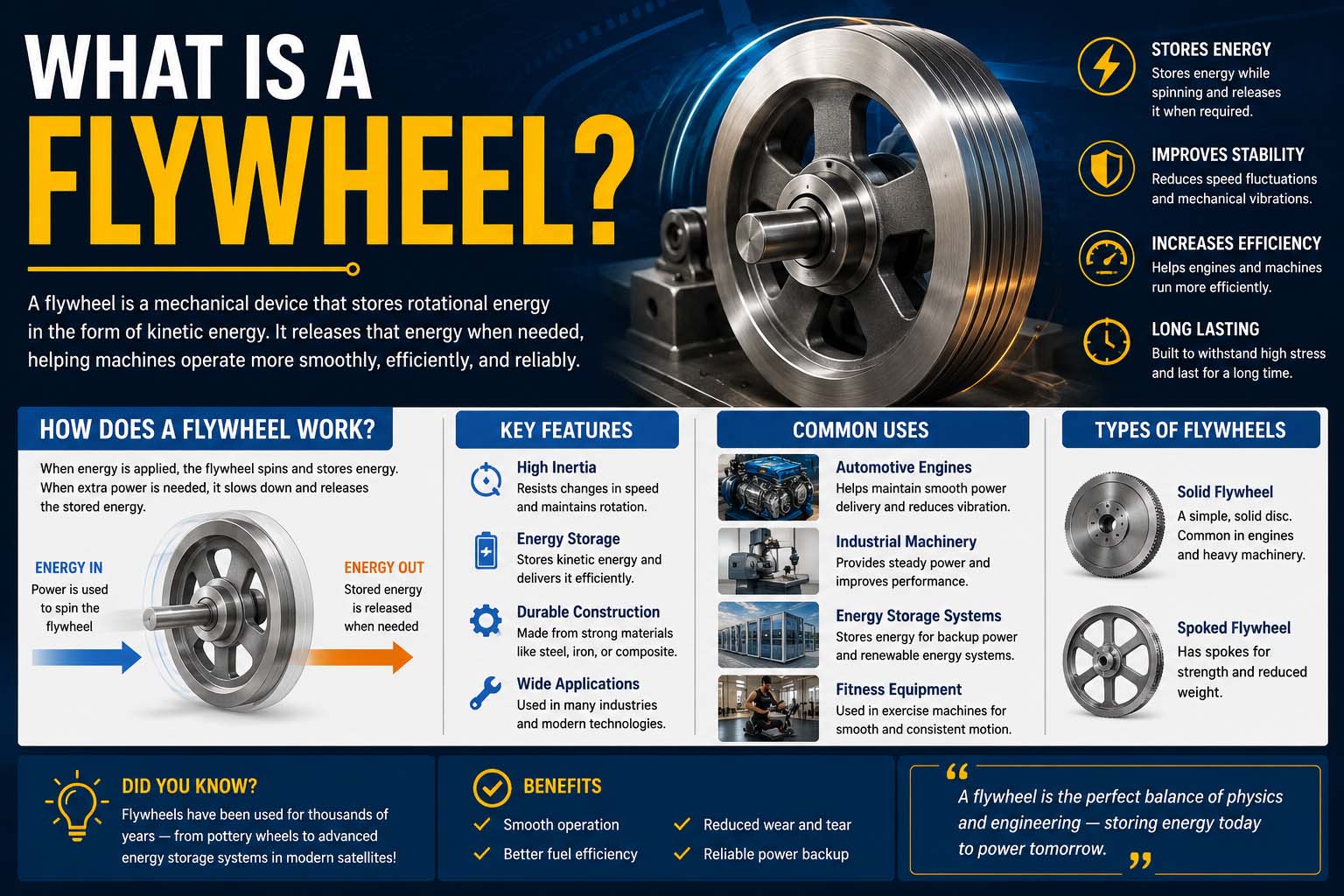
This process sits at the heart of most internal combustion engines. In addition, as our guide What Is a Flywheel explains, these engines use a flywheel to smooth power delivery between combustion cycles.
How a Motor Works Differently From an Engine
Electric motors work in a different way.
Electricity supply: First, electric current flows into the motor.
Magnetic field creation: Next, the current creates electromagnetic forces.
Rotor movement: Then, magnetic pushing and pulling makes the rotor spin.
Mechanical output: Finally, the spinning shaft powers machines or vehicles.
Because no fuel burns, electric motors often waste less energy. Likewise, learning the Brushless Motor Meaning shows why many EVs, drones and factory machines use electronically controlled motors for better efficiency and reliability.
Car Motor vs Engine
One common question involves car motor vs engine wording.
Traditional Gasoline Vehicles
Most conventional vehicles, such as sedans, SUVs and pickup trucks, have engines.
Electric Vehicles
Electric vehicles, on the other hand, use motors instead of combustion engines.
Hybrid Vehicles
Hybrids may contain both an engine and one or more electric motors. As a result, this mix improves efficiency and performance.
Hybrid and electric cars are also great examples of What Is Mechatronics, since they combine mechanical systems with electronics, sensors and smart control software.
As electric vehicles grow more popular, this difference becomes even more important.
Advantages of a Motor Over an Engine
Electric motors offer several benefits.
High efficiency: Motors turn a large share of their energy into useful motion.
Reduced maintenance: Because they have fewer moving parts, they usually need less upkeep.
Quiet operation: They also make much less noise than combustion engines.
Instant torque: Moreover, they deliver full pulling power right away.
Together, these benefits explain why electric vehicles and machines keep growing in popularity.
Advantages of an Engine Over a Motor
Despite the rise of electric technology, engines still offer important strengths.
Established infrastructure: Fuel stations are easy to find almost everywhere.
Long range: In addition, many vehicles can travel far without refueling.
High power output: Large engines also remain vital in heavy industries.
Proven technology: Furthermore, engineers have refined combustion engines over many decades.
Therefore, engines remain a very practical choice for certain jobs.
Engine Oil vs Motor Oil
Another common source of confusion is engine oil vs motor oil.
The good news is that both names usually describe the same product. Engine oil lubricates the moving parts inside an engine, and motor oil does exactly the same job.
In fact, this oil reduces friction, prevents wear, helps with cooling and protects internal parts. Therefore, in most car-related situations, the two terms mean the same thing.
Motor Oil vs Engine Oil: Is There Any Difference?
The question motor oil vs engine oil comes up often online.
Makers and shops often use both names for the same lubricant. Above all, what matters is choosing the oil grade your vehicle maker recommends.
Troubleshooting Common Motor and Engine Problems
Knowing the basic warning signs helps you spot trouble early.
Engine problems: Common signs include rough idling, poor fuel economy, heavy smoke and hard starting.
Motor problems: Similarly, an electric motor may show weaker performance, strange noises, overheating or electrical faults.
In both cases, regular maintenance lowers the chance of major failures.
Future Trends: Motor vs Engine Technology
Technology keeps changing fast, and several trends stand out.
Electric Vehicle Growth
Electric motors keep spreading into more vehicles and machines. Understanding Volts vs Amps also explains how these motors get the voltage and current they need.
Hybrid Systems
Meanwhile, many manufacturers combine engines and motors in one vehicle.
Improved Battery Technology
Better batteries support electric transport. For example, learning What Is a Battery Charge helps explain how battery capacity affects the range and performance of electric vehicles.
Cleaner Engines
Engine makers also keep improving efficiency and cutting emissions.
Overall, both technologies will likely exist side by side for many years.
FAQ
What is the difference between a motor and an engine?
A motor uses electricity to create motion, while an engine usually burns fuel.
Traditional gasoline and diesel vehicles use engines, whereas fully electric vehicles use motors. Hybrid vehicles use both an engine and one or more electric motors.
Why do people say motor when they mean engine?
People have swapped these words in everyday speech for many years.
Is motor oil different from engine oil?
In most car situations, they are basically the same product.
Which is more efficient, a motor or an engine?
Electric motors are usually more efficient, because they turn more of their energy into useful motion. Combustion engines, by contrast, lose more energy as heat.
Will motors replace engines completely?
Not necessarily. Although electric motors keep growing in popularity, engines still play key roles in many industries.
Conclusion
In conclusion, the motor vs engine question is really about how machines create movement. An engine usually makes power by burning fuel, whereas a motor runs on electricity. Besides, engine oil and motor oil are usually the same product. As transport and industry keep changing, both technologies will stay important for years to come.