Electricity powers countless devices we use every day, from smartphones and computers to home appliances and industrial machines. Behind all of these technologies is a fundamental concept known as an electrical .
So, what is a circuit?
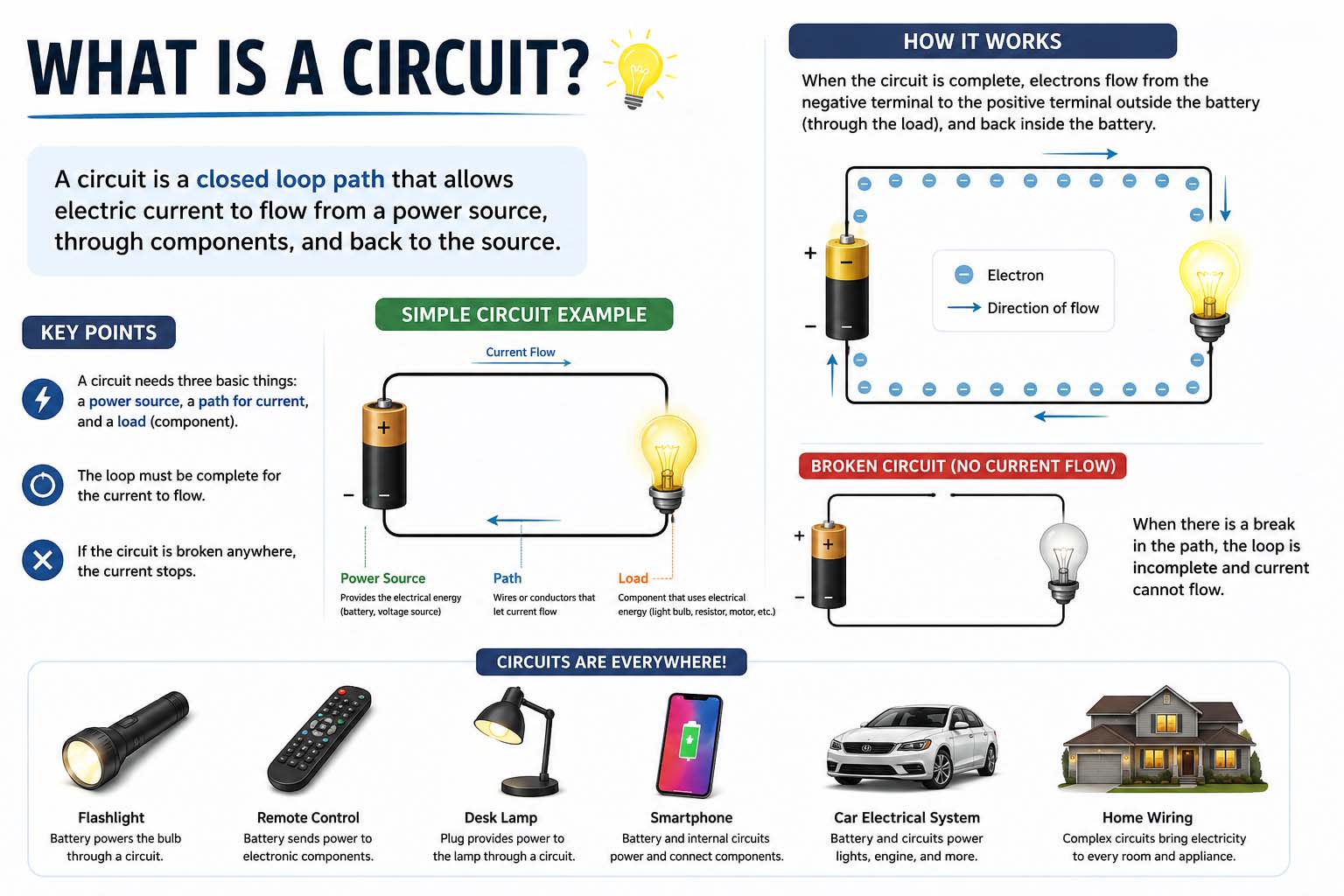
A is a complete path that allows electric current to flow from a power source, through electrical components, and back to the source. Without a complete path, electricity cannot move and devices cannot operate.
Understanding circuits is essential for students, technology enthusiasts, electricians, engineers, and anyone interested in how electrical systems function.
This guide explains what circuits are, how they work, the different types of circuits, common problems, and practical troubleshooting tips.
What Is a Circuit and How Does It Work?
A is a closed loop through which electricity travels.
A basic typically contains:
- Power source
- Conductive wires
- Load or device
- Switch (optional)
The power source provides electrical energy, the wires carry the current, and the load uses that energy to perform a function.
Examples include:
- Turning on a light bulb
- Charging a smartphone
- Running a computer
- Operating a fan
Electric current only flows when the forms a complete path.
Main Components of an Electrical Circuit
Every contains essential components.
Power Source
The source supplies electrical energy.
Examples include:
- Batteries
- Solar panels
- Power outlets
- Generators
Conductors
Conductors carry electricity throughout the .
Copper wire is one of the most common conductors.
Load
A load uses electrical energy.
Examples include:
- Light bulbs
- Motors
- Speakers
- Computers
Switch
Switches control the flow of electricity.
Opening a switch interrupts the , while closing it allows current to flow.
Types of Electrical Circuits
Several designs are used depending on the application.
Open Circuit
An open contains a break in the electrical path.
As a result:
- Current cannot flow
- Devices remain off
Examples include:
- A light switch turned off
- A broken wire
Closed Circuit
A closed provides a complete path.
Current flows normally and powers connected devices.
Short Circuit
We’ll discuss this in more detail later.
What Is a Series Circuit?
One common question is what is a series circuit?
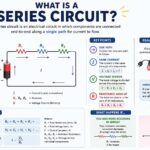
A series connects electrical components in a single path.
Characteristics include:
- One path for current
- Same current through all components
- Simpler design
Example:
A string of older holiday lights often uses a series .
Advantages of Series Circuits
- Easy to design
- Requires less wiring
- Cost-effective for simple applications
Disadvantages of Series Circuits
- Failure of one component can affect the entire
- Voltage is divided among devices
Series circuits are useful for educational demonstrations and basic electronic systems.
What Is a Parallel Circuit?
Another frequently asked question is what is a parallel circuit?
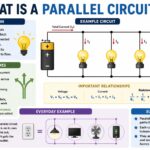
A parallel provides multiple paths for electricity to travel.
Each device operates independently.
Examples include:
- Home electrical systems
- Office lighting
- Modern electronic installations
Advantages of Parallel Circuits
- Devices continue working if one fails
- Consistent voltage across components
- Greater reliability
Disadvantages of Parallel Circuits
- More complex wiring
- Higher installation costs
Most modern buildings use parallel circuits because they provide greater flexibility and safety.
Series Circuit vs Parallel Circuit
The following comparison highlights key differences.
| Feature | Series Circuit | Parallel Circuit |
|---|---|---|
| Current Path | One | Multiple |
| Reliability | Lower | Higher |
| Wiring Complexity | Simple | More Complex |
| Device Independence | No | Yes |
| Common Use | Educational Projects | Homes and Buildings |
Understanding these differences helps explain why engineers choose specific designs for different applications.
What Is a Circuit Breaker?
Many people wonder, what is a circuit breaker?
A breaker is a safety device designed to automatically interrupt electrical flow when dangerous conditions occur.
Its purpose is to protect:
- Electrical equipment
- Wiring systems
- Buildings
- People
breakers commonly respond to:
- Overloads
- Short circuits
- Electrical faults
When a problem occurs, the breaker “trips” and stops electricity from flowing.
After the issue is resolved, the breaker can typically be reset.
What Is a Short Circuit?
A critical electrical problem is what is a short circuit.
A short circuit occurs when electrical current follows an unintended path with very little resistance.
This causes:
- Excessive current flow
- Overheating
- Equipment damage
- Fire risks
Common causes include:
- Damaged wires
- Faulty appliances
- Loose connections
- Moisture exposure
Short circuits are one of the main reasons breakers are installed.
Real-World Examples of Circuits
Circuits exist almost everywhere.
Smartphones
Contain thousands of miniature electronic circuits that manage:
- Processing
- Charging
- Communication
- Display functions
Home Lighting
When you flip a switch, you complete a that powers the light.
Computers
Complex circuits allow processors, memory, storage devices, and displays to communicate.
Vehicles
Modern cars contain numerous circuits controlling:
- Lights
- Sensors
- Navigation systems
- Engine management
Common Circuit Problems
Electrical systems occasionally develop issues.
Loose Connections
Loose wiring can interrupt current flow.
Symptoms include:
- Flickering lights
- Intermittent power
Overloaded Circuits
Possible signs include:
- Warm outlets
- Frequent breaker trips
Damaged Wiring
Aging or damaged wires may create safety hazards.
Short Circuits
These require immediate attention because of potential fire risks.
Basic Circuit Troubleshooting Guide
When electrical problems occur, troubleshooting can help identify the cause.
Step 1: Check Power Sources
Ensure:
- Batteries are charged
- Outlets have power
- Power switches are on
Step 2: Inspect Connections
Look for:
- Loose wires
- Damaged connectors
- Corrosion
Step 3: Examine Circuit Breakers
Check whether a breaker has tripped.
Step 4: Test Components
Faulty loads such as bulbs or motors may prevent operation.
Step 5: Seek Professional Help
For complex or potentially dangerous issues, consult a qualified electrician.
Why Understanding Circuits Matters
Learning about circuits offers many benefits.
Educational Value
Circuits are foundational concepts in:
- Physics
- Electronics
- Engineering
Technology Literacy
Understanding circuits helps people better understand modern devices.
Problem Solving
Basic knowledge can assist with troubleshooting everyday electrical issues.
Career Opportunities
Many technical careers require electrical and knowledge.
FAQ
What is a circuit?
A is a complete path that allows electrical current to flow from a power source through components and back to the source.
What is a series circuit?
A series circuit contains one continuous path through which current flows.
What is a parallel circuit?
A parallel circuit contains multiple paths that allow electricity to flow independently through different components.
What is a circuit breaker?
A circuit breaker is a safety device that automatically stops electrical flow when dangerous conditions occur.
What is a short circuit?
A short occurs when electricity follows an unintended low-resistance path, causing excessive current flow.
Why are circuits important?
Circuits power electronic devices, electrical systems, appliances, vehicles, and countless technologies used daily.
Conclusion
Understanding what is a circuit provides a foundation for learning about electricity, electronics, and modern technology. From simple battery-powered devices to advanced computer systems, circuits make it possible for electrical energy to perform useful work.