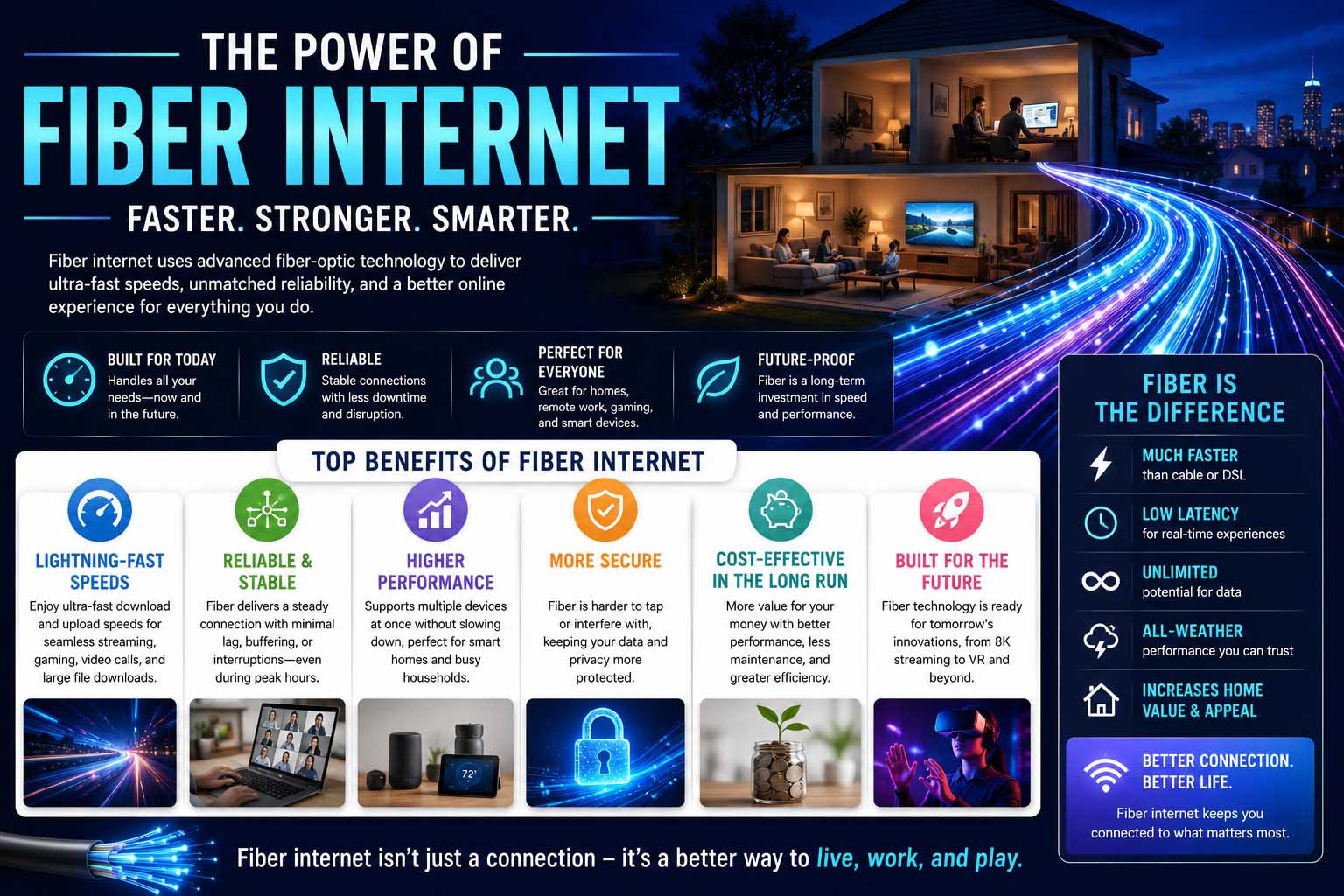
Slow internet can turn simple online tasks into frustrating experiences. Whether you’re working from home, streaming movies, attending video meetings, or gaming online, your connection plays a huge role in daily productivity. That’s why many people are searching for the benefits of fiber internet before deciding whether to upgrade.
Unlike traditional cable or DSL connections, fiber internet uses light signals transmitted through ultra-thin glass or plastic fibers. This technology delivers exceptional speed, stability, and reliability, making it one of the most advanced internet options available today.
If you’re wondering whether fiber internet is worth the switch, this guide explains its biggest advantages, potential drawbacks, and who can benefit the most.
What Is Fiber Internet?
Fiber internet is a broadband connection that transfers data using pulses of light instead of electrical signals. This allows information to travel at incredibly high speeds over long distances with minimal signal loss.
If you’d like a deeper look at the technology behind these networks, our guide on how does fiber optic internet work explains the process from data transmission to home installation.
Compared to older internet technologies, fiber offers much higher bandwidth, allowing multiple devices to stay connected without slowing each other down.
Benefits of Fiber Internet for Everyday Users
The biggest reason people upgrade is performance. However, the advantages go well beyond faster downloads.
Lightning-Fast Download and Upload Speeds
One of the biggest benefits of fiber optic internet is symmetrical speed. Many fiber providers offer upload speeds that are just as fast as download speeds.
That matters because modern internet usage isn’t limited to downloading files. People regularly upload:
- Photos
- Videos
- Cloud backups
- Large work documents
- Livestreams
With fiber, these uploads finish much faster than they typically do on cable or DSL.
Lower Latency for Real-Time Activities
Latency measures how quickly data travels between your device and a server.
Fiber connections usually provide much lower latency, which improves:
- Online gaming
- Video conferencing
- Voice calls
- Remote desktop sessions
- Live streaming
Lower latency creates smoother communication and reduces lag during interactive tasks.
More Reliable Internet Connection
Weather, electrical interference, and aging copper lines can affect traditional internet services.
Fiber optic cables are much more resistant to these issues, resulting in fewer outages and a more consistent connection throughout the day.
This reliability is especially valuable for households with many connected devices.
Benefits of Fiber Internet for Remote Work
Working from home depends heavily on a stable internet connection.
A reliable connection supports:
- Video meetings
- VPN access
- Cloud applications
- File sharing
- Team collaboration
If you’re planning to improve your home office, creating an efficient remote work setup becomes much easier when paired with a dependable fiber connection.
Instead of worrying about dropped calls or slow uploads, employees can focus on getting work done.
Better Streaming and Entertainment
Modern households often stream multiple videos simultaneously.
Fiber internet easily supports:
- 4K streaming
- HDR movies
- Live sports
- Music streaming
- Multiple smart TVs
Even if several family members are online at the same time, fiber’s higher bandwidth helps prevent buffering.
As streaming quality continues to improve, fiber is well-positioned to handle future bandwidth demands.
Ideal for Content Creators
Creators regularly upload massive files to cloud storage, YouTube, or editing platforms.
Large video projects that once took hours to upload may finish in minutes on a fast fiber connection.
If you’re producing online content, improving your video editing tips can save time during production, while fiber internet helps speed up collaboration, cloud rendering, and file transfers.
Faster Cloud Backup and File Syncing
Cloud storage has become part of everyday computing.
People back up:
- Family photos
- Work files
- Smartphones
- Documents
- Entire computers
Because fiber offers high upload speeds, backups complete much more quickly.
If protecting your memories is a priority, exploring the best photo backup solutions alongside a fiber connection makes cloud syncing faster and more reliable.
Benefits of Switching to Fiber Internet
Many households wonder whether upgrading is worth the cost.
The benefits of switching to fiber internet often include noticeable improvements from the first day:
| Feature | Fiber Internet | Cable Internet | DSL |
|---|---|---|---|
| Download speed | Excellent | Good | Limited |
| Upload speed | Excellent | Moderate | Slow |
| Latency | Very low | Moderate | Higher |
| Reliability | Excellent | Good | Fair |
| Future scalability | Excellent | Moderate | Limited |
While actual speeds depend on your provider and plan, fiber generally offers the best overall experience.
Supports More Connected Devices
Today’s homes contain dozens of internet-connected devices, including:
- Smartphones
- Tablets
- Laptops
- Smart TVs
- Security cameras
- Smart speakers
- Gaming consoles
- Smart thermostats
Fiber connections can comfortably handle many devices operating simultaneously without noticeable slowdowns.
This makes fiber an excellent long-term choice for growing families.
Benefits of Static IP Address in Fiber Internet
Many fiber providers also offer optional static IP addresses for business or advanced home users.
Some benefits of static IP address in fiber internet include:
- Easier remote access
- Reliable VPN hosting
- Stable web server hosting
- Better support for network-attached storage (NAS)
- Improved management of business applications
While most home users don’t need a static IP, businesses and IT professionals often find it valuable.
Enhanced Online Gaming Experience
Gamers care about more than download speed.
Fiber helps improve gaming through:
- Lower ping
- Reduced lag spikes
- Faster game downloads
- Faster updates
- More stable multiplayer sessions
Large game updates that previously required hours may download much faster on fiber connections.
Better Performance for Smart Homes
Modern smart homes rely on continuous internet access.
Fiber supports connected devices such as:
- Video doorbells
- Smart locks
- Security cameras
- Voice assistants
- Smart lighting
- Home automation hubs
Since many of these devices constantly exchange data, a reliable internet connection improves responsiveness.
Environmental Benefits of Fiber Optic Internet
The environmental benefits of fiber optic internet are becoming more relevant as internet infrastructure expands.
Compared with traditional copper-based systems, fiber networks can:
- Use less energy to transmit data
- Require fewer signal repeaters
- Last longer before replacement
- Reduce maintenance requirements
Because fiber infrastructure is durable and efficient, it may contribute to lower long-term energy consumption for network operators.
Is Fiber Internet Secure?
No internet connection is completely immune to cyber threats, but fiber offers several advantages.
Because fiber transmits light rather than electrical signals, intercepting the data is generally more difficult than tapping traditional copper cables.
Even so, users should still:
- Enable strong Wi-Fi encryption
- Use unique passwords
- Keep routers updated
- Turn on multi-factor authentication
- Install software updates regularly
Security always depends on both the network and user practices.
Things to Consider Before Upgrading
Fiber isn’t perfect for every situation.
Before switching, consider:
- Availability in your neighborhood
- Installation costs
- Monthly pricing
- Contract requirements
- Equipment compatibility
In some rural areas, fiber service may still be unavailable, although expansion continues worldwide.
Is Fiber Internet Worth It?
For many users, the answer is yes.
Fiber delivers measurable improvements for:
- Remote workers
- Students
- Gamers
- Streamers
- Content creators
- Families with many devices
- Small businesses
Even casual internet users often appreciate the increased reliability and faster response times.
As cloud computing, AI tools, smart homes, and ultra-high-definition streaming continue to grow, fiber infrastructure is well-equipped to meet future internet demands.
Frequently Asked Questions
Is fiber internet faster than cable?
Yes. Fiber generally provides higher download speeds, significantly faster upload speeds, and lower latency than cable internet.
Does weather affect fiber internet?
Fiber cables are less susceptible to electrical interference than copper cables. Severe physical damage can still disrupt service, but normal weather typically has less impact.
Can I use my existing Wi-Fi router?
Sometimes. Older routers may not support gigabit speeds, so upgrading your router may be necessary to take full advantage of a fiber connection.
Is fiber internet good for gaming?
Yes. Low latency, fast downloads, and stable connections make fiber one of the best internet options for online gaming.
Does fiber internet increase home value?
While it doesn’t directly increase property value in every market, homes with access to high-speed fiber internet are often more attractive to buyers and renters.
Final Thoughts
The benefits of fiber internet extend far beyond raw speed. Faster uploads, lower latency, dependable performance, improved support for cloud services, and the ability to handle many connected devices make fiber an excellent long-term investment for both homes and businesses.
As more people work remotely, rely on cloud storage, stream high-quality media, and connect smart devices throughout the home, fiber internet continues to stand out as one of the most capable broadband technologies available. If fiber service is available in your area, upgrading can provide a smoother, more reliable online experience today while preparing your network for the demands of tomorrow.