Choosing the right plumbing material can make a big difference in how well and how long your water system works. So one of the most common questions homeowners and contractors ask is about the difference between PEX A and PEX B. Both are cross-linked polyethylene pipes for hot and cold water. However, they differ in how makers produce them, how flexible they are and which fittings they use.
Maybe you are remodeling a home, adding radiant floor heating or replacing old plumbing. In any of these cases, knowing these differences will help you pick the right material for your project.
What Is PEX Pipe?
PEX stands for cross-linked polyethylene, a flexible plastic tubing that plumbers use widely in homes and commercial buildings.
Unlike rigid copper or PVC piping, this tubing bends around corners, resists corrosion and usually needs fewer fittings. As a result, installation goes faster, and the system has fewer possible leak points.
People commonly use it for drinking water lines and for hot and cold water distribution. It also works well for radiant floor heating, snow-melting systems and home plumbing renovations.
PEX-A and PEX-B do many of the same jobs. However, makers use different production methods for each one, and that changes their properties.
Difference Between PEX A and PEX B at a Glance
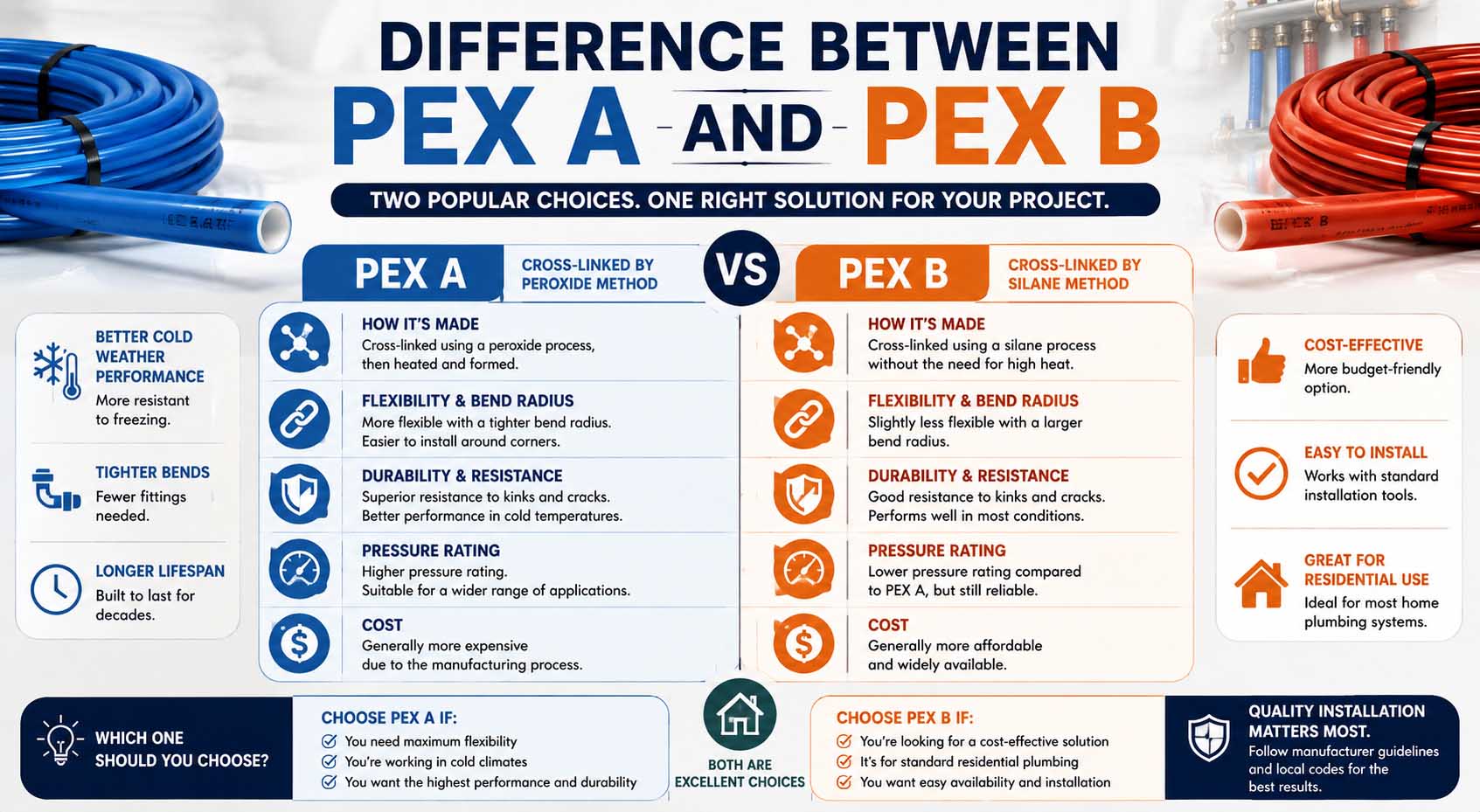
If you are asking, what is the difference between PEX A and PEX B, here is a quick overview.
| Feature | PEX-A | PEX-B |
|---|---|---|
| Manufacturing Method | Engel process | Silane process |
| Flexibility | Excellent | Good |
| Kink Resistance | Higher | Lower |
| Kink Repair | Often repairable with heat | Usually requires replacement |
| Expansion Fittings | Yes | Generally no |
| Crimp or Clamp Fittings | Yes | Yes |
| Typical Cost | Higher | Lower |
| Burst Resistance | Excellent | Very good |
Both products meet plumbing standards when you install them correctly. Still, each one has strengths that make it better for certain jobs.
How PEX-A and PEX-B Are Manufactured
The main difference between PEX A and B begins during production.
PEX-A Manufacturing
Makers produce PEX-A with the Engel method, which cross-links the polyethylene while the pipe takes shape. This method creates a very flexible pipe with a high degree of cross-linking.
As a result, PEX-A bends easily and handles expansion well. It also resists kinking better and works well with expansion-style fittings. For these reasons, many plumbers like it for complex layouts.
PEX-B Manufacturing
Makers produce with the silane method, where cross-linking happens after the pipe takes its shape.
Although it is slightly less flexible, it still offers excellent durability and long-term performance. Therefore, many plumbers choose it because it gives reliable results at a lower material cost.
Flexibility: One of the Biggest Differences
Flexibility is often the first feature installers notice. PEX-A bends more easily around framing, corners and obstacles. As a result, it can cut the number of fittings, save installation time and reduce possible leak points.
PEX-B also stays flexible compared to copper or CPVC. However, it usually needs a wider bend radius. So for projects with many tight turns, PEX-A often gives a smoother installation.
Fitting Systems and Installation
The fitting method is another major factor when you compare what’s the difference between PEX A and PEX B.
PEX-A Expansion Fittings
PEX-A commonly uses cold expansion fittings. First, the installer stretches the pipe with a special expansion tool. Then, the installer slides in the fitting.
As the tubing shrinks back, it forms a tight seal around the fitting. Because of this, you get strong connections, a full inside pipe diameter and excellent water flow. For this reason, this system has become especially popular in high-end home plumbing.
PEX-B Crimp and Clamp Fittings
Most installers connect with copper crimp rings or stainless steel clamp rings. These systems are simple and usually need cheaper tools. Consequently, many professional plumbers and DIY homeowners like their simplicity.
Also, if you are learning about plumbing distribution, understanding what is a manifold explains why these setups often use central distribution points instead of traditional branch layouts.
Pressure and Temperature Performance
PEX-A and PEX-B both carry hot and cold drinking water. When you follow the maker’s instructions, both meet industry standards for home plumbing, commercial plumbing, hydronic heating and radiant floors.
In fact, the ASTM F876 standard for cross-linked polyethylene tubing sets test requirements such as burst pressure and degree of cross-linking. So you should not pick either product only by its pressure rating, since both perform well under normal conditions.
Instead, flexibility, fitting choice and installation style usually matter more in the final decision.
Advantages of PEX-A
PEX-A offers several features that make it attractive for professional installations.
Excellent Flexibility
Its flexibility lets installers run longer sections with fewer connections. As a result, fewer fittings often make the job simpler.
Better Freeze Resistance
No plumbing material is completely freeze-proof. However, PEX-A usually handles the expansion of freezing water better than many rigid pipes. Therefore, it can reduce damage in places where freezing temperatures happen now and then.
Heat Repair for Minor Kinks
You can often fix small kinks in PEX-A by carefully applying heat, following the maker’s advice. This works because the material’s memory lets it return close to its original shape. Indeed, this repair ability is one reason many installers prefer PEX-A for complex projects.
Advantages of PEX-B
PEX-B remains one of the most widely used plumbing materials for several reasons.
Lower Material Cost
PEX-B usually costs less than PEX-A. So on large plumbing systems, these savings can add up quickly.
Reliable Long-Term Performance
Although it is less flexible, PEX-B has earned a strong reputation for durability in home plumbing. In fact, many installers have used it successfully for decades.
Simple Installation Tools
Crimp and clamp tools are easy to find and fairly easy to learn. As a result, homeowners doing plumbing upgrades can save on both equipment and effort.
Potential Drawbacks
Every plumbing material has trade-offs.
PEX-A
PEX-A has a higher purchase price, and expansion tools cost more. In addition, some users find the installation process slightly longer.
PEX-B
PEX-B is less flexible and harder to repair if it kinks. It may also need more fittings on complicated layouts.
Overall, understanding these trade-offs helps homeowners choose the option that best fits their project and budget.
Best Applications for PEX-A and PEX-B
Both types perform well in modern plumbing systems. However, each one suits certain situations better.
When PEX-A Is the Better Choice
Many installers prefer PEX-A for complex layouts with many bends and for radiant floor heating. It also suits new custom homes, cold climates where freezing is a concern and jobs that use expansion fittings.
Moreover, its flexibility lets installers run longer sections of pipe with fewer joints, which can simplify the whole job.
When PEX-B Makes More Sense
PEX-B is a practical choice for budget projects and standard home water supply systems. It also works well for straight pipe runs, simple remodels and DIY jobs with crimp or clamp fittings.
For this reason, many homeowners find PEX-B an excellent option that still delivers dependable performance at a lower cost.
Cost Comparison
Price is often a deciding factor when you choose between these materials. Although costs vary by brand and location, the general comparison looks like this:
| Factor | PEX-A | PEX-B |
|---|---|---|
| Pipe Cost | Higher | Lower |
| Installation Tools | More expensive | Less expensive |
| Fittings | Expansion fittings | Crimp or clamp fittings |
| Overall Project Cost | Usually higher | Usually lower |
PEX-B often lowers upfront costs. On the other hand, labor savings from PEX-A’s flexibility may offset some of the price gap on larger or more complicated projects.
Which One Lasts Longer?
Many homeowners ask whether one type lasts longer than the other. In reality, both PEX-A and PEX-B can give decades of reliable service when they come from reputable brands and follow plumbing codes.
Their lifespan depends more on proper installation, water quality and water pressure. Operating temperature and sunlight exposure before installation also play a part.
Therefore, never store either product outdoors for long periods, because strong ultraviolet (UV) light can damage this tubing.
Common Installation Mistakes
Even high-quality materials can fail if someone installs them the wrong way. So watch out for these common mistakes.
Using the Wrong Fittings
PEX-A expansion fittings and PEX-B crimp fittings suit different installation methods. Therefore, always use fittings that the pipe maker approves and that match your installation system.
Bending the Pipe Too Sharply
Although the tubing is flexible, every maker lists a minimum bend radius. If you ignore it, the pipe may kink or suffer stress.
Leaving Pipe Exposed to Sunlight
This plastic pipe cannot handle long-term UV exposure. So store it indoors whenever possible and install it soon after you buy it.
Skipping Pressure Testing
Before you cover walls or floors, pressure-test the plumbing system according to local plumbing rules. That way, you can find leaks before you finish construction.
Choosing the Right PEX for Your Project
If you are still wondering whats the difference between PEX A and PEX B, the answer often depends on your priorities. In other words, neither product is better in every case.
First, ask yourself how much flexibility matters and whether the project has many tight corners. Next, think about your budget and which fitting system you feel comfortable using. Finally, decide whether a professional plumber will do the work or whether it is a DIY project. Your answers will usually point you toward the better option.
PEX in Modern Construction
PEX has become one of the most popular plumbing materials in homes and commercial buildings. Across many types of construction, builders choose it because it installs faster, resists corrosion and needs less maintenance than many traditional pipes.
As plumbing technology keeps improving, this pipe remains a top choice for both new construction and renovation projects.
PEX and Home Heating Systems
Many installers also use PEX tubing for hydronic heating. For example, radiant floor systems pump warm water through the tubing under the floor. As a result, the home gets even, energy-efficient heat.
Because of its flexibility and heat resistance, it works well in these systems. Also, if you are interested in home heating, learning how does a furnace work shows how heating equipment and distribution systems keep your home comfortable.
Frequently Asked Questions
What is the difference between PEX A and PEX B?
The main difference is how makers produce them. PEX-A uses the Engel process, so it is more flexible and works with expansion fittings. PEX-B, on the other hand, uses the silane process and usually connects with crimp or clamp fittings.
Which is more flexible?
PEX-A is noticeably more flexible than PEX-B. As a result, it is easier to route around obstacles and needs fewer fittings.
Is PEX-B lower quality?
No. PEX-B meets plumbing standards and performs very well in home and commercial plumbing systems. Instead, it simply has different features and installation methods.
Can I mix PEX-A and PEX-B?
In some cases, you can join different types of tubing with approved transition fittings. However, always follow the maker’s instructions and local plumbing codes before you combine materials.
Which is better for DIY projects?
Many homeowners choose PEX-B because crimp and clamp tools usually cost less and are easier to learn. Still, experienced DIY installers also use PEX-A with expansion tools successfully.
Which type is better for radiant floor heating?
Both types work for radiant heating systems. However, many installers prefer PEX-A because it is flexible and easy to fit in complex layouts.
Making the Right Choice
The difference between PEX A and PEX B is not about one material winning in every situation. Instead, each one offers clear advantages depending on what the project needs.
PEX-A stands out for its flexibility, strong kink resistance and expansion fittings. Therefore, it is a strong choice for complex layouts and radiant heating. PEX-B, on the other hand, gives reliable performance at a lower cost. So it suits standard home plumbing where simple installation matters most.
Before you buy, think about your budget, installation method, plumbing layout and long-term goals. In the end, choosing the right pipe at the start can simplify installation, improve reliability and keep your plumbing working well for years.