If you have ever wondered how does a furnace work, you are not alone. A furnace is one of the most important parts of a home heating system. However, many people only notice it when the weather turns cold or something goes wrong. So learning how it operates can help you use it better, spot problems early and talk clearly with HVAC technicians.
There are several types of furnaces. Still, most home systems follow the same basic process. First, they create heat. Then, they pass that heat to the air and send the warm air through the house using a network of ducts.
What Is a Furnace and How Does It Work?
A furnace is a heating appliance that warms indoor spaces. It produces heat and moves warm air through ductwork.
Depending on the model, it may run on natural gas, propane, electricity or heating oil. However, gas furnaces are the most common choice in many homes, because they heat reliably and run efficiently.
A furnace is often part of a complete HVAC (heating, ventilation and air conditioning) system. During cold months it provides heat, while the cooling system takes over in warm weather. Also, learning how does an air conditioner work shows how both systems share the same ductwork to keep your home comfortable all year.
How Does a Furnace Work?
The answer to how does a furnace work is surprisingly simple. The furnace repeats the same cycle whenever your home’s temperature drops below the thermostat setting.
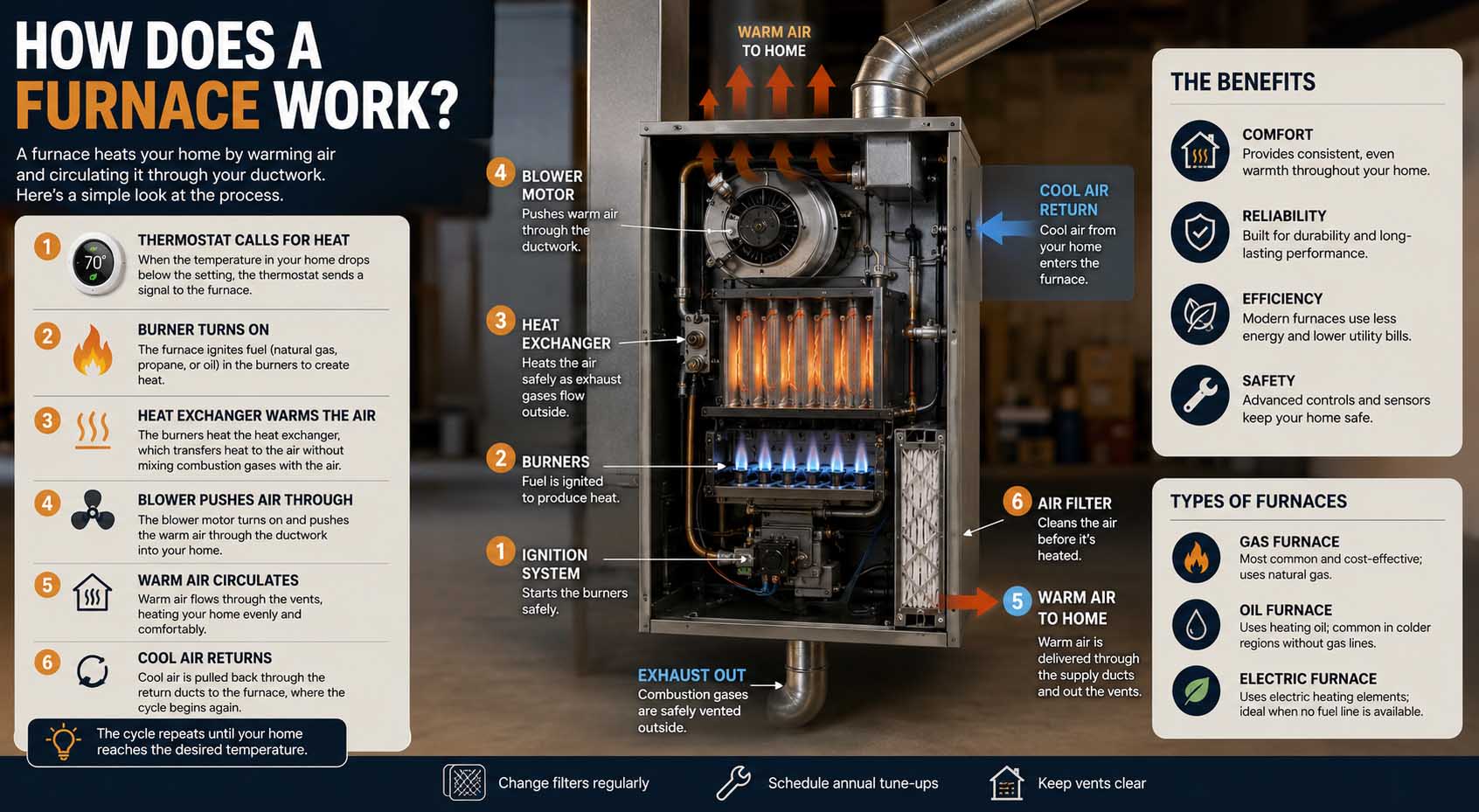
First, the thermostat senses the drop and signals the furnace to start. Next, fuel or electricity creates heat, and a heat exchanger warms the incoming air. Then, the warm air flows into each room through supply vents. Meanwhile, cooler indoor air returns through return vents.
The cycle keeps repeating until the room reaches the set temperature. Finally, the thermostat switches the heat off until your home needs more warmth.
According to the U.S. Department of Energy’s guide to furnaces and boilers, furnaces heat air and distribute it through the house using ducts. In addition, the guide explains AFUE, the rating that shows how much fuel a furnace turns into useful heat over a year.
Main Parts That Make a Furnace Work
Knowing each part makes it easier to see how the whole system works together.
Thermostat: The thermostat acts as the control center. It checks the indoor temperature all the time and tells the furnace when to start or stop. Moreover, smart thermostats can save energy by adjusting the temperature automatically during the day.
Burners: In a gas furnace, the burners mix gas with air and light the fuel safely. As a result, they produce the heat the whole system needs. Electric furnaces, however, use heating elements instead of burners.
Heat exchanger: This is one of the most important safety parts. It moves heat from the burners to the air while it keeps combustion gases away from your household air. Therefore, a qualified technician should always inspect a damaged heat exchanger, because it can create serious safety risks.
Blower motor: Once the air is warm, the blower motor pushes it through the home’s ducts. It also keeps the air moving until the thermostat reaches the set temperature.
Air filter: Before air enters the furnace, it passes through a filter that traps dust, pet hair, pollen, lint and other particles. So changing the filter regularly improves airflow and helps the furnace run more efficiently.
How Does a Furnace Work Step by Step?
Let’s look at the full heating cycle in more detail.
Step 1, the thermostat calls for heat: Everything begins with the thermostat. When the room temperature falls below your setting, it sends an electrical signal to the furnace.
Step 2, the ignition starts: Modern gas furnaces usually have electronic ignition instead of a standing pilot light. Then, the ignition safely lights the burners after it receives the thermostat’s signal.
Step 3, fuel makes heat: The burners create heat inside the combustion chamber. However, the flames never touch the air you breathe. Instead, they heat the metal walls of the heat exchanger.
Step 4, the heat exchanger warms the air: Cool air from your return ducts flows around the outside of the heat exchanger. As it passes over the hot metal, it soaks up heat.
Many gas furnaces also include safety devices that watch the burner flame. For example, learning how does a thermocouple work shows how some heating systems detect flames and stay safe.
Step 5, the blower moves warm air: After the air heats up, the blower motor pushes it through the ductwork and into each room. At the same time, return vents pull cooler air back toward the furnace, so the air keeps circulating.
Step 6, the furnace shuts off: When the thermostat senses the target temperature, it tells the burners to shut off. However, the blower usually runs a little longer to push out the last of the warm air.
How Does a Gas Furnace Work?
Many homeowners ask how does a gas furnace work, because it is the most common type in homes. It burns natural gas or propane inside a sealed combustion chamber.
First, it gets a heating request from the thermostat and opens the gas valve. Next, it lights the burners and heats the heat exchanger. Then, it sends warm air through the home while it vents combustion gases safely outside.
Because combustion gases never mix with indoor air, a well-maintained gas furnace heats your home safely and efficiently.
Why Airflow Helps a Furnace Work Well
Making heat is only part of the job. In fact, a furnace also depends on good airflow.
Poor airflow can lower efficiency and wear out important parts faster. For example, dirty filters, blocked vents, closed registers, damaged ducts or a failing blower motor can all restrict airflow.
On the other hand, good airflow keeps temperatures even across the home and reduces strain on the HVAC system.
Understanding Temperature Difference
HVAC technicians often measure the temperature rise between the return air going into the furnace and the warm air coming out.
This measurement is commonly called what is delta t. It helps technicians check whether a furnace runs within the maker’s recommended range. Therefore, an unusually high or low reading can point to airflow problems or other issues.
Gas Furnace vs Electric Furnace
| Feature | Gas Furnace | Electric Furnace |
|---|---|---|
| Heat Source | Natural gas or propane | Electric heating elements |
| Heating Speed | Fast | Moderate |
| Installation Cost | Usually higher | Usually lower |
| Operating Cost | Often lower where natural gas is available | Depends on electricity rates |
| Maintenance | Requires burner and vent inspections | Generally simpler |
| Venting Required | Yes | No |
Both systems heat reliably. However, the best choice depends on local energy prices, your climate and the utility connections your home already has.
Benefits of Modern Furnaces
Today’s furnaces are far more efficient than older models. For instance, many now include variable-speed blowers, electronic ignition and high-efficiency heat exchangers.
They also work with smart thermostats, offer better safety controls and carry higher efficiency ratings. As a result, homeowners can use less energy while they enjoy steadier indoor comfort.
How Does a 2 Stage Furnace Work?
If you are comparing heating systems, you may also wonder how does a 2 stage furnace work.
A single-stage furnace runs at full power every time it turns on. A two-stage furnace, however, has two heat levels. It uses the low stage in mild weather or when the home needs only a little heat. Then, it switches to the high stage on colder days when the home needs more warmth.
Most of the time, the furnace runs on the low setting, because it uses less energy and keeps the temperature steadier.
As a result, a two-stage furnace offers better efficiency, more even temperatures and quieter operation. It also reduces wear on parts and improves comfort during long heating cycles.
Because the system does not keep jumping between full power and off, temperature swings are often much smaller.
How Does a Two Stage Furnace Work in Everyday Use?
The phrase how does a two stage furnace work refers to the same technology described above. Here is a simple example.
Imagine your thermostat is set to 70°F (21°C). On a cool autumn day, the furnace may need only its low stage to hold that temperature. During a freezing winter night, however, the thermostat may call for the high stage to warm the home faster.
After the home reaches the target temperature, the system usually drops back to low or shuts off until it needs to heat again. Therefore, this flexible operation improves comfort while it cuts unnecessary fuel use.
How Does a Vacuum Furnace Work?
A vacuum furnace works very differently from the furnaces in homes. Instead of heating indoor air, it is an industrial machine for special manufacturing jobs.
It heats materials inside a sealed chamber after pumps remove most of the air. As a result, this controlled space helps prevent oxidation, contamination, unwanted chemical reactions and surface discoloration.
For this reason, aerospace, automotive, medical device, tool-making and metal heat-treating industries often use vacuum furnaces.
Although they share the word “furnace,” home furnaces and vacuum furnaces serve completely different purposes.
Common Furnace Problems
Even well-maintained furnaces sometimes develop problems. So knowing the common issues helps you tell when basic maintenance will fix things and when you should call an HVAC technician.
Dirty air filter: A clogged filter is one of the most common causes of poor furnace performance. For example, you may notice weak airflow, higher energy bills, uneven heating or longer heating cycles. Therefore, replace the filter every one to three months, depending on use and the maker’s advice.
Thermostat problems: Sometimes the furnace itself is not the issue. Instead, wrong settings, dead batteries or faulty wiring can stop the heating cycle from starting. So always check the thermostat before you assume the furnace has failed.
Ignition failure: Gas furnaces use an ignition system to light the burners. If it malfunctions, the furnace may try to start several times and then shut down as a safety step.
Blocked air vents: Furniture, rugs or other objects over supply or return vents can cut airflow through the house. Therefore, keep vents open so warm air can circulate freely.
Why Won’t My Furnace Work or Start?
If your furnace will not turn on, check these items before you book a repair.
Check the thermostat: First, make sure it is set to Heat and that its batteries work, if it uses them.
Inspect the air filter: Next, look at the filter, because a badly clogged one can block enough air to trigger a safety shutdown.
Check the power supply: Like many home appliances, furnaces need electricity to run their controls and blower motor. So if the system has no power at all, you may need to learn why does a breaker trip, since an overloaded or faulty circuit can stop the furnace.
Check the gas valve: Finally, if you have a gas furnace, make sure the gas supply valve is fully open. However, do not try to relight the furnace yourself.
Routine Maintenance Tips
Regular maintenance helps your furnace run efficiently and last longer. For example, replace air filters regularly, keep vents clear and book a professional inspection every year.
In addition, clean the dust around the furnace, listen for unusual noises and watch how well it heats during the season. After all, a small issue is often much easier and cheaper to fix before it becomes a major repair.
Does Furnace Size Matter?
Yes. An oversized furnace may heat the home too quickly, so it keeps switching on and off. On the other hand, an undersized furnace may struggle to keep you warm in very cold weather.
For this reason, HVAC contractors calculate the right size based on home size, insulation, climate, window area, ceiling height and air leaks. As a result, proper sizing improves both comfort and energy efficiency.
Understanding Furnace Energy Use
Many homeowners want to know how much electricity their heating system uses. After all, the blower motor and electronic controls draw power even in gas furnaces.
So if you are comparing running costs or backup power needs, knowing how to calculate watts can help you understand how much power your furnace parts need.
Frequently Asked Questions
How does a furnace work to heat a house?
A furnace makes heat with fuel or electricity. Then it warms air through a heat exchanger or heating elements and uses a blower fan to send that air through the ducts.
Does every furnace use gas?
No. Some furnaces run on electricity, propane or heating oil. However, the most common home models use natural gas.
How long does a furnace usually last?
With proper maintenance, many furnaces last 15 to 20 years. In addition, regular servicing and timely filter changes can help them last longer.
Why does my furnace keep turning on and off?
This problem, called short cycling, may come from a dirty filter, thermostat issues, poor airflow or the wrong furnace size. Therefore, an HVAC technician should check it if it keeps happening.
Is a two-stage furnace worth it?
For many homeowners, yes. Two-stage furnaces often give better comfort, quieter operation and higher efficiency than single-stage models, especially in places with long winters.
Key Takeaways: How Does a Furnace Work?
Understanding how does a furnace work makes it easier to keep your heating system running well and to notice when something is wrong. Whether you have a gas furnace, a two-stage model or you are simply curious about industrial vacuum furnaces, the basic idea stays the same: make heat safely and send it where you need it.
Finally, simple habits like changing filters, keeping vents clear and booking yearly inspections can improve performance and prevent costly repairs. As a result, you will be better prepared to keep your home comfortable and make smart choices when it is time to repair or replace your system.