Construction shapes the world around us. From family homes and office towers to highways and bridges, every project begins with choosing the right types of construction. In addition, each construction method has its own purpose, materials, safety requirements, and engineering techniques.
Whether you’re a student, homeowner, or someone curious about how people create buildings, understanding construction categories makes it easier to appreciate the planning behind modern infrastructure. For this reason, this guide explains the most common construction types, where they’re used, and the equipment and materials that make them possible.
What Are Types of Construction?
The term types of construction refers to the different methods, structural systems, and building classifications used to create residential, commercial, industrial, and infrastructure projects. In simple terms, Britannica describes construction as the techniques and industry involved in the assembly and erection of structures.
Construction professionals select a building method based on several factors. First, they look at the purpose of the structure, the budget, and the local climate. Next, they check building codes, the expected lifespan, and the level of fire resistance needed. Finally, they consider material availability and environmental conditions.
As a result, no single construction method is suitable for every project.
Main Types of Construction
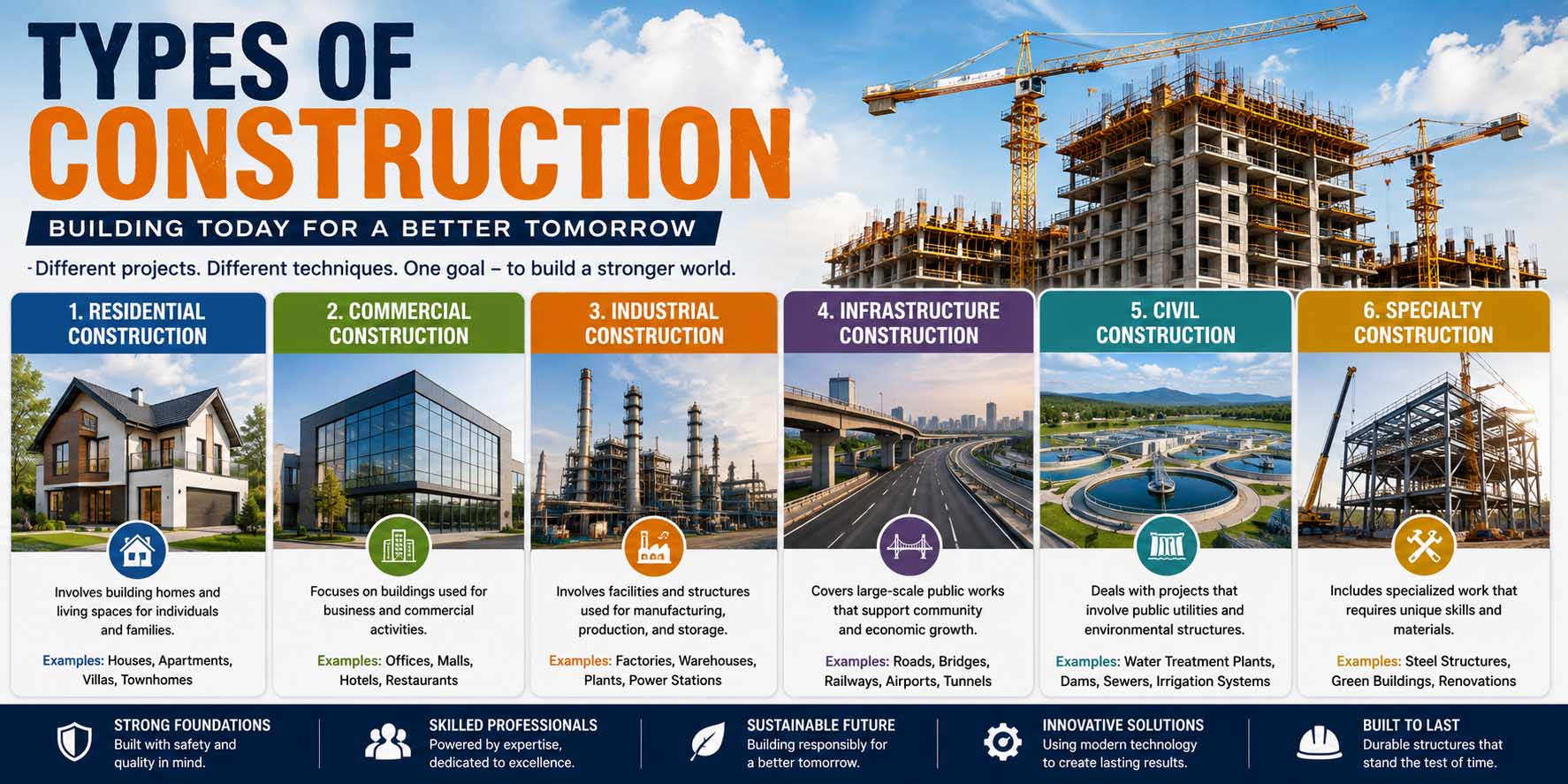
Construction projects generally fall into several broad categories. For example, the table below shows the six main groups and the projects each one covers.
| Construction Type | Common Projects |
|---|---|
| Residential | Houses, apartments, condominiums |
| Commercial | Offices, hotels, shopping centers |
| Industrial | Factories, warehouses, power plants |
| Infrastructure | Roads, bridges, tunnels, airports |
| Institutional | Schools, hospitals, government buildings |
| Heavy Civil | Dams, railways, ports, utilities |
Because their goals differ, each category uses different engineering practices and specialized equipment.
Residential Construction
Residential construction focuses on buildings where people live. For instance, it includes single-family homes, townhouses, apartment buildings, vacation homes, and senior housing.
Usually, these projects emphasize comfort, energy efficiency, and long-term durability. Although residential projects are smaller than commercial developments, they still require careful planning, structural calculations, and compliance with local building codes.
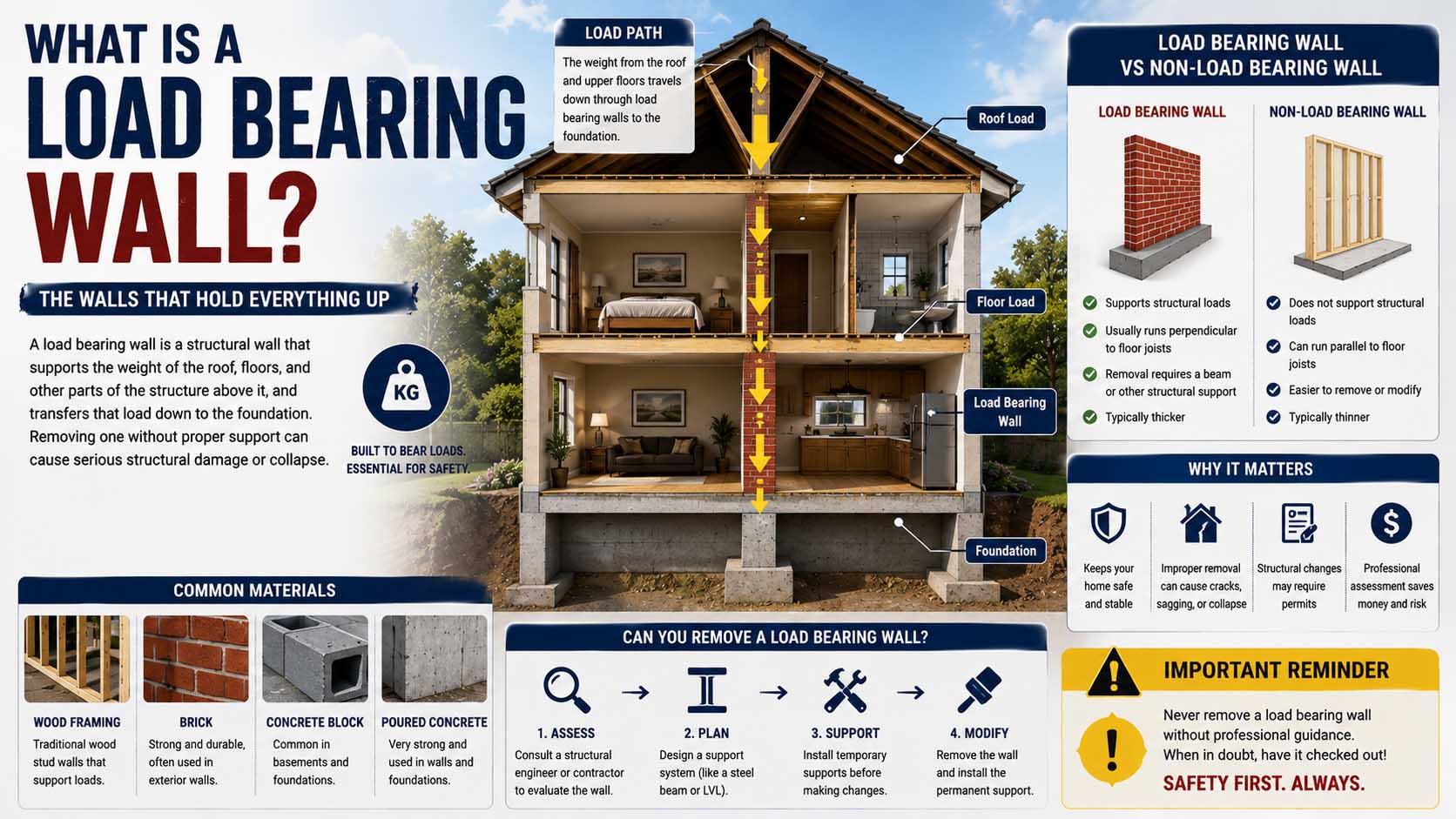
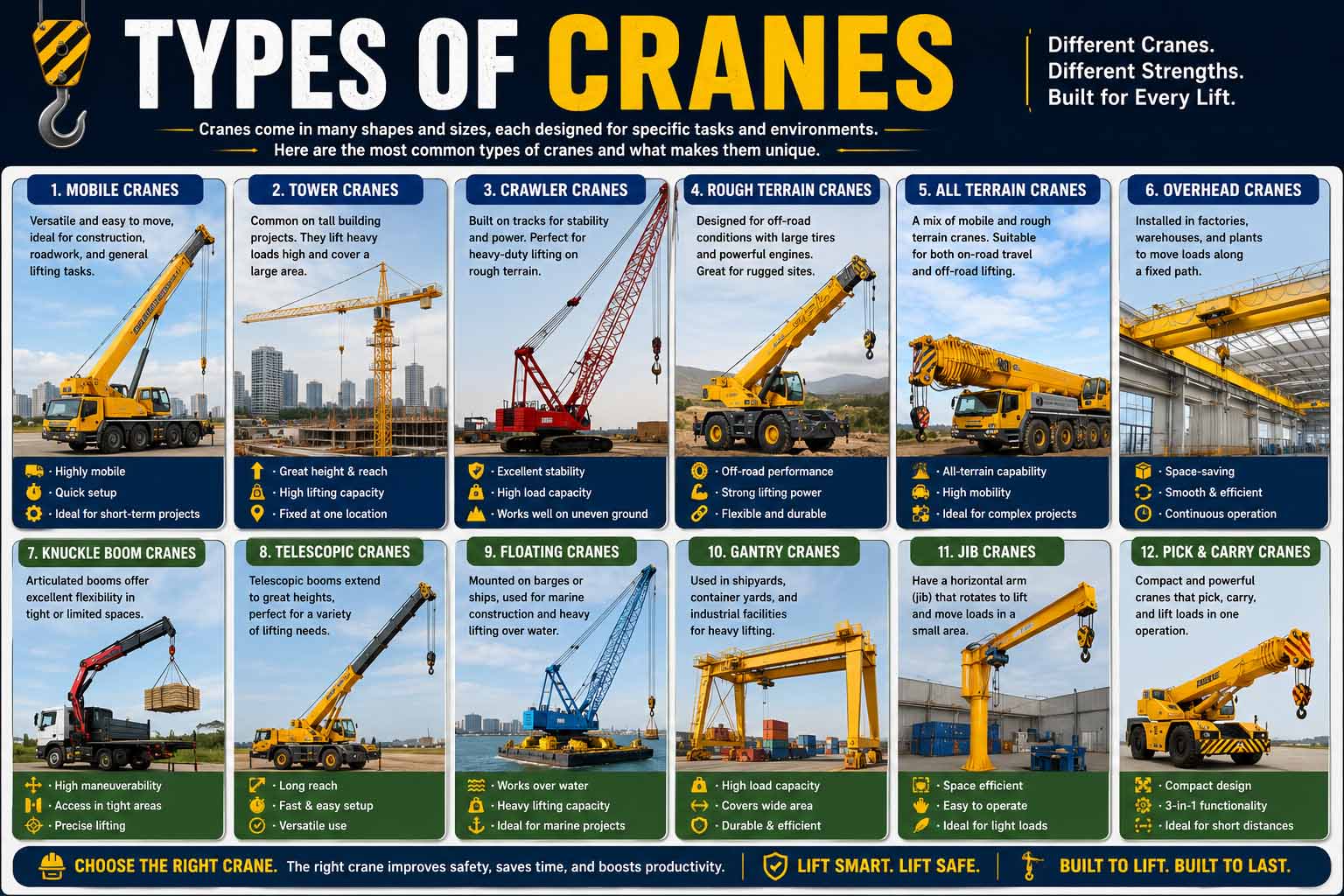
Also, many construction tasks rely on mechanical principles similar to those explained in what is a simple machine, since cranes, pulleys, levers, and lifting systems help move heavy materials safely.
Commercial Construction
Commercial construction creates spaces for businesses and public services. Typically, these projects include office buildings, hotels, restaurants, shopping malls, entertainment venues, and banks.
Compared with residential projects, commercial buildings often need larger foundations and more complex electrical systems. They also require advanced HVAC installations, fire suppression systems, and higher safety standards for the many people inside.
On top of that, builders manage commercial schedules tightly to reduce business delays.
Industrial Construction
Industrial construction supports manufacturing, production, and logistics. For example, it covers manufacturing plants, distribution centers, chemical facilities, oil refineries, data centers, and food processing plants.
These projects involve specialized engineering because they frequently include heavy machinery, process equipment, and utility systems. Therefore, industrial construction also requires detailed planning for worker safety and equipment maintenance.
Infrastructure Construction
Infrastructure projects connect communities and support transportation. For instance, this group includes highways, bridges, railways, airports, water systems, and utility networks.
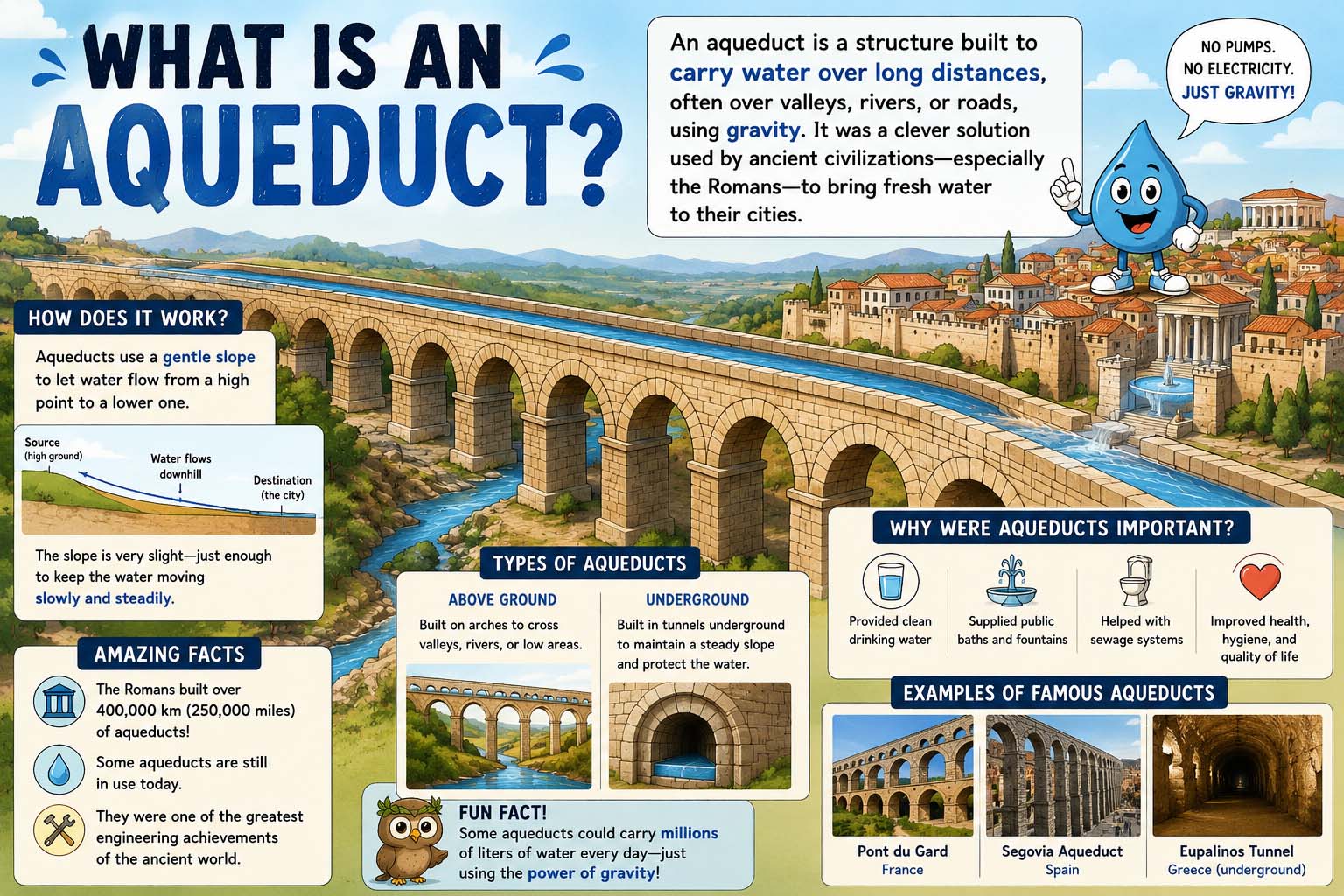
Unlike buildings, infrastructure often stretches across large geographic areas. In some cases, large water management projects include channels, canals, and structures similar to what is an aqueduct, which carries water across valleys or uneven terrain.
Types of Construction by Fire Resistance
Construction professionals also classify buildings by how well their structure resists fire. In the United States, building codes group buildings into five classes, from Type I to Type V.
| Class | Main Materials | Common Uses |
|---|---|---|
| Type I (fire-resistive) | Fire-protected steel and reinforced concrete | High-rise buildings |
| Type II (non-combustible) | Non-combustible materials such as steel | Commercial buildings and warehouses |
| Type III (ordinary) | Masonry exterior walls with interior wood framing | Mixed-use buildings |
| Type IV (heavy timber) | Large wooden structural members | Older warehouses and timber buildings |
| Type V (wood-frame) | Wood framing | Most single-family homes |
In general, Type I offers the most fire protection, while Type V offers the least. As a result, these classes influence insurance, safety standards, and emergency response planning.
What Are the Types of Construction Materials?
One of the most common questions is what are the types of construction materials? In short, modern construction uses a mix of traditional and advanced materials.
Concrete: Concrete remains one of the world’s most widely used building materials. This is because it offers high compressive strength, a long lifespan, fire resistance, and low maintenance.
Steel: Structural steel provides exceptional strength while allowing taller buildings and longer spans. In fact, many builders compare stainless steel vs carbon steel when selecting materials, since corrosion resistance and strength needs vary by project.
Wood: Wood remains popular because it is renewable, lightweight, easy to work with, and cost-effective. Moreover, engineered wood products have expanded its use in larger buildings.
Brick and masonry: Brick offers excellent durability, fire resistance, and low maintenance. Besides that, many owners like its attractive appearance.
Glass: Modern commercial buildings frequently use large glass curtain walls. This way, they improve natural lighting and energy efficiency.
Composite materials: Advanced composites continue to grow in popularity. For example, what is carbon fiber explains why builders increasingly use lightweight composites to strengthen bridges, reinforce structures, and reduce building weight.
Modern Construction Technologies
Technology has transformed the construction industry. Today, many projects use Building Information Modeling (BIM), 3D laser scanning, drone surveys, and GPS-guided equipment.
In addition, builders now use artificial intelligence, robotics, prefabrication, and modular construction. Together, these technologies improve accuracy while reducing waste and construction time.
What Are the Types of Construction Sites?
The answer to what are the types of construction sites depends on the project being built. For example, the table below lists common site categories.
| Site Type | Examples |
|---|---|
| Greenfield | New land development |
| Brownfield | Redevelopment of existing sites |
| Urban | City construction projects |
| Rural | Agricultural or remote construction |
| Industrial | Factory and plant construction |
| Infrastructure | Roads, bridges, utilities |
Each site presents unique engineering challenges. Urban construction, for example, often has limited working space, while rural sites may need temporary roads and utilities.
Types of Construction Vehicles
Heavy equipment makes modern construction possible. For instance, popular types of construction vehicles include excavators, bulldozers, backhoes, and wheel loaders.
Other common machines are motor graders, skid steer loaders, compactors, and cranes. Since each machine performs a specialized task, projects can progress efficiently.
Types of Construction Trucks
Large projects also depend on several types of construction trucks. The most common are dump trucks, concrete mixer trucks, flatbed trucks, and water trucks.
In addition, many sites use crane trucks, fuel trucks, and vacuum trucks. Together, these vehicles move materials, equipment, water, fuel, and waste around construction sites.
How to Choose Between Types of Construction
Several factors influence construction decisions. To begin with, engineers study soil conditions, weather, and building height.
Then, they compare the budget and material costs. Lastly, they weigh environmental impact, local regulations, and future maintenance needs.
Ultimately, balancing these factors helps create structures that remain safe and economical for decades.
Advantages of Modern Construction Techniques
Modern methods offer several benefits. Above all, they lead to faster project completion and improved worker safety.
Furthermore, they bring better quality control, less material waste, and lower long-term maintenance. They also improve energy efficiency and allow more accurate planning.
Thanks to digital tools, large-scale projects are more predictable than ever before.
Challenges Facing the Construction Industry
Even so, modern construction still faces challenges. For example, rising material costs, skilled labor shortages, and weather delays can slow projects down.
Likewise, supply chain disruptions, environmental regulations, and safety management add pressure. For this reason, successful projects depend on detailed planning and constant communication among engineers, contractors, and suppliers.
Sustainable Construction
Environmental concerns continue to influence building design. Specifically, sustainable construction focuses on recycled materials, energy-efficient buildings, solar power, and water conservation.
It also aims for waste reduction, low-carbon concrete, and green roofs. Meanwhile, many governments now encourage greener construction through updated building standards.
In some cases, specialized projects use lightweight structural metals, which leads to questions about what is titanium used for in demanding engineering work where corrosion resistance and strength are critical.
Frequently Asked Questions About Types of Construction
What are the main types of construction?
The six primary categories are residential, commercial, industrial, institutional, infrastructure, and heavy civil construction.
Which construction type is the most common?
Residential construction is generally the most common because people build homes continuously around the world.
What materials are used most often?
Concrete, steel, wood, brick, glass, and composite materials remain the most widely used construction materials.
Why are construction classifications important?
Building classifications set structural requirements, fire resistance standards, safety rules, and inspection procedures. Therefore, they help keep people safe inside every building.
Is technology changing construction?
Yes. In fact, digital modeling, automation, drones, robotics, and prefabrication have greatly improved efficiency, safety, and project accuracy.
Understanding Construction from the Ground Up
Every building, bridge, highway, and industrial facility begins with choosing the right construction method. So, by understanding the different types of construction, along with the materials, equipment, and technologies involved, it’s easier to see how modern engineering turns ideas into safe, durable structures.
Whether you’re studying engineering, planning a building project, or simply curious about the built environment, knowing these basics gives you a solid foundation for understanding the world around you.