
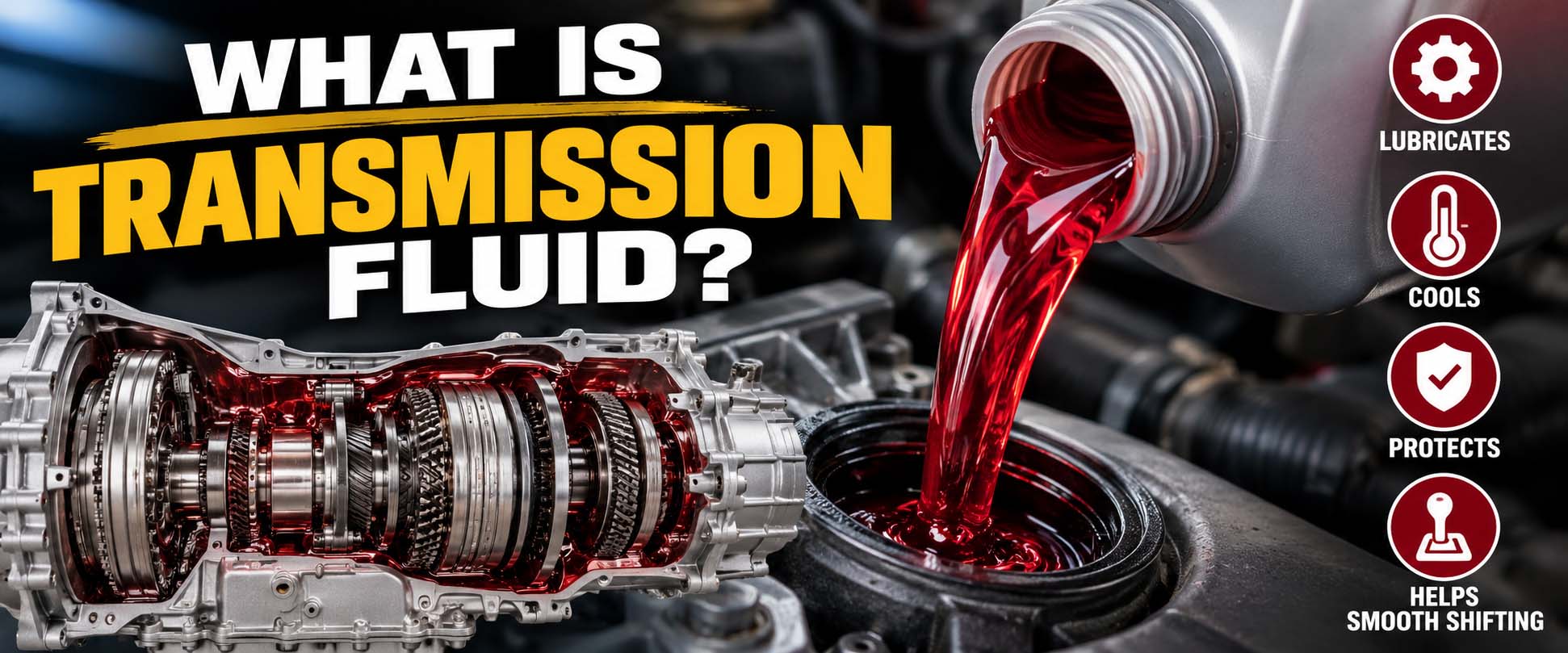
If you drive an automatic vehicle, transmission fluid quietly performs several jobs every time the car moves. So, what is transmission fluid? It is a specially formulated automotive fluid that lubricates transmission components, helps control heat, supports hydraulic operation in many transmissions, and allows the system to shift and transfer power smoothly.
However, not every vehicle uses the same fluid. Automatic transmissions, continuously variable transmissions (CVTs), dual-clutch transmissions, and manual gearboxes can have very different fluid requirements. Therefore, choosing the exact specification recommended by the vehicle manufacturer matters far more than choosing fluid by color or appearance alone.
What Is Transmission Fluid and What Does It Do?
Transmission fluid works inside a vehicle’s transmission under changing temperatures, pressures, and operating conditions.
In a conventional automatic transmission, the fluid does much more than lubricate moving components. It also acts as a hydraulic medium, carries heat away from internal parts, and helps the transmission apply clutch packs and other mechanisms.
Its main functions can include:
- Lubricating gears, bearings, and other moving parts
- Carrying hydraulic pressure
- Helping control transmission temperature
- Reducing wear
- Supporting smooth gear changes
- Protecting internal surfaces
- Carrying contaminants toward the filter where applicable
- Providing the required friction characteristics for transmission components
Because transmission designs vary, fluid manufacturers use different additive packages and formulations to meet specific technical requirements.
For example, someone learning what is a torque converter will find that fluid also plays a major role in conventional automatic transmissions because the torque converter uses it to transfer rotational energy between the engine and transmission.
How the Transmission Hydraulic System Works
When the engine runs, a conventional automatic transmission circulates fluid through its hydraulic system.
The transmission pump creates fluid flow. From there, the liquid travels through carefully designed passages while valves and electronically controlled components regulate its pressure and direction.
Hydraulic pressure can then operate clutch packs and other components required for different gear ratios.
This system contains several types of valves, depending on the transmission design. Some regulate pressure, while others route fluid through specific hydraulic circuits.
Modern transmissions combine this hydraulic system with electronic control. Therefore, a transmission control module can use information from sensors and then command solenoids to influence hydraulic operation.
As a result, mechanical parts, electronics, and hydraulic fluid work together as a coordinated system.
How Transmission Fluid Differs From Engine Oil
Engine oil and the lubricant used in a transmission serve different systems.
Engine oil primarily lubricates and protects internal engine components while helping control heat and contamination. In contrast, the lubricant inside an automatic gearbox must meet a different set of requirements.
For example, automatic transmission fluid may need carefully controlled friction characteristics so clutch packs engage correctly. It may also function as a hydraulic medium while operating across a wide temperature range.
As a result, engine oil should never replace the specified gearbox fluid unless a particular vehicle design explicitly calls for an unusual lubricant specification.
Likewise, different automotive fluids are not automatically interchangeable.
Understanding Transmission Fluid Color
People often inspect fluid color because it can provide a quick visual clue about a vehicle.
Many new automatic transmission fluids are red or reddish because manufacturers add dye that makes the liquid easier to identify. However, products can come in other colors depending on their formulation and manufacturer.
Therefore, color by itself does not reliably identify a fluid specification.
As the fluid ages, it may gradually become darker. Heat, normal use, oxidation, and contamination can all affect its appearance.
Still, dark fluid does not automatically prove that the transmission has suffered damage. Likewise, bright red fluid does not guarantee that everything inside the gearbox is operating correctly.
Instead, consider fluid condition alongside service history, odor, transmission behavior, manufacturer guidance, and diagnostic findings.
What Should Fresh Transmission Fluid Look Like?
The most accurate way to judge fresh fluid is to check the specification and appearance of the exact product approved for your vehicle.
Fresh automatic transmission fluid is often red, pinkish-red, amber, or another manufacturer-specific color. Meanwhile, some specialized products may look different from traditional ATF.
Therefore, never buy replacement fluid solely because its color matches what came out of the transmission.
Instead, use the specification listed in the owner’s manual, manufacturer service information, or another reliable vehicle-specific source.
Identifying a Transmission Fluid Leak
Finding a puddle under a vehicle can be worrying, yet color can help narrow down possible sources.
A fresh automatic transmission leak may appear red or reddish. However, older fluid can look darker brown or similar to other automotive fluids.
Therefore, you cannot always identify a leak simply because the liquid looks red.
Location can provide another clue. Fluid may escape around transmission seals, cooler lines, the pan, electrical connectors, or other components depending on the vehicle.
Still, liquids can travel along underbody panels or components before reaching the ground. Consequently, the location of a puddle does not always identify the exact leak source.
If you notice repeated fluid spots, have the vehicle inspected instead of identifying the leak solely by color.
Symptoms of a Low Transmission Fluid Level
A low level can create problems in transmissions that depend on a specific amount of fluid for hydraulic operation and lubrication.
Insufficient fluid may affect pressure, cooling, and component protection.
Possible symptoms can include:
- Delayed engagement
- Unusual shifting
- Transmission slipping
- Shuddering or hesitation
- Overheating
- Unusual noises
- Poor gear engagement
- Warning lights on some vehicles
However, these symptoms are not exclusive to low fluid. Electrical problems, damaged solenoids, worn clutch components, internal leaks, and mechanical faults can produce similar behavior.
Therefore, checking the level is one diagnostic step rather than a complete diagnosis.
Effects on Transmission Hydraulic Pressure
A conventional automatic transmission depends on stable hydraulic pressure. Therefore, a significant fluid shortage can interfere with the system’s ability to operate as designed.
Inside hydraulic systems, liquid travels through passages that distribute pressure to different components. Understanding what is a manifold can provide useful background because a manifold generally distributes or directs fluid through multiple paths. This concept is similar to how transmission hydraulic passages route fluid.
If the system cannot maintain the pressure it needs, gear engagement and shifting may suffer.
Meanwhile, an excessively low level can reduce lubrication and cooling. As a result, continuing to operate a vehicle with a serious leak may increase the risk of transmission damage.
Transmission Fluid Aeration and Foaming
Under certain conditions, the fluid can become aerated or foamy.
For example, an incorrect level can sometimes interfere with normal operation. Depending on the transmission design, moving components may churn excess fluid, while a low level may allow the pump to draw air.
Air mixed into hydraulic fluid can affect pressure consistency and lubrication.
A related fluid-dynamics concept is what is cavitation, which describes the formation and collapse of vapor bubbles when local pressure conditions allow it. Cavitation and aeration are not identical, but both illustrate why stable fluid conditions matter in hydraulic machinery.
Because transmission designs differ, technicians should follow the manufacturer-specific procedure when checking fluid level.
Checking the Transmission Fluid Level Correctly
The correct procedure depends heavily on the vehicle.
Older automatic transmissions often have an accessible dipstick under the hood. In those vehicles, the manufacturer may specify checking the fluid with the engine running, the transmission warm, and the vehicle on level ground.
However, many modern transmissions do not have a conventional user-accessible dipstick.
Instead, they may use fill and level plugs. Some require the fluid to reach a specific temperature before technicians can verify the correct level.
Therefore, avoid assuming that one online procedure applies to every car.
A safe general approach is:
- Identify the vehicle’s exact year, model, engine, and transmission.
- Find the manufacturer-approved fluid specification.
- Check the owner’s manual for a user-level inspection procedure.
- Look underneath the vehicle for signs of leakage.
- Follow the specified fluid-temperature and level-check procedure.
- Seek professional service when specialized equipment or under-vehicle access is required.
Never remove an unfamiliar transmission plug simply because it appears to be a drain or fill point.
Choosing the Correct Transmission Fluid Type
There is no universal product that suits every vehicle.
Manufacturers specify fluids according to transmission design, materials, friction requirements, operating temperature, and control strategy.
Common categories include traditional automatic transmission fluids, CVT fluids, dual-clutch transmission fluids, and manual transmission lubricants.
Even within one category, specifications can differ considerably.
For that reason, avoid selecting fluid based only on labels such as “automatic transmission fluid” or recommendations for a completely different vehicle.
Instead, check the owner’s manual or manufacturer service information. Then, confirm that the product explicitly meets the required specification. ZF Aftermarket’s transmission-fluid information also illustrates why different transmissions require fluids matched to their specific applications.
Using the wrong fluid can affect shifting quality, lubrication, friction behavior, seals, and long-term durability.
When Transmission Fluid Replacement May Be Needed
Transmission fluid does not necessarily last forever, although service requirements vary widely between vehicles.
Some manufacturers specify fluid replacement at defined intervals. Meanwhile, other maintenance schedules depend on driving conditions or transmission type.
Towing, frequent stop-and-go driving, heavy loads, high temperatures, or other severe operating conditions may also affect service recommendations.
Therefore, follow the maintenance schedule for your exact vehicle rather than applying a universal mileage interval.
Also, distinguish between a fluid change and a transmission flush. They are different service procedures, and not every vehicle manufacturer recommends the same approach.
If the transmission already has serious shifting problems, changing fluid should not replace proper diagnosis.
Warning Signs That Need Attention
Drivers do not need to become transmission specialists, yet a few warning signs deserve attention.
Check the vehicle if you notice:
- New fluid spots underneath it
- A sudden change in shifting behavior
- Delayed Drive or Reverse engagement
- Transmission warning messages
- Unusual transmission noises
- A burning smell
- Repeated overheating warnings
A leak deserves particular attention because topping off fluid repeatedly does not repair the source.
Likewise, do not assume every shifting problem requires new fluid. Modern automatic transmissions rely on electronics, sensors, solenoids, hydraulic controls, and mechanical components. Therefore, accurate diagnosis may require a scan tool and vehicle-specific testing.
Common Transmission Fluid Maintenance Mistakes
One common mistake is assuming all red fluids are interchangeable. Color helps with visual identification, but it does not define the technical specification.
Another mistake is overfilling. Too much fluid can create operating problems in some transmissions, so “more” is not necessarily safer.
Likewise, drivers sometimes use universal maintenance advice without checking their vehicle’s requirements. Modern transmissions can have precise fluid-level procedures and temperature ranges.
Mixing incompatible products is another avoidable risk. Even when two fluids look identical, their friction characteristics and additive chemistry may differ.
Finally, avoid waiting for severe symptoms when you know the transmission is leaking. Fixing a leak early may prevent a low-fluid condition from becoming a much larger repair.
Frequently Asked Questions
Is Transmission Fluid Always Red?
No. Many automatic transmission fluids are dyed red, but other colors exist. Therefore, always identify the required product by specification rather than color alone.
Can You Drive With a Low Fluid Level?
Driving with a significantly low level may affect lubrication, cooling, and hydraulic operation. If you suspect a serious leak or experience slipping or poor engagement, have the vehicle inspected promptly.
Is Transmission Fluid the Same as Gear Oil?
Not necessarily. Different transmission designs require different lubricants. For example, some manual transmissions use gear oil, while others specify different fluids.
Can Different Transmission Fluids Be Mixed?
Do not mix products simply because they look similar. First, verify that both products meet the exact specification required by your vehicle manufacturer.
How Often Should Transmission Fluid Be Changed?
There is no single interval for every vehicle. Check the manufacturer’s maintenance schedule because the recommended service interval can depend on transmission design and operating conditions.
Does Dark Transmission Fluid Mean the Gearbox Is Failing?
Not automatically. Fluid naturally changes appearance with age and use. However, very dark fluid, unusual odors, contamination, or shifting symptoms may justify inspection.
Keeping the Transmission Properly Lubricated
Understanding the role of transmission fluid makes it easier to see why this liquid has such a major effect on automatic transmission operation. Depending on the design, it can lubricate components, carry hydraulic pressure, manage heat, support clutch operation, and protect internal parts from wear.
However, the correct fluid specification and level matter just as much as having fluid in the transmission at all. Therefore, use the manufacturer’s requirements, investigate leaks promptly, and avoid guessing based on color alone.
When a vehicle starts slipping, shifting harshly, or engaging gears slowly, check the basics but do not assume fluid is always the cause. A careful diagnosis can separate a simple fluid issue from an electrical, hydraulic, or mechanical transmission problem.