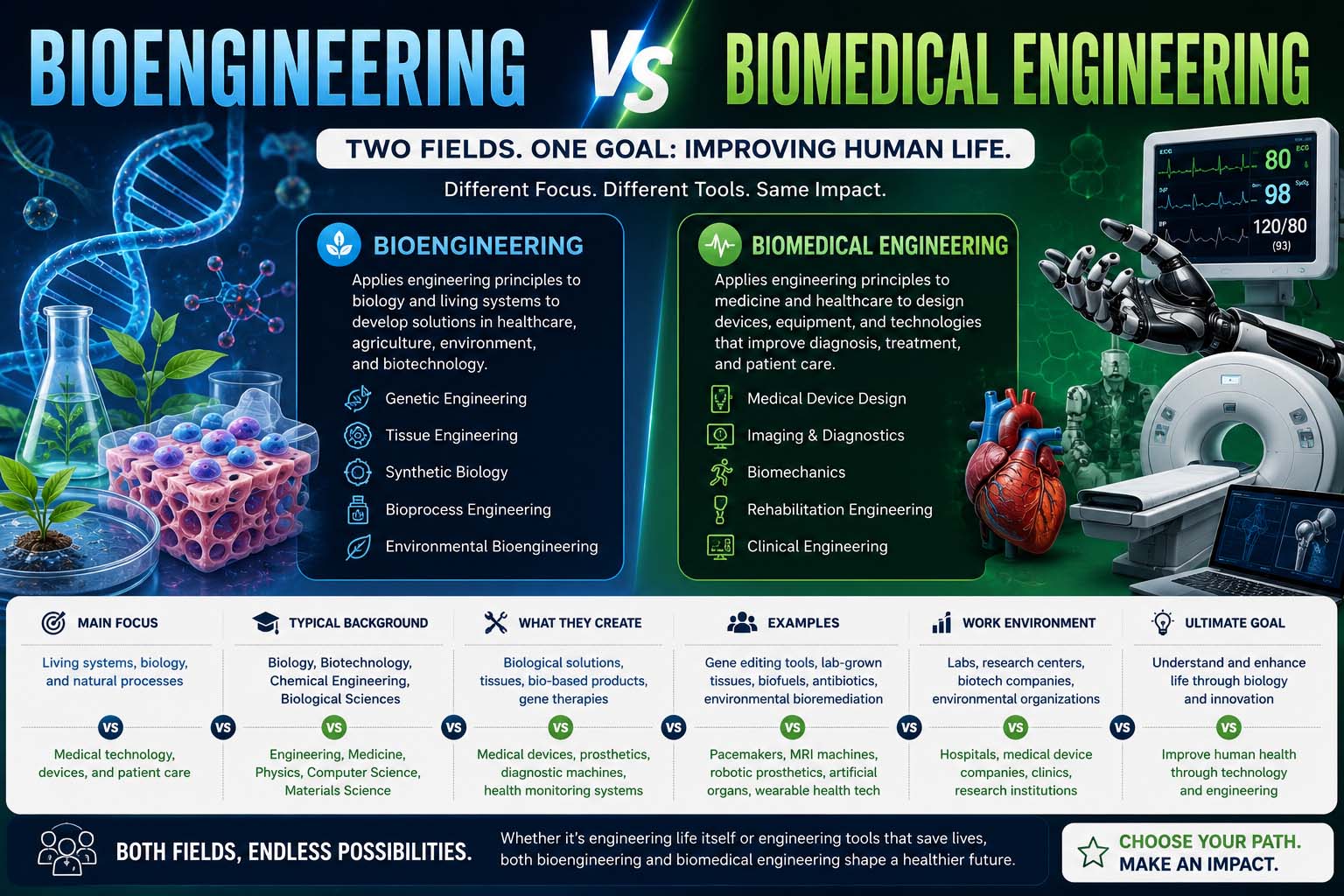
If you’re interested in combining engineering with biology, understanding bioengineering vs biomedical engineering can help you choose the right degree and career path. Although both disciplines apply engineering principles to living systems, their applications, coursework, and professional opportunities can differ.
In fact, some universities use these degree names interchangeably. However, others distinguish between broader biological engineering applications and technologies developed specifically for healthcare.
Both fields combine mathematics, science, and engineering design. Nevertheless, the best choice depends on your interests, preferred industry, and long-term goals.
Students who enjoy interdisciplinary engineering may also be interested in What Is Mechatronics?, another field that combines mechanical, electronic, and computer systems to solve practical problems.
Therefore, this guide explains the main differences, compares degree programs and salaries, explores career opportunities, and helps you choose a suitable academic path.
Bioengineering vs Biomedical Engineering: Quick Comparison
The following table highlights the main differences between these related engineering disciplines.
| Feature | Bioengineering | Biomedical Engineering |
|---|---|---|
| Main focus | Engineering applications involving biological systems | Engineering applications in medicine and healthcare |
| Common industries | Biotechnology, agriculture, pharmaceuticals, environmental technology, and healthcare | Medical devices, hospitals, diagnostics, rehabilitation, and healthcare technology |
| Typical projects | Synthetic biology, biomaterials, tissue engineering, and biological processes | Prosthetics, medical imaging, patient monitoring, and medical equipment |
| Patient interaction | Usually indirect | Sometimes direct, depending on the role |
| Academic focus | Often emphasizes biological systems and biotechnology | Often emphasizes human physiology and medical technology |
| Career flexibility | Opportunities across several biological industries | Strong emphasis on healthcare-related industries |
However, these distinctions are general rather than universal. In fact, individual universities may offer nearly identical curricula under either degree name.
Therefore, students should compare course requirements and specializations before deciding.
What Is Bioengineering?
Bioengineering is a broad engineering discipline that applies mathematics, physics, chemistry, and engineering design to biological systems.
Rather than focusing exclusively on medicine, bioengineers solve problems involving living organisms, biological materials, and biological processes.
For example, they may develop technologies that improve food production, create useful biological materials, or support pharmaceutical manufacturing.
Major Areas of Bioengineering
Bioengineers may specialize in:
- Genetic engineering
- Synthetic biology
- Tissue engineering
- Agricultural technology
- Environmental biotechnology
- Biomaterials
- Pharmaceutical development
- Biological process engineering
Because these areas cover several industries, graduates may pursue careers in research, manufacturing, biotechnology, or healthcare.
Practical Bioengineering Applications
A bioengineer might help design a system that uses microorganisms to produce valuable compounds.
Alternatively, they could develop biodegradable materials or investigate ways to improve tissue regeneration.
As a result, the field offers opportunities to apply engineering knowledge beyond traditional medical settings.
What Is Biomedical Engineering?
Biomedical engineering combines engineering principles with medical science to develop technologies that support healthcare, diagnosis, treatment, and rehabilitation.
Its central purpose is to solve medical problems through engineering design and scientific research.
For instance, biomedical engineers may develop devices that monitor heart activity, improve medical imaging, or assist patients with physical disabilities.
Common Biomedical Engineering Technologies
Biomedical engineers contribute to the development of:
- Artificial organs and implantable devices
- Prosthetic limbs
- Medical imaging equipment
- Surgical robotics
- Wearable health monitors
- Pacemakers
- Diagnostic systems
- Rehabilitation equipment
Many medical technologies rely on components such as those explained in What Is a Transducer.
For example, ultrasound systems use transducers to convert electrical energy into sound waves and returning echoes into electrical signals.
Consequently, biomedical engineers often work closely with physicians, medical researchers, equipment manufacturers, and healthcare organizations.
Bioengineering vs Biomedical Engineering: Main Differences
The most useful distinction concerns the scope of each field.
Bioengineering generally covers a wider range of biological applications. Biomedical engineering, meanwhile, places greater emphasis on medicine and healthcare.
However, this distinction does not create a strict boundary.
For instance, some universities organize biomedical engineering as a specialization within bioengineering. Others offer independent departments with substantial overlap.
Bioengineering and Biomedical Engineering Applications
Bioengineering may involve agriculture, environmental systems, industrial biotechnology, and healthcare.
By comparison, biomedical engineering usually concentrates on medical devices, clinical technology, rehabilitation, and human health.
For example, designing a biological process for sustainable chemical production fits naturally within bioengineering.
Developing a device that monitors a patient’s heart rhythm, on the other hand, fits directly within biomedical engineering.
Research and Industry Focus
Bioengineering research may investigate living cells, biological manufacturing processes, or engineered materials.
Meanwhile, biomedical engineering research often focuses on human physiology, medical instrumentation, imaging, and therapeutic devices.
Still, tissue engineering and biomaterials research can belong to either discipline.
Therefore, a specific project or laboratory may provide a clearer indication of specialization than the degree title alone.
Bioengineering vs Biomedical Engineering Degree Programs
Students entering either program usually build a foundation in mathematics, science, and engineering.
During the early stages of study, coursework may include:
- Biology
- Chemistry
- Physics
- Calculus
- Programming
- Engineering design
- Statistics
As students progress, their courses become more specialized.
However, universities organize these subjects differently, so the following examples describe common patterns rather than fixed requirements.
Typical Bioengineering Courses
A bioengineering curriculum may emphasize:
- Molecular biology
- Genetics
- Biochemistry
- Biomaterials
- Systems biology
- Cellular engineering
- Biotechnology
- Fluid mechanics
Together, these subjects help students understand biological systems and develop engineering solutions for different industries.
Typical Biomedical Engineering Courses
Biomedical engineering students may study:
- Human anatomy and physiology
- Medical imaging
- Biomechanics
- Medical instrumentation
- Signal processing
- Rehabilitation engineering
- Medical device design
- Clinical engineering
Students studying medical instrumentation may also encounter concepts discussed in What Is Impedance.
For instance, electrical impedance influences the design and performance of certain biological measurement systems and medical sensors.
Comparing Bioengineering and Biomedical Engineering Curricula
Two universities may offer similar courses under different program titles.
Likewise, two degrees with the same title may emphasize different research areas.
Therefore, review the required subjects, available laboratories, electives, and internship opportunities before applying.
In addition, check whether the program meets the relevant accreditation requirements in the country where you intend to work.
Bioengineering Career Opportunities
Bioengineers can pursue opportunities across several industries because their skills apply to different biological systems.
Common workplaces include:
- Biotechnology companies
- Pharmaceutical manufacturers
- Agricultural technology firms
- Food science companies
- Environmental engineering organizations
- Government laboratories
- Research universities
For example, a bioengineer might help improve a fermentation process at a biotechnology company.
Similarly, another professional could investigate biomaterials for use in medical products.
However, some research-intensive positions require postgraduate education or specialized laboratory experience.
Biomedical Engineering Career Opportunities
Biomedical engineers generally concentrate on technologies related to human health.
Typical workplaces include:
- Hospitals
- Medical device manufacturers
- Medical research laboratories
- Healthcare technology companies
- Diagnostic equipment manufacturers
- Government health agencies
For instance, a biomedical engineer may help design patient-monitoring equipment or test a medical device before commercial use.
In addition, some professionals collaborate with healthcare teams to improve equipment performance.
However, not every biomedical engineer works in a hospital. Many spend their careers in product development, research, manufacturing, or quality assurance.
Bioengineering vs Biomedical Engineering Salary
Salary is an important consideration when comparing these careers.
However, neither degree automatically guarantees higher earnings. Instead, compensation depends on the actual job, industry, location, experience, and qualifications.
In the United States, the U.S. Bureau of Labor Statistics occupational overview for bioengineers and biomedical engineers groups these professionals within the same occupational category.
Therefore, its occupational data does not provide a reliable separate salary comparison between the two degree names.
Factors That Influence Engineering Salaries
Several factors affect compensation:
- Location: Salaries vary across countries, regions, and employment markets.
- Industry: Medical devices, pharmaceuticals, research, and manufacturing may offer different compensation structures.
- Experience: Experienced professionals may qualify for more specialized responsibilities.
- Education: Certain research and development positions favor advanced degrees.
- Technical skills: Programming, instrumentation, data analysis, and specialized laboratory expertise may improve employment options.
- Responsibilities: Management, regulatory, and senior engineering positions can have different salary ranges.
Bioengineering and Biomedical Engineering Career Progression
| Career Stage | Bioengineering | Biomedical Engineering |
|---|---|---|
| Entry level | Laboratory, process, research, or engineering support roles | Medical device, testing, engineering, or technical support roles |
| Mid-career | Specialized research, process development, or biotechnology engineering | Product development, systems engineering, or medical technology specialization |
| Senior level | Research leadership, technical management, or biotechnology operations | Engineering leadership, medical device development, or technical management |
However, these examples describe possible career paths rather than guaranteed promotions or salary levels.
As a result, students should compare real job advertisements in their target country instead of choosing a degree based solely on its name.
Bioengineering and Biomedical Engineering Skills
Both disciplines require strong technical and analytical abilities.
However, individual roles may demand different combinations of laboratory, programming, design, and communication skills.
Useful competencies include:
- Mathematics and applied science
- Programming
- Critical thinking
- Problem-solving
- Data analysis
- Engineering design
- Communication
- Teamwork
- Laboratory techniques
- Technical documentation
For example, programming can help engineers analyze biological measurements or develop software for medical equipment.
Meanwhile, communication skills allow engineers to collaborate effectively with scientists, researchers, and healthcare professionals.
In addition, familiarity with safety requirements and technical documentation can be valuable in regulated industries.
Bioengineering vs Biomedical Engineering vs Biotechnology
Students sometimes compare all three fields because their applications overlap.
Although they share biological foundations, they approach problems from different perspectives.
| Field | Primary Focus |
|---|---|
| Bioengineering | Applying engineering principles to biological systems and processes |
| Biomedical engineering | Developing engineering solutions for medicine and healthcare |
| Biotechnology | Using biological organisms, cells, or processes to develop useful products and technologies |
For example, a biotechnology company might use microorganisms to manufacture a pharmaceutical ingredient.
A biomedical engineering team might design equipment that delivers or monitors a medical treatment.
Meanwhile, bioengineers could contribute to biological manufacturing processes or develop materials relevant to both industries.
Therefore, these fields often collaborate rather than operate independently.
Bioengineering vs Biomedical Engineering Projects
Practical examples make the differences easier to understand.
Examples of Bioengineering Projects
Bioengineering projects may involve:
- Designing artificial tissues
- Developing biodegradable materials
- Engineering microorganisms for environmental cleanup
- Improving agricultural processes
- Developing biological manufacturing systems
For instance, a research team might investigate how engineered microorganisms can help remove certain environmental contaminants.
As a result, such work combines biological knowledge with engineering design and process development.
Examples of Biomedical Engineering Projects
Biomedical engineering projects may include:
- Developing robotic prosthetic hands
- Designing heart-monitoring equipment
- Creating wearable glucose-monitoring technology
- Improving medical imaging software
- Developing rehabilitation devices
For example, engineers designing a wearable monitor must consider sensor accuracy, power consumption, comfort, and reliable data processing.
Consequently, the project combines several engineering disciplines with medical knowledge.
Advantages of Studying Bioengineering
Bioengineering appeals to students who want to explore biological applications across multiple industries.
Potential advantages include:
- Broad career possibilities
- Opportunities outside healthcare
- Research in emerging biological technologies
- Interdisciplinary coursework
- Applications in biotechnology and environmental systems
Because the field covers many areas, students may discover several possible specializations during their studies.
However, that breadth can also make career planning more complicated.
Therefore, students benefit from choosing relevant electives, gaining practical experience, and developing a clear technical specialty.
Advantages of Studying Biomedical Engineering
Biomedical engineering may suit students who want to apply engineering skills to healthcare problems.
Potential advantages include:
- Opportunities to improve patient care
- Medical technology development
- Collaboration with healthcare professionals
- Work involving diagnostics and rehabilitation
- Research in medical robotics and monitoring systems
For example, developing more comfortable prosthetic devices can improve the experience of people who use them.
Similarly, better monitoring equipment can help healthcare teams collect useful patient information.
However, medical technology development also involves testing, documentation, and regulatory requirements.
Therefore, students should consider these responsibilities when exploring the profession.
Choosing a Bioengineering or Biomedical Engineering Degree
The best choice depends on the type of problems you want to solve.
Although the programs share technical foundations, their available specializations may lead toward different industries.
Choose Bioengineering If You Enjoy
- Genetics
- Biotechnology
- Biological research
- Environmental biology
- Industrial biological processes
- Agricultural technology
For example, bioengineering may be a strong option if you want to work with microorganisms, biological materials, or biotechnology manufacturing.
Choose Biomedical Engineering If You Enjoy
- Medicine
- Medical devices
- Human anatomy
- Healthcare technology
- Rehabilitation systems
- Medical instrumentation
On the other hand, biomedical engineering may suit you if you want to design equipment used in diagnosis, treatment, or patient monitoring.
Compare University Specializations
Degree titles alone do not reveal everything about a program.
Therefore, compare the following:
- Required courses and electives
- Faculty research areas
- Laboratory facilities
- Internship opportunities
- Industry partnerships
- Graduate employment pathways
- Relevant accreditation
Finally, consider whether the available coursework supports the career you want.
After all, a well-matched curriculum can matter more than the wording on your degree certificate.
Common Misunderstandings About Both Fields
Several misconceptions make these disciplines seem more different or more similar than they actually are.
Myth: Both Degrees Are Exactly the Same
Some universities use the names interchangeably.
However, others offer programs with distinct specializations.
Therefore, students should examine each university’s curriculum rather than assume the degrees are identical.
Myth: Biomedical Engineers Only Build Prosthetics
Prosthetics represent just one area of biomedical engineering.
For example, professionals also contribute to:
- Medical imaging systems
- Diagnostic devices
- Surgical equipment
- Patient-monitoring technology
- Rehabilitation systems
As a result, the profession offers opportunities beyond prosthetic design.
Myth: Bioengineering Only Involves Genetics
Genetic engineering is one possible specialization.
However, bioengineering also includes biomaterials, biological processes, environmental applications, and tissue engineering.
Consequently, its broader scope allows engineers to work with different biological technologies.
Career Growth in Biological and Medical Engineering
Both fields continue to evolve as researchers develop new biological and medical technologies.
Relevant areas include:
- Artificial intelligence in medical applications
- Personalized healthcare technologies
- Tissue engineering
- Medical robotics
- Wearable health monitoring
- Bioinformatics
- Regenerative medicine
For example, engineers may combine machine learning with biological measurements to support research or develop analytical tools.
Meanwhile, advances in biomaterials may contribute to improved medical devices and engineered tissues.
However, emerging technologies do not guarantee immediate employment growth in every specialty or region.
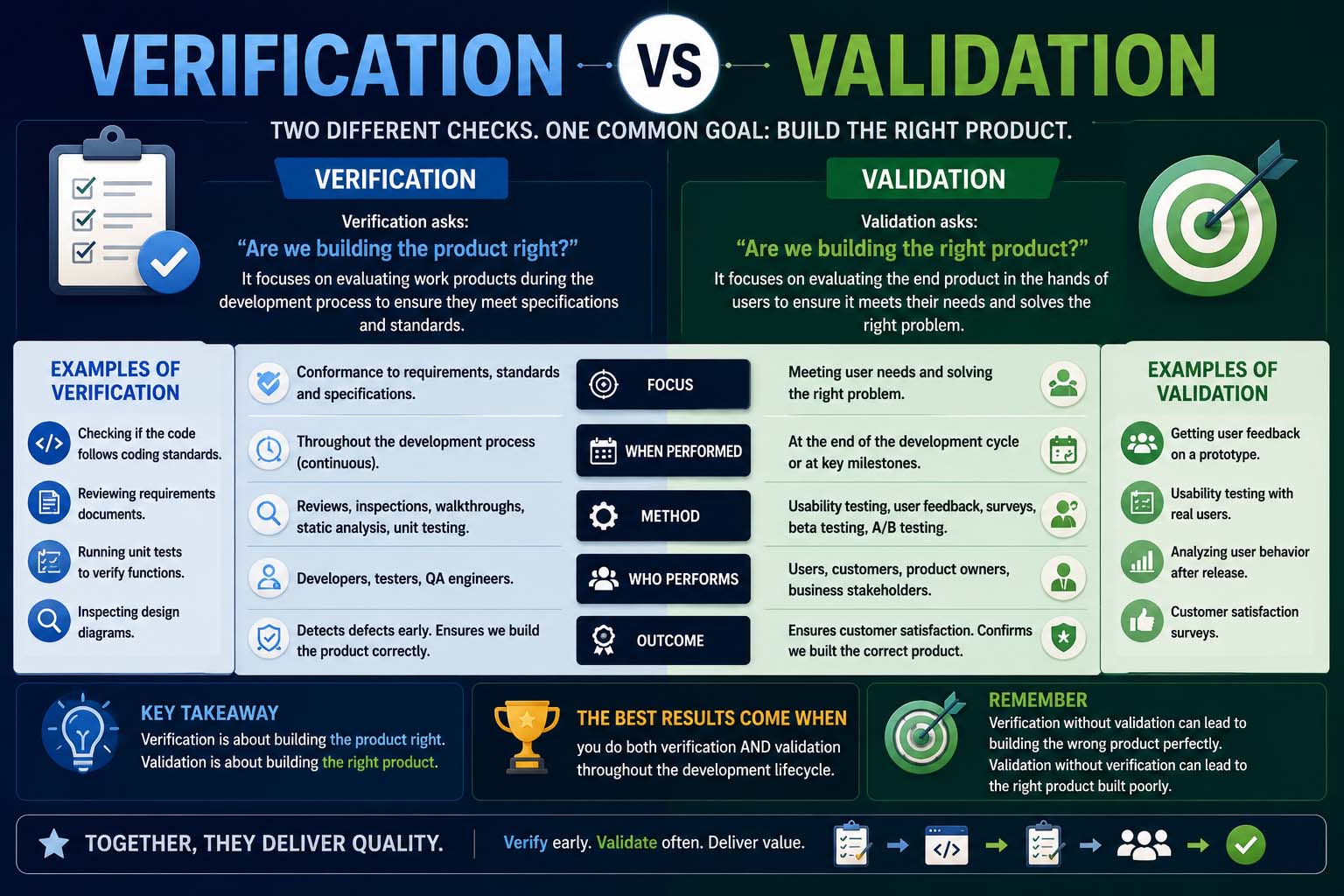
During product development, engineers also apply processes such as Verification vs Validation to evaluate whether a design meets specified requirements and intended user needs.
Consequently, technical testing and quality management remain valuable skills across both disciplines.
Student Checklist Before Choosing a Degree
Before selecting a university program, ask yourself these questions:
- Do I enjoy biology and engineering?
- Am I more interested in healthcare or broader biological applications?
- Would I enjoy laboratory research?
- Do I prefer developing devices, studying biological systems, or improving processes?
- Does the university offer specializations that interest me?
- Are relevant internships available?
- What qualifications do employers in my preferred industry require?
In addition, review the types of projects completed by current students.
As a result, these examples can reveal whether the program emphasizes medical devices, biological research, or industrial applications.
Frequently Asked Questions About Both Degrees
Is Bioengineering the Same as Biomedical Engineering?
Not always. Bioengineering often covers a wider range of biological applications, while biomedical engineering generally emphasizes healthcare and medical technology.
However, some universities use the terms interchangeably.
Which Engineering Degree Is Harder?
Both degrees can be challenging because they combine engineering, mathematics, biology, and scientific coursework.
The difficulty depends on the university’s curriculum and your academic strengths.
For example, students who enjoy human anatomy may prefer certain biomedical engineering courses, while those interested in genetics may enjoy bioengineering subjects.
Can Bioengineers Work in Hospitals?
Yes, some bioengineers work in healthcare environments when their qualifications match the position.
However, biomedical engineering programs often provide more direct preparation for medical equipment and clinical technology roles.
Which Field Offers Better Job Opportunities?
Both fields offer career possibilities, but opportunities depend on location, specialization, and employer demand.
Therefore, compare relevant job openings and required skills in your preferred industry.
Can Students Switch Between the Two Programs?
Students may be able to switch between programs because many foundational courses overlap.
However, transfer requirements vary by university, and some specialized courses may not transfer directly.
Is Biotechnology Different From Bioengineering?
Yes. Biotechnology focuses on using biological systems and processes to create useful products or technologies.
Bioengineering, on the other hand, applies engineering principles to biological problems.
Nevertheless, the fields overlap significantly, particularly in biological manufacturing, biomaterials, and research.
Bioengineering vs Biomedical Engineering: Final Comparison
When comparing bioengineering vs biomedical engineering, neither degree is universally better. Both combine engineering and biological science to address important technical challenges.
If you enjoy medical devices, healthcare technology, and patient-focused applications, biomedical engineering may align more closely with your goals.
However, if you prefer biotechnology, genetics, biological processes, and applications beyond healthcare, bioengineering may provide a better fit.
Before deciding, compare university curricula, available research projects, and potential career paths.
Above all, choose a program that matches the problems you want to solve and the skills you want to develop.