Buying an electric vehicle changes one everyday habit: instead of regularly visiting a gas station, you can start each morning with a charged car. However, getting that convenience often requires proper EV charger installation at home. While some EVs can charge from an ordinary household outlet, a dedicated home charging setup can provide faster, safer, and more convenient charging when it is correctly matched to the vehicle and electrical system.
The installation itself may be straightforward in a newer home with spare electrical capacity. In other houses, however, the electrical panel, wiring route, charger location, or available service capacity can make the project more involved.
Understanding these factors before buying equipment can help you choose the right charger and avoid unnecessary installation problems.
What Does EV Charger Installation Involve?
An EV charger, more accurately called electric vehicle supply equipment or EVSE, provides a controlled connection between a building’s electrical system and an electric vehicle.
The vehicle itself contains charging electronics that manage energy going into its battery. Therefore, the wall-mounted or portable EVSE does more than simply act as an electrical outlet. It communicates with the vehicle, supplies power within safe limits, and incorporates protective features.
For beginners, understanding what is a battery charge can also make EV terminology easier to follow because charging involves transferring electrical energy into the vehicle’s rechargeable battery system.
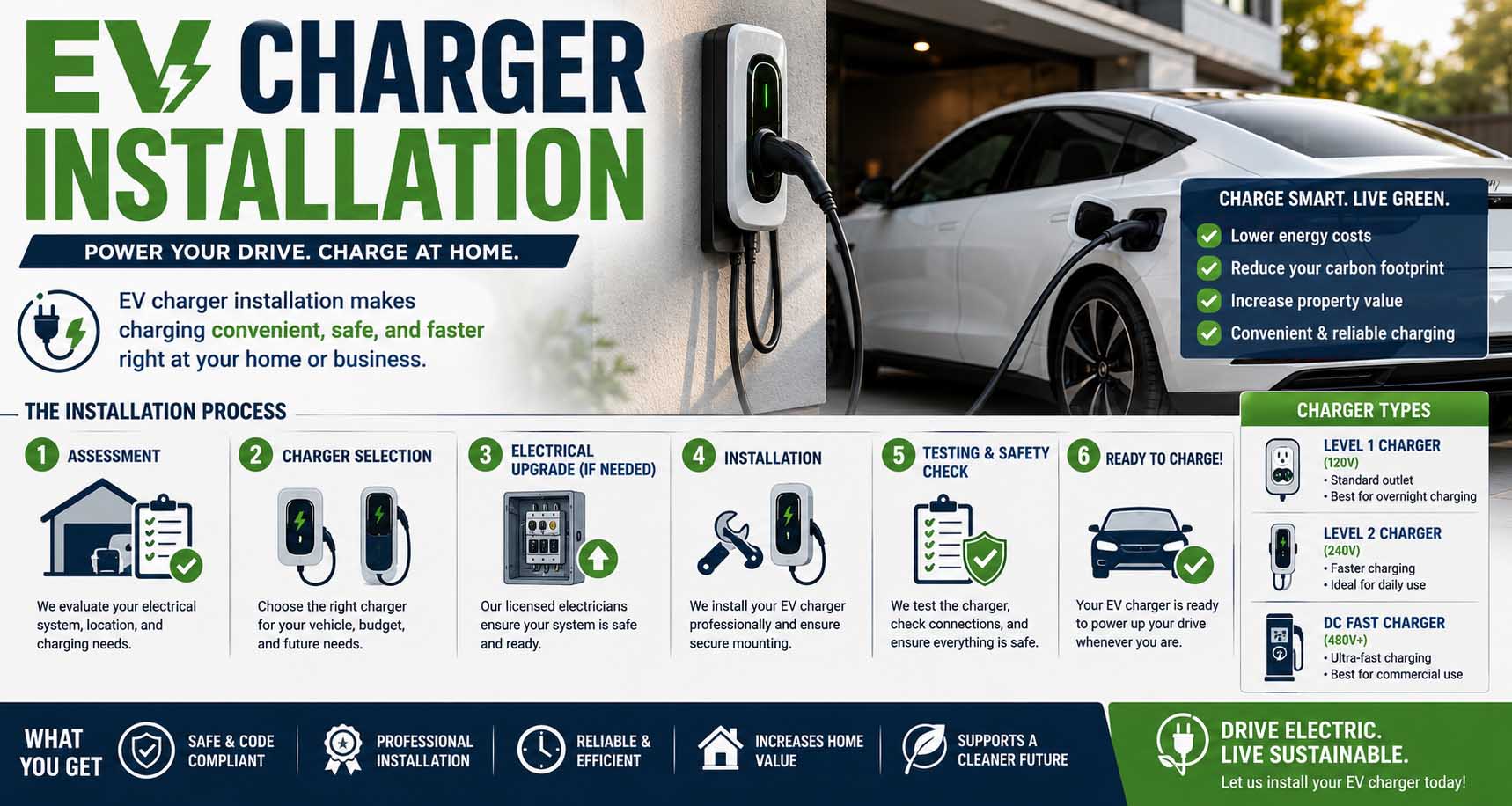
Home installations generally fall into two categories: lower-power charging from a standard outlet and higher-power Level 2 charging using a dedicated circuit.
Level 1 charging
Level 1 charging typically uses a standard residential outlet in North American installations. As a result, it usually requires little additional equipment if a suitable outlet already exists.
However, charging is relatively slow. Therefore, Level 1 works best for drivers who travel modest distances each day, have long overnight charging periods, or own a plug-in hybrid with a smaller battery.
Level 2 charging
Level 2 charging uses a higher-voltage residential supply and can deliver substantially more power than Level 1. Consequently, it has become a popular choice for dedicated home charging.
Actual charging speed depends on several factors, including the EV’s onboard charging capability, EVSE rating, circuit capacity, temperature, and battery conditions.
Why Level 2 EV Charger Installation Is Popular
For many EV owners, level 2 EV charger installation offers a useful balance between charging speed and home convenience.
Instead of waiting a very long time to recover a significant amount of driving range through a standard outlet, a properly sized Level 2 system can replenish the battery much faster. Therefore, drivers with regular commutes often find it easier to restore their daily energy use overnight.
Still, buying the highest-powered charger available is not always worthwhile.
Suppose an EV can accept only a certain maximum AC charging rate. In that case, installing an EVSE capable of supplying considerably more power will not make that particular vehicle charge beyond its onboard limit.
Likewise, the home’s electrical system must safely support the new load. That is why understanding concepts such as volts vs amps can be useful when comparing charger specifications and electrical requirements.
What to Check Before Installing a Home EV Charger
A successful installation starts before anyone drills holes or runs cable. Instead, homeowners should first evaluate the proposed charging location, electrical panel capacity, daily driving needs, and the EV’s charging specifications.
Check the electrical service and panel
A qualified professional may need to determine whether the electrical system has enough capacity for the proposed charger.
Homes already running large electric loads—such as electric heating, air conditioning, water heating, cooking equipment, or other high-demand appliances—may require closer evaluation.
The presence of an unused breaker position also does not automatically mean the system has enough capacity. Available physical space and available electrical capacity are separate issues.
Check your vehicle’s charging capability
Next, find the maximum AC charging rate supported by your EV.
A charger should suit both the car and the home. For example, purchasing an extremely high-output unit may offer little immediate benefit when the vehicle cannot use the extra capacity.
However, some homeowners intentionally install infrastructure with future EVs in mind. In that case, extra capacity may be useful if the electrical system can safely accommodate it.
Choose the charging location
Most homeowners place their charger in a garage, carport, or exterior parking area.
Ideally, the charging cable should comfortably reach the vehicle’s charging port without excessive stretching, sharp bends, or creating a tripping hazard. Meanwhile, the equipment should not create a tripping hazard or require the cable to cross areas where it can easily be damaged.
For outdoor locations, select equipment approved for the intended environment and follow the manufacturer’s installation requirements.
How EV Home Charger Installation Works
The exact process depends on local electrical rules, the charger, and the property. Nevertheless, a typical EV home charger installation follows a fairly predictable sequence.
1. Evaluate daily charging requirements
Start with how far you normally drive rather than focusing only on maximum charger output.
Someone who drives relatively few miles per day may not need the same charging power as a driver covering a long daily commute. Therefore, estimating the energy you actually need to replace each night can prevent unnecessary spending.
2. Inspect the electrical system
Next, an electrician can assess the electrical service, panel, existing loads, proposed circuit, and cable route.
This stage also helps determine whether upgrades are necessary. For example, some homes may require changes before supporting a substantial continuous charging load.
3. Select hardwired or plug-in equipment
Some Level 2 chargers plug into a compatible receptacle, while others connect directly to the electrical circuit.
A plug-in unit can offer flexibility because the EVSE itself can potentially be removed or replaced more easily. However, the receptacle, wiring, circuit protection, and installation still need to be suitable for sustained EV charging.
A hardwired installation removes the plug-and-receptacle connection and may be preferred or required for certain equipment, locations, or electrical configurations.
4. Install the dedicated circuit and charger
When necessary, the installer runs appropriately sized conductors from the electrical panel to the charging location, installs required protection, and connects the EVSE according to its instructions and applicable electrical requirements.
Circuit sizing depends on the charger’s electrical characteristics, installation requirements, and applicable local electrical codes and regulations. Therefore, homeowners should not choose wire or breaker sizes simply from an online example.
5. Test the completed system
Once installed, the system should be checked before routine use.
The charger should power up normally, communicate with the vehicle, and begin charging without faults. If it repeatedly stops charging or trips circuit protection, the underlying cause needs investigation rather than repeated resetting.
Anyone wondering why does a breaker trip should remember that a breaker can operate because of overloads, faults, equipment problems, or other electrical conditions that require proper diagnosis.
Plug-In vs Hardwired EV Chargers
Both arrangements can work well when correctly installed, although each suits slightly different priorities.
| Feature | Plug-In Charger | Hardwired Charger |
|---|---|---|
| Removal | Usually easier | Requires disconnection |
| Electrical connection | Receptacle and plug | Direct wiring |
| Outdoor suitability | Depends on equipment/setup | Often practical for permanent setups |
| Connection points | More | Fewer |
| Installation requirements | Dedicated compatible setup | Professional wiring commonly used |
| Best for | Flexibility | Permanent installation |
Rather than assuming one is universally better, consider the charger manufacturer’s requirements, local electrical rules, location, desired charging power, and long-term plans.
How to Organize EV Charger Installation Efficiently
If you’re wondering how to organize an EV charger installation, start by selecting the vehicle’s usual parking position rather than purchasing equipment before determining the best charging location. the charger first.
From there, locate the charging port on the vehicle and estimate where the wall unit should sit. Then, identify the electrical panel and consider how wiring could travel between the two points.
Shorter, simpler cable routes can reduce installation complexity. In contrast, long runs through finished walls, multiple floors, concrete, or difficult exterior areas can require more labor and materials.
After that, compare compatible chargers. Look at power output, cable length, connector compatibility, outdoor rating where necessary, warranty, connectivity features, and manufacturer support.
Finally, arrange the electrical assessment and confirm whether permits or inspections apply in your location.
This order prevents a common mistake: buying a charger and discovering afterward that the chosen model or location creates avoidable complications.
Understanding the Electrical Side
You do not need to become an electrician to own an EV. Still, a few basic concepts make charger specifications easier to understand.
Electrical power depends on voltage and current, while the circuit and equipment must be designed for the intended load. Because EV charging can continue for hours, proper circuit design and installation matter.
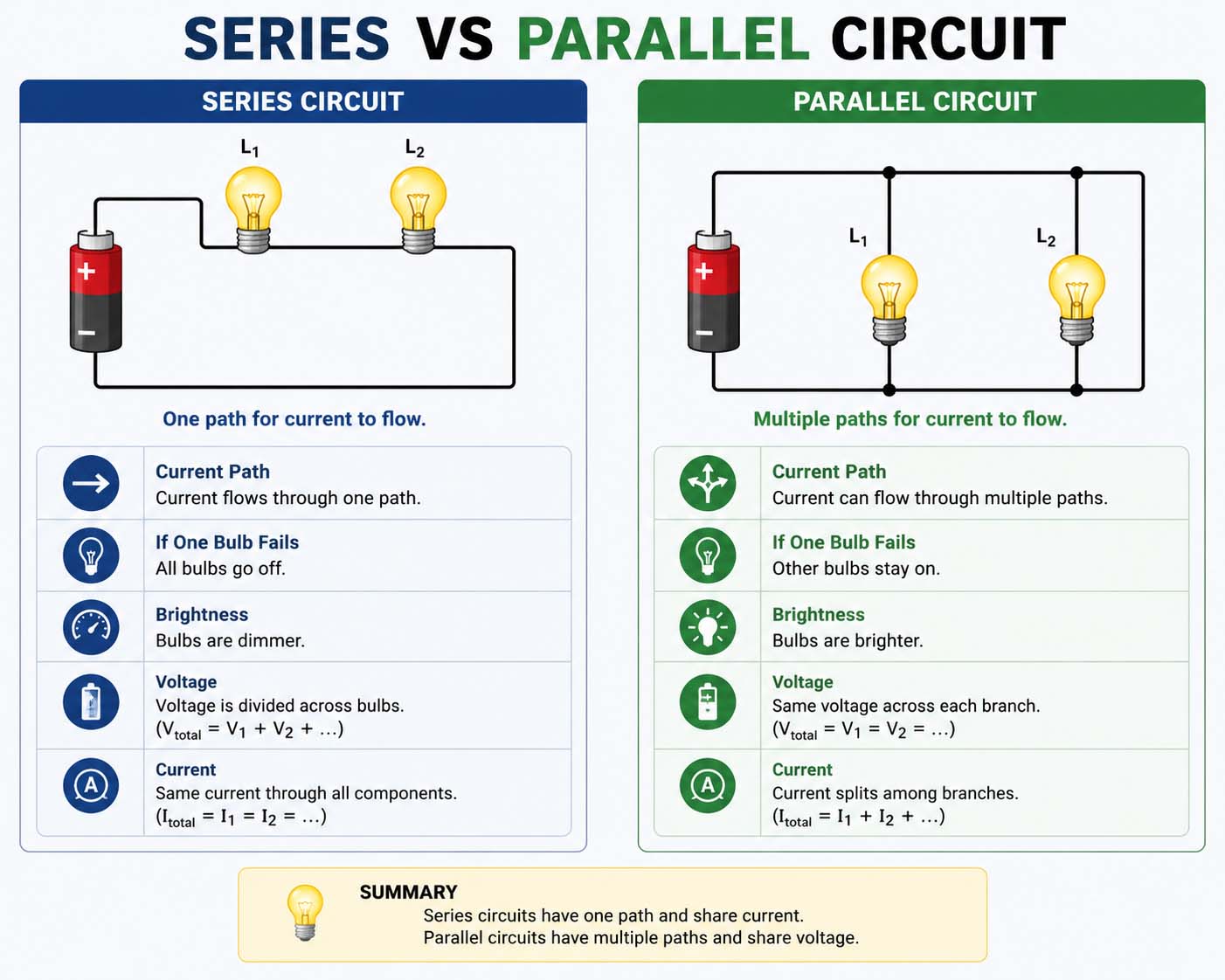
Homeowners who want more background on electrical layouts may encounter topics such as what is a series circuit, although residential branch circuits and EV charging installations should not be interpreted simply from introductory circuit diagrams.
Likewise, learning about series vs parallel arrangements can help explain basic electrical theory, but real residential wiring must follow electrical codes and equipment requirements rather than DIY interpretations of those concepts.
How Much Does EV Charger Installation Cost?
A relatively simple installation can cost much less than a project requiring a long cable run, panel modifications, electrical service upgrades, trenching, wall repairs, or extensive permitting.
Several factors commonly influence the final bill:
- Distance between the electrical panel and parking location
- Charger output and circuit requirements
- Existing electrical capacity
- Hardwired versus plug-in configuration
- Indoor versus outdoor installation
- Local labor rates
- Permit and inspection requirements
- Necessary panel or service work
The EVSE itself is another expense. Smart chargers with Wi-Fi, energy monitoring, scheduling, app controls, or load-management features may cost more than basic units.
Therefore, compare the total installed cost rather than looking only at the charger’s retail price.
Smart Features: Useful or Unnecessary?
Connected EV chargers can provide useful controls, although not every driver needs them.
For example, scheduling can help drivers charge during preferred electricity-rate periods where time-of-use pricing is available. Energy monitoring can also show how much electricity the vehicle consumes over time.
However, many EVs already offer charging schedules and related controls through their own software. Therefore, paying extra for similar functions in the wall charger may not always provide much benefit.
Before buying a smart model, check what your vehicle already does.
Common EV Charger Installation Mistakes
One frequent mistake is choosing charging equipment purely by maximum power. Instead, match the system to the vehicle, electrical capacity, and realistic driving requirements.
Another mistake is ignoring cable placement. A charger mounted in an awkward location can become annoying every day, even if its electrical installation is technically excellent.
Homeowners should also avoid treating repeated breaker trips as normal behavior. Resetting circuit protection without finding the cause can leave an electrical problem unresolved.
Likewise, don’t assume every existing outlet is suitable simply because the charger plug fits it. The complete circuit and installation must be appropriate for the intended charging load.
Finally, consider future needs. If you expect to add a second EV, replace your current car, or renovate the garage, mentioning those plans during the initial assessment may help you avoid paying for unnecessary rework later.
EV Charger Installation Safety and Best Practices
EV charging combines significant electrical power with equipment that may operate unattended for hours. Therefore, installation quality matters more than finding the quickest DIY shortcut.
Use equipment that meets applicable certification and installation requirements for your region. Meanwhile, follow the EVSE manufacturer’s instructions regarding mounting, wiring, environmental conditions, and circuit requirements.
Local rules differ, so permits, inspections, protective devices, and installation methods may vary by jurisdiction.
After installation, periodically inspect the charging cable, connector, plug if present, and visible equipment. Excessive heat, physical damage, unusual odors, repeated faults, or discoloration should be investigated rather than ignored.
Frequently Asked Questions
Do I need a Level 2 charger at home?
Not necessarily. Level 1 may meet the needs of drivers with short daily mileage or long charging windows. However, Level 2 is often more convenient for drivers who need to replenish more energy overnight.
Can I install an EV charger myself?
That depends on the equipment and local regulations. Because dedicated Level 2 charging often involves higher-power electrical work, professional installation is generally the safer choice and may be required by local rules.
Does a more powerful charger always charge an EV faster?
No. The vehicle’s onboard AC charging limit can restrict the charging rate. Therefore, an EVSE capable of supplying more power than the vehicle accepts will not automatically shorten charging time.
Can an EV charger be installed outside?
Yes, suitable EV charging equipment can be installed outdoors. However, the unit and installation method need to be rated and approved for the intended environment.
Will installing an EV charger require a new electrical panel?
Not always. Some homes already have sufficient capacity, while others may need modifications or other solutions. An electrical assessment can determine what the property actually requires.
Plan the Installation Around How You Drive
A good EV charger installation should make owning an electric car easier without adding unnecessary cost or complexity. Therefore, begin with your daily mileage, vehicle charging capability, parking arrangement, and home’s electrical capacity.
For many households, a properly sized Level 2 charger offers an excellent home-charging experience. Still, maximum charging power should not be the only goal. Convenient placement, safe electrical design, reliable equipment, and room for realistic future needs matter just as much.
Once those pieces are planned correctly, home charging becomes simple: park, plug in, and let the car recharge while you are doing something else.